
Apple's New Patent Fixes How Vision Pro Screenshots Look on a Regular Screen
When you're wearing Apple Vision Pro and see a 3D app floating in your room, a regular screenshot looks nothing like what you actually experienced. Apple's latest patent is a fix for exactly that.
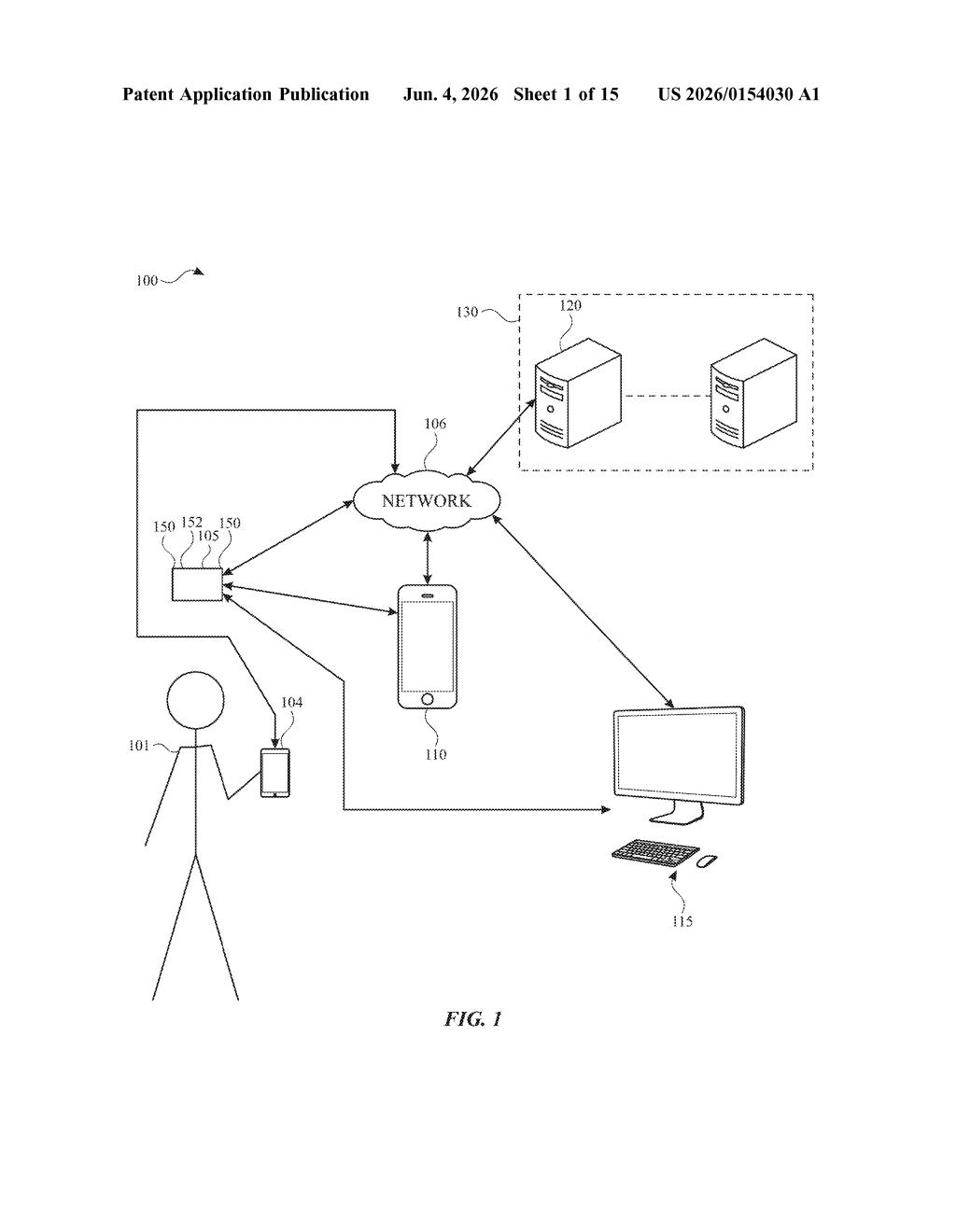
What Apple's spatial-to-flat screen sharing actually does
Imagine you're wearing Apple Vision Pro and a virtual window appears to hang in the air a few feet in front of you, angled slightly toward you in 3D space. If you take a screenshot and send it to a friend on their iPhone or Mac, it looks warped — like a photo taken at a weird angle. That's because the headset is rendering two slightly different images (one per eye) to create the illusion of depth, and a flat screen has no idea what to do with that.
Apple's solution is to generate a second, separate rendering of the same content — one specifically designed for flat, non-spatial displays. When you choose to share or screenshot something, the device doesn't just grab what's on screen. It recalculates the content as if you were looking straight at it on a traditional display, at the right scale and proportion.
The result is that your friend on an iPhone sees something that actually looks like what you experienced in the headset — not a confusing distorted grab from a stereoscopic frame. It's a small quality-of-life detail, but it closes a meaningful gap between spatial computing and the rest of the world.
How Apple re-renders 3D perspective into a 2D face-on view
The patent describes a system built around a key insight: a stereoscopic display (like the one in Vision Pro) shows slightly different images to each eye at a perspective viewing angle, making content appear to extend into physical space around you. That rendering is fundamentally incompatible with how a conventional flat display works.
When a user on a stereoscopic device wants to capture or share content, the system generates a second rendering — distinct from what's being shown in the headset — at what the patent calls a face-on viewing angle. This means the content is re-projected as if it were lying flat against the plane of the destination screen, sized and positioned to match that screen's physical dimensions.
The patent emphasizes that the second rendering is designed so it accurately represents the perceived view of the headset user. In other words, it's not just a raw frame dump — it's a geometrically corrected translation of the user's actual visual experience into a format a 2D screen can faithfully reproduce.
Key technical elements include:
- Left/right pixel element separation — the source device has distinct pixel paths for each eye
- Perspective-to-face-on reprojection — converting a depth-extended view into a planar one
- Form-factor awareness — the output is sized to the destination device's display dimensions
- On-the-fly generation — the second rendering is created while the first is still actively displayed
What this means for Vision Pro's real-world shareability
For Apple Vision Pro to go mainstream, content created inside it needs to travel well — to iPhones, Macs, iPads, and beyond. Right now, spatial content and flat-screen content live in separate worlds. This patent is infrastructure for bridging that gap, making shareability a first-class feature rather than an afterthought.
From your perspective as a user, this means screenshots, screen recordings, and share sheets from a spatial device would finally look intentional when they land on someone else's phone. It also hints at a broader Apple strategy: making the Vision Pro feel less isolated and more like a natural part of the existing Apple ecosystem, where content flows fluidly between all your devices.
This is genuinely useful, unglamorous infrastructure work. The problem it solves — spatial content looking broken when shared to flat screens — is real and annoying, and no one has cleanly addressed it yet. If Apple is filing this now, it's almost certainly headed toward a visionOS or iOS update tied to the next Vision Pro hardware cycle.
There are more where this came from
We read every patent application Big Tech publishes and send you the ones worth knowing. Plain English, free, every week.
Want this weekly breakdown for a company we don't cover? Patentlyze Pro →