
Google's New Patent Teaches Your Watch to Link Your Body Signals to Your Mood
Google is patenting a feedback loop that watches your body, asks how you feel, and gradually builds a personalized model linking the two — or confirms that no link exists at all.
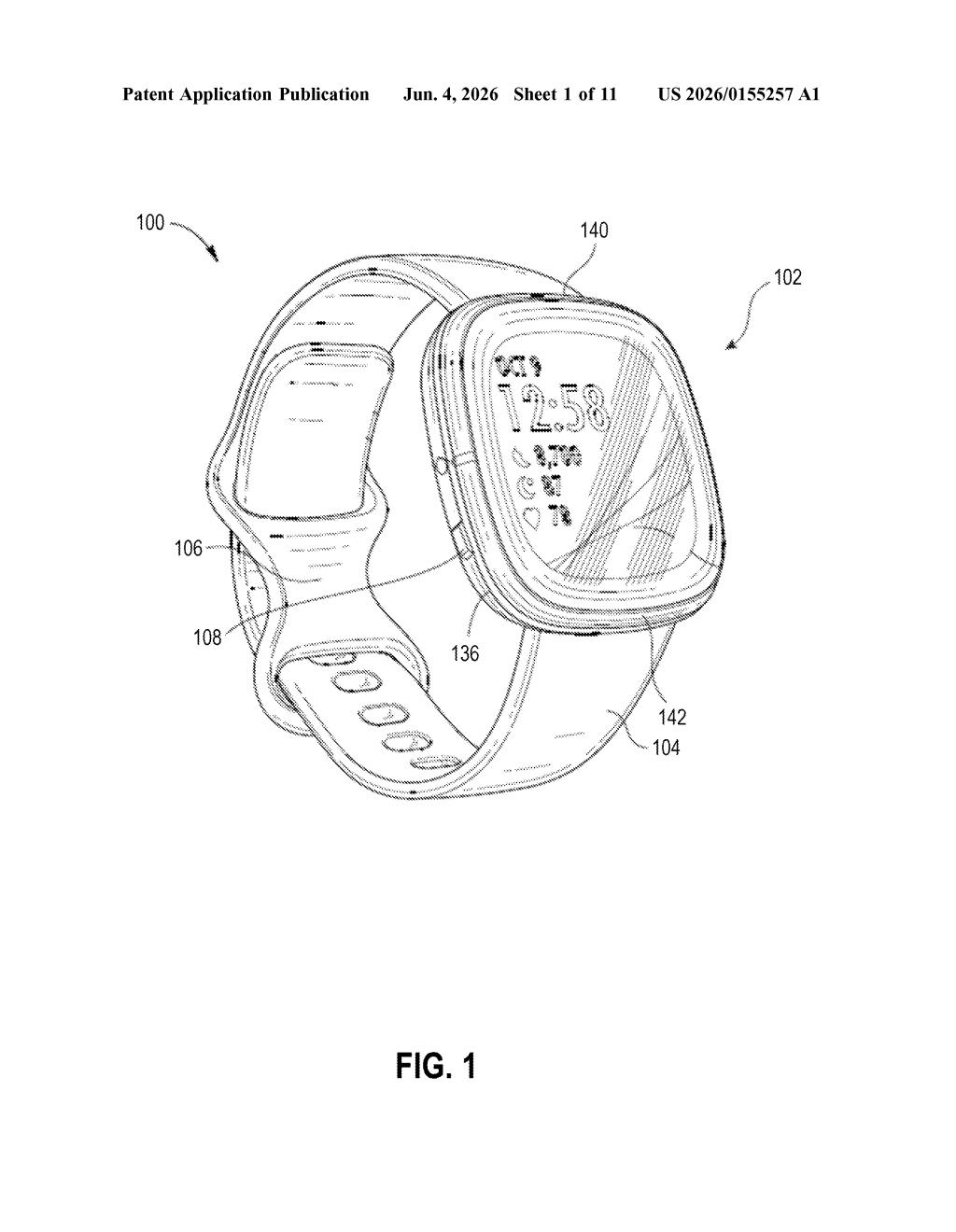
What Google's mood-and-body-data tracker actually does
Imagine your smartwatch notices your heart rate spiked this morning. Instead of just logging the number, it pops up a quick question: How are you feeling right now? You tap "anxious" or "energized," and the device quietly files that away.
Over time, your watch connects those dots. Maybe every time your heart rate jumps before 9am, you're stressed. Or maybe there's no pattern at all — your body's signals and your mood just don't line up. Google's patent covers both outcomes, teaching the system to recognize genuine correlations and to stop chasing false ones.
The result is a model that's personal to you — not built on averages from millions of strangers. It uses your own mood labels to make your physiological data more meaningful, which could eventually feed smarter health insights on a Fitbit or Pixel Watch.
How the trigger-annotate-train loop works
The patent describes a pipeline with four main steps:
- Trigger detection: The device monitors physiological data — think heart rate, HRV (heart-rate variability, a measure of beat-to-beat timing), sleep stages, or stress indicators — and fires when something notable happens.
- Mood prompt: At the moment of the trigger, the user is shown a set of mood states to choose from. The timing is tied to the event so the self-report reflects how the user actually felt at that moment, not hours later.
- Annotation: The selected mood label is attached directly to the physiological data record, creating a labeled dataset that pairs body signals with subjective experience.
- Model training: A machine-learning model is trained on these annotated records. Critically, the model is designed to surface both correlations ("your HRV drop predicts low mood") and the absence of correlation ("your sleep and mood are unrelated").
The "absence of correlation" angle is technically meaningful. Most health-tracking ML pipelines are optimized to find patterns; explicitly modeling non-correlation prevents the system from hallucinating spurious links and from surfacing misleading insights to users. This is a data-quality and reliability concern as much as a feature.
What this means for Pixel Watch and Fitbit health features
For wearable health products, the weakest link has always been that raw sensor data is hard to interpret without subjective context. A high heart rate could mean a great workout, a stressful meeting, or a cup of strong coffee. Tying physiological signals to user-reported mood — in real time, at the moment the signal fires — produces labeled training data that's genuinely hard to collect at scale.
If this ships in Fitbit or Pixel Watch software, you could eventually see personalized insights like "your cortisol-proxy readings in the afternoon consistently match low mood" rather than generic population-level averages. It also raises the obvious privacy question: this is some of the most sensitive data a device could collect, and Google holding a model trained on your mood-body correlations is a significant trust ask.
This is a well-scoped, practically useful patent — not a moonshot. The explicit inclusion of "absence of correlation" as a meaningful model output is the smartest detail in it, showing the team is thinking about reliability, not just feature surface area. Whether users will actually trust Google with this data is a separate question the patent doesn't answer.
There are more where this came from
We read every patent application Big Tech publishes and send you the ones worth knowing. Plain English, free, every week.
Want this weekly breakdown for a company we don't cover? Patentlyze Pro →