
Google Patents a Way to Run Safety Drills on Its Own AI — No Humans Required
Google is patenting a pipeline that automatically fires thousands of test prompts at a generative AI model — text, images, audio, video — and grades each response against safety policies. Think of it as a fire drill for AI, run continuously and without humans in the loop.
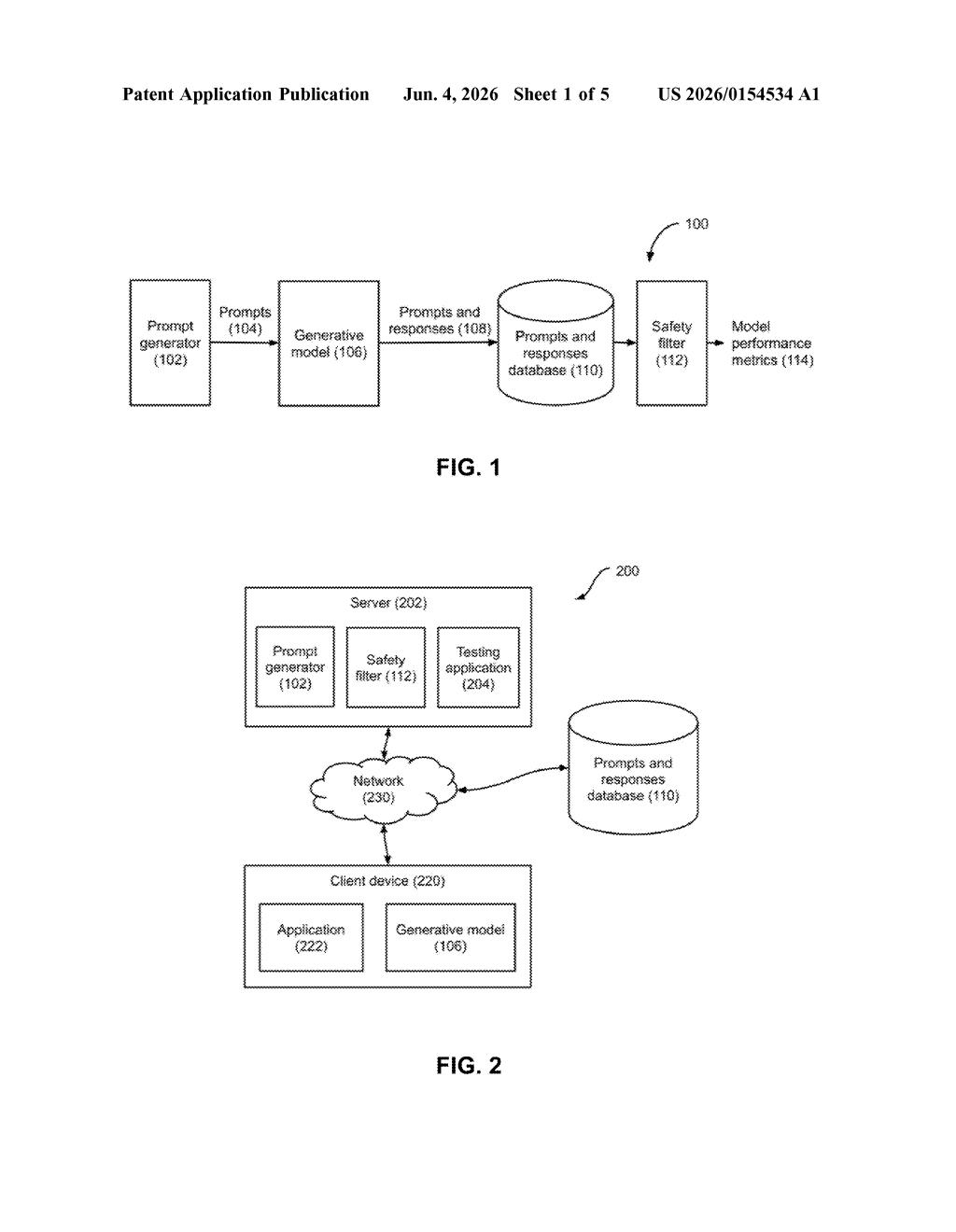
What Google's AI safety test pipeline actually does
Imagine you're hiring a new employee and you want to know if they'll say something they shouldn't when a customer pushes them in the wrong direction. You'd need to run a lot of scenarios — and you'd need a way to grade the answers. Google's patent describes exactly that kind of automated testing system, but for AI models.
The system generates batches of test prompts across different categories (think: sensitive topics, harmful requests, edge cases), feeds them to an AI model, captures every response, and then checks those responses against a set of policies to see if anything slipped through. The whole thing runs without a human having to review each exchange manually.
What makes this more than just a feedback loop is the structure: prompts can include text, images, audio, or video, and responses are stored in a database so patterns can be analyzed over time. It's less about catching one bad answer and more about building a systematic record of where a model behaves well — and where it doesn't.
How the prompt generator and safety filter work together
At the core of this patent is a three-stage pipeline: prompt generation, response capture, and safety analysis.
Prompt generation is handled by an automated prompt generator that produces batches of inputs, each tagged with a test category (a label for what kind of policy risk the prompt is probing). Prompts aren't limited to text — they can include images, audio, or video, making this multimodal by design.
For each prompt, the system sends it to the generative model under test, captures the full response (again, any modality), and stores the prompt-response pair in a database. This logging step is important: it means results accumulate over time and can be compared across model versions.
The analysis stage runs a safety filter over each stored pair. The filter checks whether the model's response violates the policy associated with that prompt's test category — essentially flagging policy breaches automatically. The output is a test result per pair, building up a performance profile for the model across all categories:
- Does the model refuse requests it should refuse?
- Does it produce harmful content when nudged with edge-case prompts?
- Does its behavior hold consistently across different input types?
The patent describes this as a method for determining generative model performance — which puts it squarely in the model evaluation and red-teaming space.
What this means for AI accountability at scale
AI safety testing is mostly a manual, ad hoc, and expensive process today. Teams of human reviewers probe models, researchers run red-teaming exercises, and results don't always feed back into a structured record. A system like this turns that into something closer to a continuous integration pipeline — the same concept software engineers use to automatically test code every time it changes. For Google, which is shipping generative AI across Search, Workspace, and Gemini, having a scalable automated testing layer matters a lot more than it might seem.
For you as a user, the practical implication is that a model shipped through this kind of pipeline has been stress-tested against policy categories systematically — not just spot-checked. It doesn't guarantee a model is safe, but it does suggest a more rigorous and reproducible evaluation process than most of what's been publicly described in the industry so far.
This is genuinely useful infrastructure work, not a flashy AI capability patent. The interesting detail is the multimodal scope — testing across text, image, audio, and video inputs signals that Google is thinking about safety evaluation for models like Gemini that handle all of those. Whether the safety filters themselves are good is a harder question this patent doesn't answer, but building a systematic automated harness is the right first step.
There are more where this came from
We read every patent application Big Tech publishes and send you the ones worth knowing. Plain English, free, every week.
Want this weekly breakdown for a company we don't cover? Patentlyze Pro →