
Google Files Patent for a Round Display That Wraps Pixels Around Its Own Edge
Google is patenting a circular display where the screen doesn't just stop at the edge. It curves around the rim, squeezing extra pixels into the border zone.
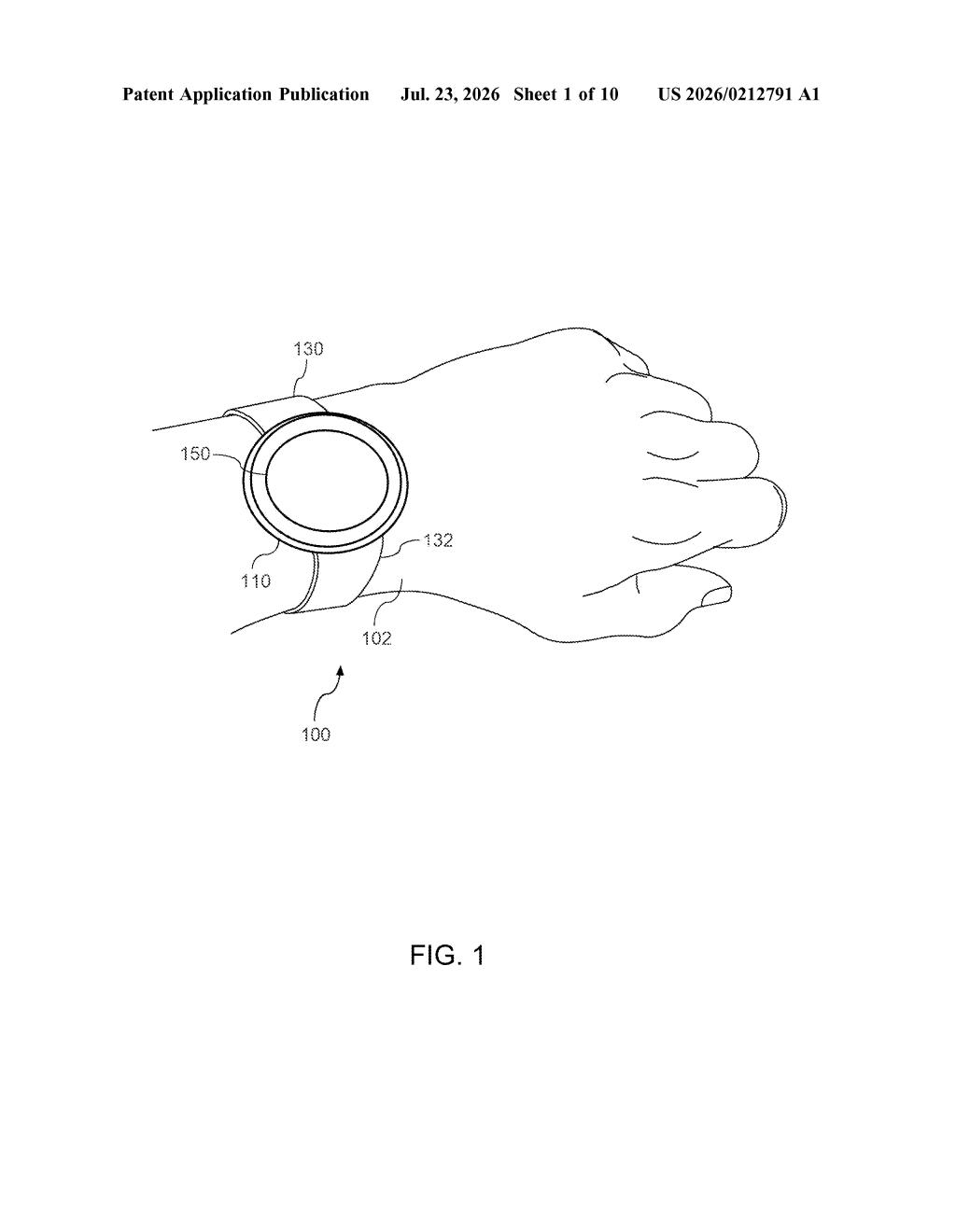
What Google's curved circular display actually does
Imagine a round smartwatch face where the display stretches all the way to the very edge of the glass and then bends slightly around the curve, instead of stopping flat like a coin sitting inside a bowl. That's the core idea here.
Google's patent describes a round screen split into two zones: a flat central area that shows your main content, and a second ring-shaped area that wraps around the outside of that center. That outer ring physically curves, following the arc of the watch's rim, so there are no dead zones or wide bezels eating into your view.
The result is a display that appears to fill a circular device from edge to edge, with no wasted space at the border. Think of it like a contact lens sitting flush in your eye rather than a button dropped into a jar lid.
How the two display zones fit inside a round cover
The patent describes a display assembly designed for a round electronic device, most likely a smartwatch. The cover glass defines an internal volume divided into two regions: a central portion and a peripheral portion (the ring-shaped zone just inside the rim).
The display itself is also split into two matching zones:
- First display area: the main flat screen that sits in the center, showing standard pixel content.
- Second display area: a ring of pixels that extends around the edge of the first area, sitting inside that peripheral volume near the rim.
The key engineering detail is the arcuate connection portion (arcuate just means curved in an arc). This is the physical section of the display panel that bends to follow the curved wall of the device, connecting the flat center screen to the outer ring of pixels. It defines where the second display area ends and the device housing begins.
Essentially, the display panel is folded or bent near the edge so pixels can inhabit the curved boundary of the device, rather than requiring a flat panel to stop short of the rim.
What this means for Google's wearable ambitions
Bezels are the enemy of round displays. Most circular smartwatch screens have a noticeable gap between where the pixels end and where the glass or case begins, because bending a flat display panel into a curve is hard. If Google can put this into production, Pixel Watch or a future wearable could offer a genuinely edge-to-edge round screen, which would be a clear visual step up from current designs.
There's also a practical angle for always-on displays and watch faces. A second ring of pixels around the outer edge opens up design possibilities: a continuous color border, a progress ring, or ambient information that lives at the periphery without cluttering the center. Whether this reaches a shipping product is another question, but Google is clearly thinking about how to make round screens feel more complete.
This is a focused, specific hardware patent rather than a broad platform grab, which actually makes it more interesting. Google clearly has someone on the Pixel Watch team thinking hard about display real estate, and a bent-edge circular display would address one of the most visible criticisms of round smartwatch screens today. Whether manufacturing can catch up to the concept is the real question.
There are more where this came from
We read every patent application Big Tech publishes and send you the ones worth knowing. Plain English, free, every week.
The drawings
10 drawing sheets from US 2026/0212791 A1 · click any drawing to enlarge


Want this weekly breakdown for a company we don't cover? Patentlyze Pro →
Be the first to weigh in