
Microsoft Patents a Way to Shrink the Math Behind Quantum Computer Simulations
Simulating a quantum device on a classical computer is brutally expensive — the math blows up fast. Microsoft's new patent describes a way to dramatically shrink that math without losing the physics that matters.
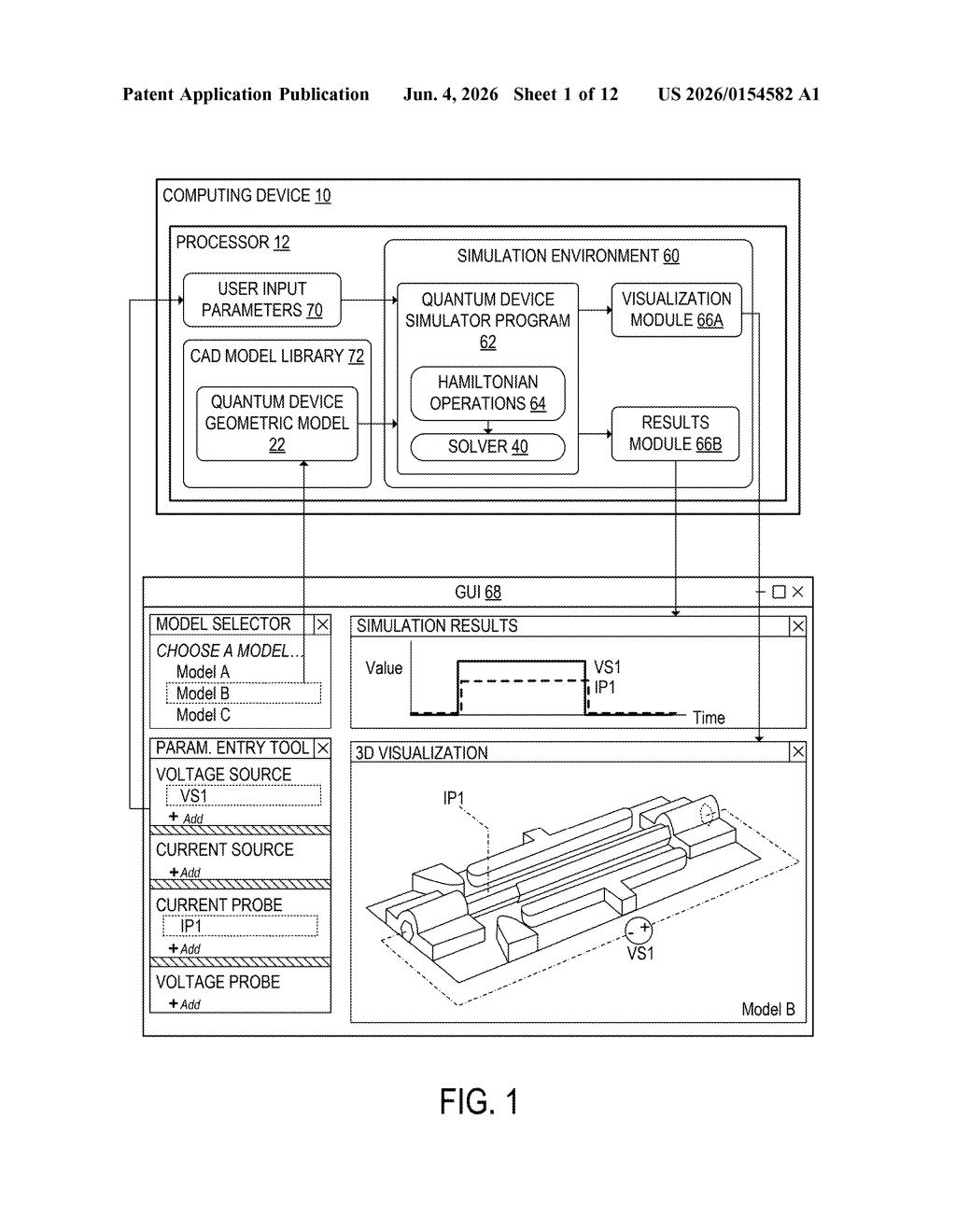
What Microsoft's quantum simulator shortcut actually does
Imagine you're trying to model every single conversation happening in a city to understand how two people in one neighborhood are talking. That's overkill — you only need the conversations relevant to that neighborhood. Microsoft's patent applies the same logic to quantum device simulation.
When engineers design quantum hardware, they need to run simulations on classical computers to predict how the quantum components will behave. The problem is that these simulations grow enormously complex as the number of quantum states tracked increases. This patent describes a method that identifies which quantum states actually matter for a given component, then throws out the rest before doing the heavy math.
The result is a reduced-dimensionality simulation — the same physics, but with a much smaller matrix to crunch. That means faster simulations, more design iterations, and potentially better quantum hardware coming out the other end.
How the natural-orbital basis trims the simulation matrix
The patent describes a classical computing process for simulating quantum devices — specifically the kind of multi-component quantum hardware Microsoft is building for its quantum computing program.
The core technique works in several steps:
- Take a geometric model of the quantum device's physical components and build a single-particle Hamiltonian matrix (a mathematical object encoding the energy structure of the whole system).
- Compute a predefined energy window — a range of energies that are physically relevant — and exclude quantum modes (fermionic modes, meaning electron-like quantum states) that fall outside it.
- For a specific component of the device, estimate a reduced density matrix (a compact description of that component's quantum state, ignoring the rest of the system).
- Find the eigenvectors and eigenvalues of that matrix — essentially the "principal components" of the quantum state, ranked by importance.
- Keep only the most significant eigenvectors to form a natural-orbital basis, then rewrite the full Hamiltonian in that smaller basis, shrinking its dimensionality.
The shrunken Hamiltonian is then used to solve the Schrödinger equation (the fundamental equation governing quantum behavior), and the result is passed to downstream simulation processes. The dimensionality reduction is the key innovation — it makes the problem tractable without discarding physics that matters.
What this means for Microsoft's quantum hardware pipeline
For Microsoft, this is infrastructure work for its quantum hardware ambitions. Designing and validating quantum components — things like topological qubits or Josephson junctions — requires enormous numbers of simulation runs. A method that reliably shrinks those simulations means engineers can iterate faster and explore more design variations before committing to fabrication.
More broadly, this kind of simulation tooling is where the real competitive advantage in quantum hardware gets built. If your simulation pipeline is faster and more accurate than a competitor's, your hardware designs improve faster. This patent is less about a flashy user-facing feature and more about the unglamorous engineering scaffolding that determines whether quantum hardware programs actually ship.
This is deep infrastructure — the kind of patent that never makes consumer headlines but quietly determines which quantum hardware programs are viable. The natural-orbital basis reduction is a well-established technique in quantum chemistry, and Microsoft is applying it to quantum device design simulation. It's not a conceptual leap, but it's a practical one, and the fact that they're patenting simulation tooling suggests this is part of an active internal engineering workflow, not a paper exercise.
There are more where this came from
We read every patent application Big Tech publishes and send you the ones worth knowing. Plain English, free, every week.
Want this weekly breakdown for a company we don't cover? Patentlyze Pro →