
Meta's New Patent Reveals How Its Muscle-Reading Wristband Stays Connected to Itself
Meta is quietly building out the internal plumbing of a wristband that reads your muscle signals — and this patent covers how the tiny antenna inside it stays connected to sensors spread across the entire band.
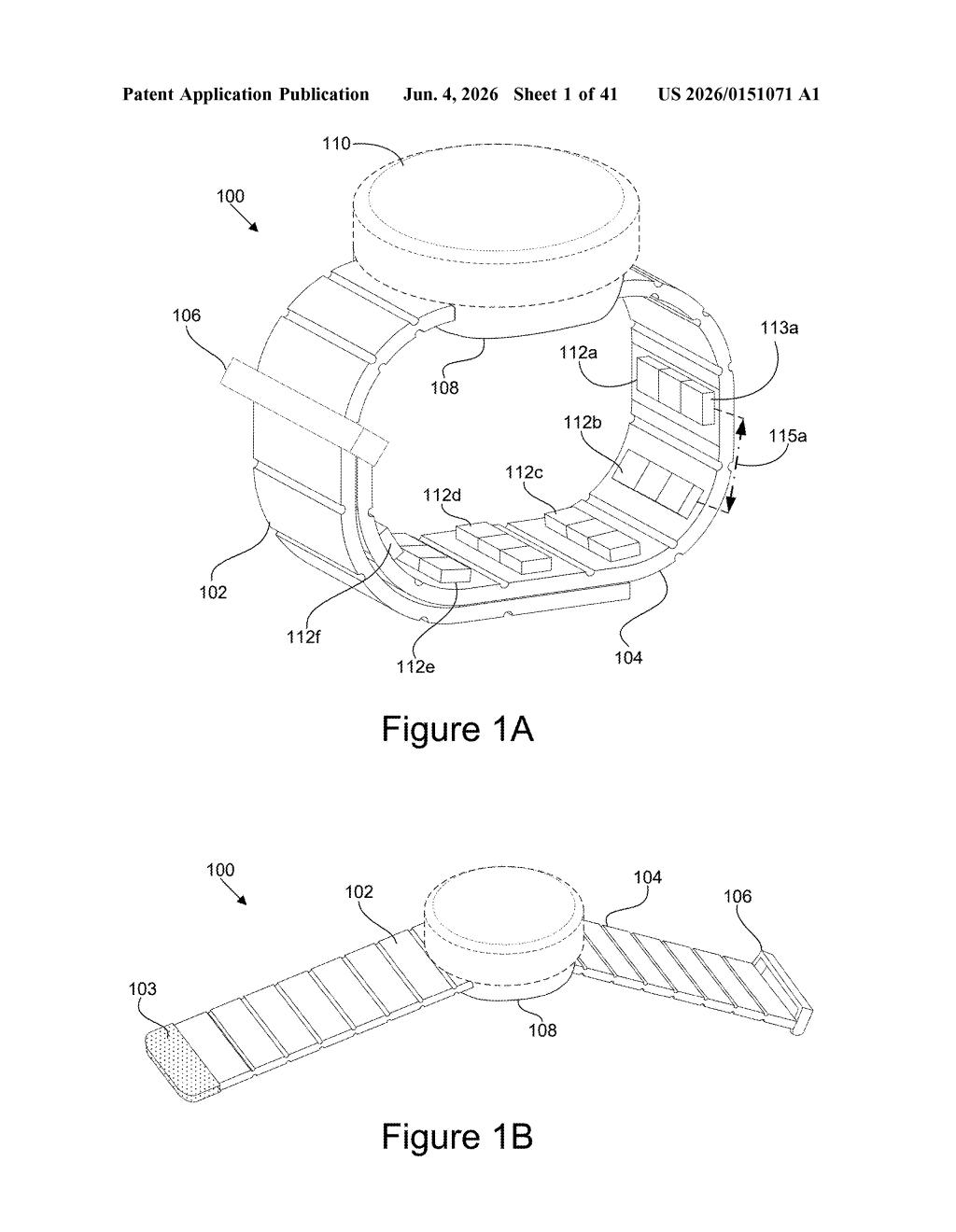
What Meta's neural wristband antenna actually does
Imagine a wristband that can tell what your hand is about to do by reading the electrical signals your muscles send before you even move. That's the concept behind Meta's neuromuscular wristband, a device that detects subtle muscle activity around your wrist and turns it into computer input — like scrolling, clicking, or controlling AR glasses without touching anything.
The tricky engineering problem is that the sensors need to be spread all the way around the band to pick up signals from different muscle groups. This patent covers how a central chip inside the wristband talks wirelessly to all those sensors using a laser direct structuring (LDS) antenna — an antenna that's literally etched into a plastic component using a laser, rather than soldered in as a separate part. It's a compact, precise way to fit an antenna into a tight space.
A small physical connector called a service loop — basically a bit of slack cable — ties the antenna to the main circuit board, giving the assembly just enough flex to survive the device being bent and worn every day. It's unglamorous but essential.
How the LDS antenna and service loop connect the sensors
The patent describes the internal architecture of a wrist-worn device built around neuromuscular sensing — reading the electrical signals (EMG, or electromyography) that muscles generate when they contract. Multiple sensors are distributed around the band so the device can detect activity from different muscle groups simultaneously.
The central challenge is getting data from those distributed sensors to the main processor. The patent's solution is a laser direct structuring (LDS) antenna — a manufacturing technique where a laser traces a circuit pattern directly onto a plastic substrate, which is then metal-plated to form a conductive antenna. This produces a compact, 3D-shaped antenna that fits precisely into tight device enclosures without needing a separate PCB mount.
Key components described in the claim:
- Band portion with neuromuscular sensors distributed along its length
- Main logic board that processes the incoming sensor signals
- LDS antenna component that wirelessly relays data between the sensors and the logic board
- Service loop — a short, flexible cable segment that physically connects the antenna to the board while absorbing mechanical stress from everyday bending and movement
The wireless link between the LDS antenna and the individual sensors means the sensors themselves don't need hard-wired traces running the full length of the band, which simplifies construction and potentially improves comfort.
What this means for Meta's neural input ambitions
Meta has been publicly building toward neural input as the long-term control scheme for AR glasses — the idea that you'd control a heads-up display by thinking about gestures rather than pressing buttons. The neuromuscular wristband is central to that roadmap, and this patent is a look at the unglamorous but necessary hardware engineering that makes it possible to actually manufacture such a device at scale.
For you as a potential user, what this really means is that Meta is working through real production-level problems: how do you cram a functional antenna into a wristband that also has to be thin, flexible, and comfortable? LDS antennas are already common in phones and earbuds, so this isn't exotic — but applying the technique here signals that Meta's neural wristband is moving from research prototype toward something you might actually buy.
This is a manufacturing and integration patent, not a breakthrough concept — LDS antennas are already standard in consumer devices. But it confirms Meta is doing serious production-engineering work on the neuromuscular wristband, not just lab demos. That's a meaningful signal that the device is progressing toward real hardware.
There are more where this came from
We read every patent application Big Tech publishes and send you the ones worth knowing. Plain English, free, every week.
Want this weekly breakdown for a company we don't cover? Patentlyze Pro →