
Meta Patents System to Keep High-Speed Server Data Transfers Organized and Reliable
Meta is patenting a coordination system that lets servers send data directly to each other's memory — skipping the CPU as much as possible — while keeping careful track of when each transfer slot is free to reuse.
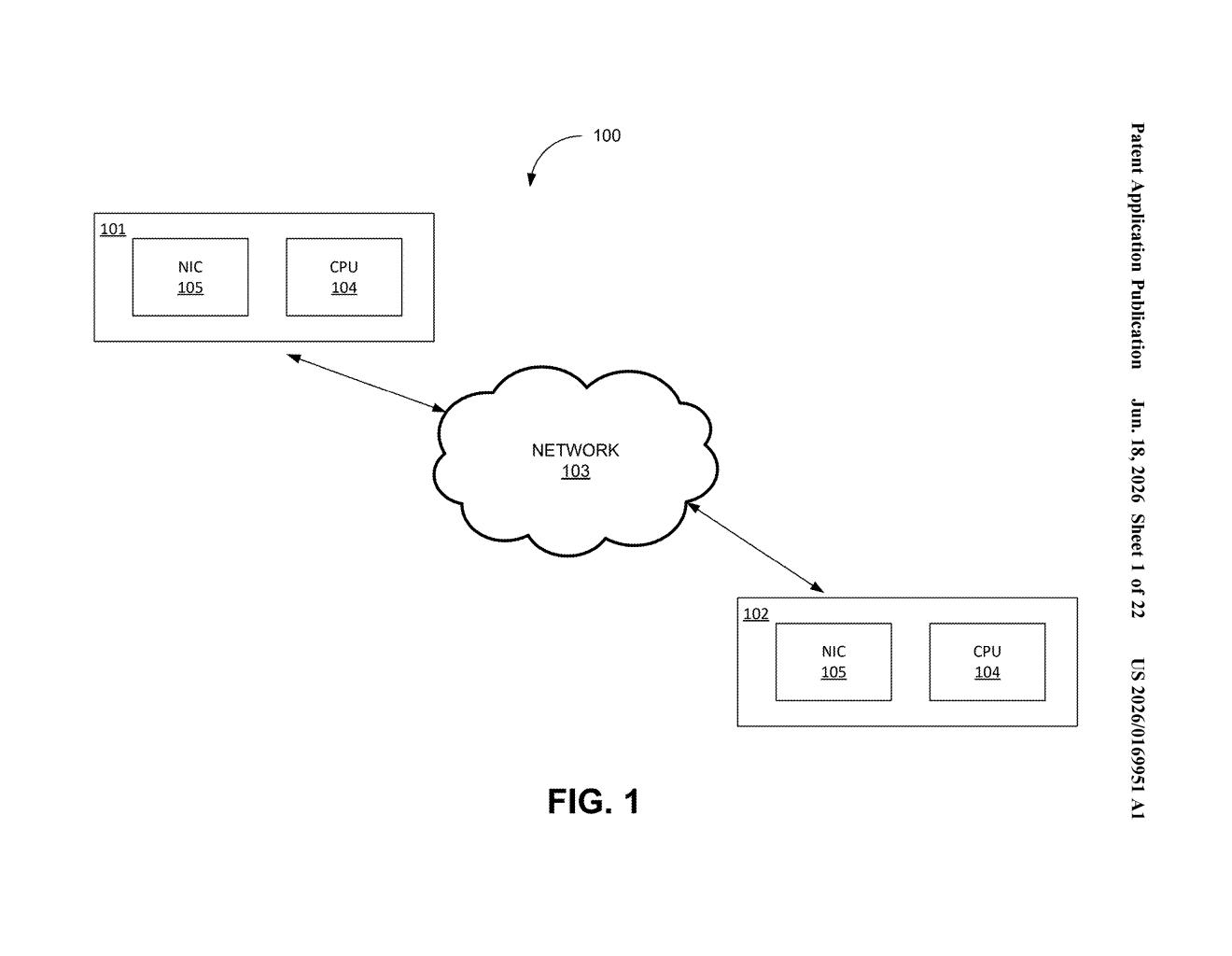
What Meta's datacenter memory-transfer system actually does
Imagine a busy warehouse where workers pass boxes directly between each other instead of always going through a central dispatcher. That's roughly what Meta's system is doing inside its datacenters: letting servers write data straight into another server's memory without constantly bothering the main processor.
The tricky part is making sure no server tries to send data before the receiver is actually ready to accept it. This patent describes a signaling system — using small status markers called "ready bytes" — that tells each sender when a receiving slot is free, when data is being received, and when the slot is available again for the next transfer.
This kind of plumbing is critical when you're running large AI training jobs that require thousands of servers to constantly pass data back and forth at very high speed. Getting the coordination wrong means dropped transfers, wasted compute time, or crashes.
How the ready-byte handshake controls RDMA writes
The patent describes a queue management protocol for Remote Direct Memory Access over Converged Ethernet (RoCE) — a technology that allows one server to write directly into another server's RAM without the receiving machine's CPU having to actively handle the transfer.
The core mechanism uses a small status flag called a ready byte stored in a lookup table. The sequence works like this:
- A sender checks the ready byte for a target slot; if it shows "available," a special instruction called a WAIT WQE (Work Queue Element — essentially a task in the network card's to-do list) proceeds.
- The system initiates an RDMA write to a target base table, signaling the receiver is ready.
- The receiver sets the ready byte to "pending" via a SET WQE, claiming the slot.
- The actual data transfer happens; the network card generates a Completion Queue Entry (CQE) — a receipt confirming the transfer finished.
- On seeing the CQE, the system issues another SET WQE to flip the ready byte back to "available" for the next sender.
This handshake keeps multiple concurrent communicators — many senders and receivers operating at the same time — from colliding over the same memory slots, all without constant CPU intervention.
What this means for Meta's AI training infrastructure
Meta operates some of the largest AI training clusters in the world, and those clusters depend on servers exchanging enormous amounts of data with minimal delay. RDMA is a standard tool for that job, but coordinating many simultaneous transfers without errors or bottlenecks is genuinely hard. This patent addresses the coordination layer — keeping queue slots from being double-booked or left idle — which directly affects how efficiently a training job can use expensive GPU time.
For everyday users, this is invisible infrastructure. But if Meta's AI models train faster or more cheaply, that efficiency eventually shows up in the products built on top of them — from recommendation feeds to generative AI tools.
This is deep datacenter plumbing — the kind of engineering that never appears in a product announcement but quietly determines whether a multi-thousand-GPU training run finishes in three days or five. It's not flashy, but for a company spending billions on AI infrastructure, shaving inefficiency out of memory transfers is exactly where the real engineering work happens. Worth noting for anyone tracking how the big AI labs are building their compute stacks.
There are more where this came from
We read every patent application Big Tech publishes and send you the ones worth knowing. Plain English, free, every week.
Want this weekly breakdown for a company we don't cover? Patentlyze Pro →