US 2026/0194986 A1
Meta Patent Lets Pinch-and-Twist Wrist Gestures Control Smart Glasses Volume
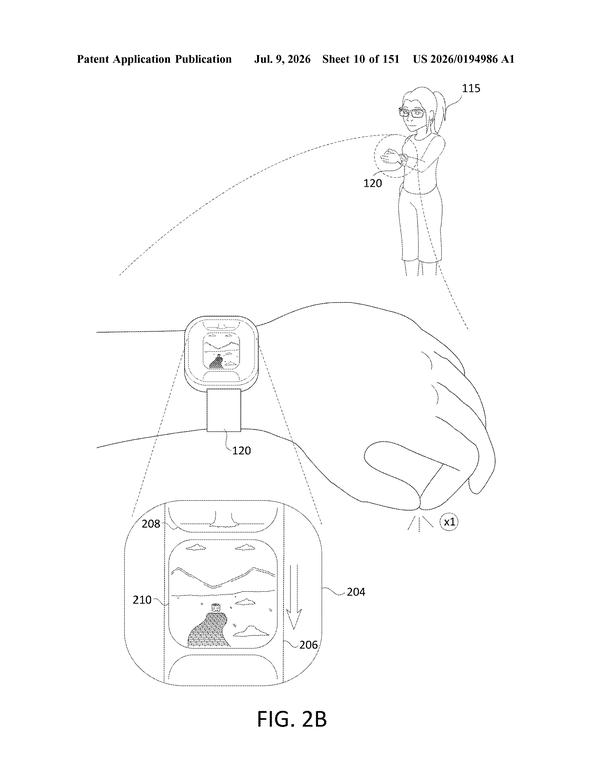
The wristband now handles command input through pinch-and-twist gestures, moving beyond passive sensing into active control of the glasses themselves.

This tracker gathers every Meta patent on its muscle-reading wristband, from cleaner signal grounding and shielding to internal wiring, fabric-hidden sensors, and added heart-rate tracking. The pattern points to Meta refining signal accuracy and comfort so the wristband could pass as an everyday accessory rather than a lab device.
9 filings · tracking since May 2026 · latest Jul 2026 · updates automatically as new filings publish
US 2026/0194986 A1
The wristband now handles command input through pinch-and-twist gestures, moving beyond passive sensing into active control of the glasses themselves.
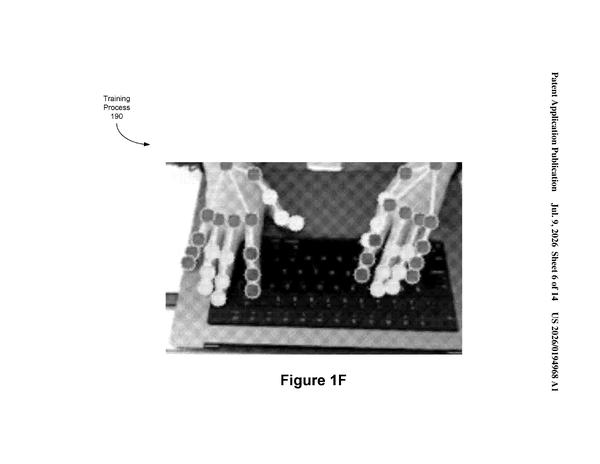
US 2026/0194968 A1
The muscle-reading wristband gains a learning layer: it watches your finger sequences as you type in air and starts spotting which motions trip you up, then offers compressed alternatives to smooth out the friction points.
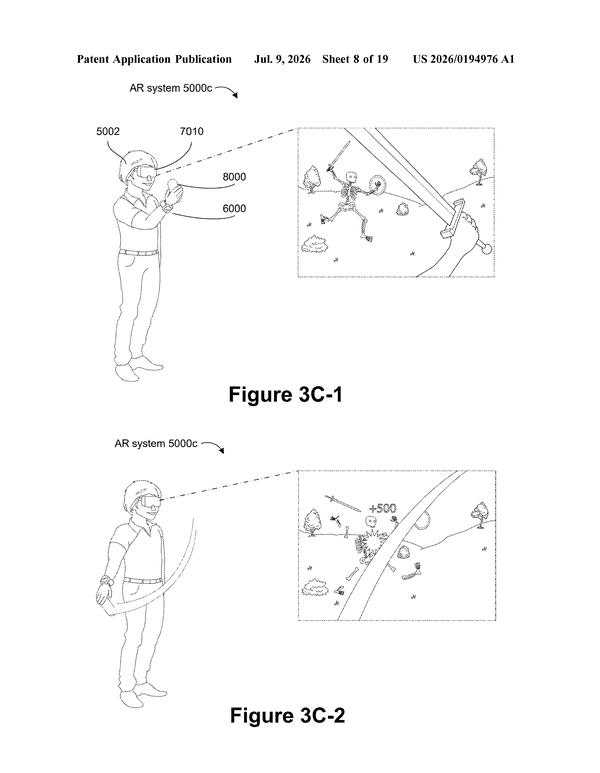
US 2026/0194976 A1
Muscle signal patterns from finger motions bypass the need for physical input surfaces, letting the wristband infer typed characters directly from arm electromyography data fed through a language model.
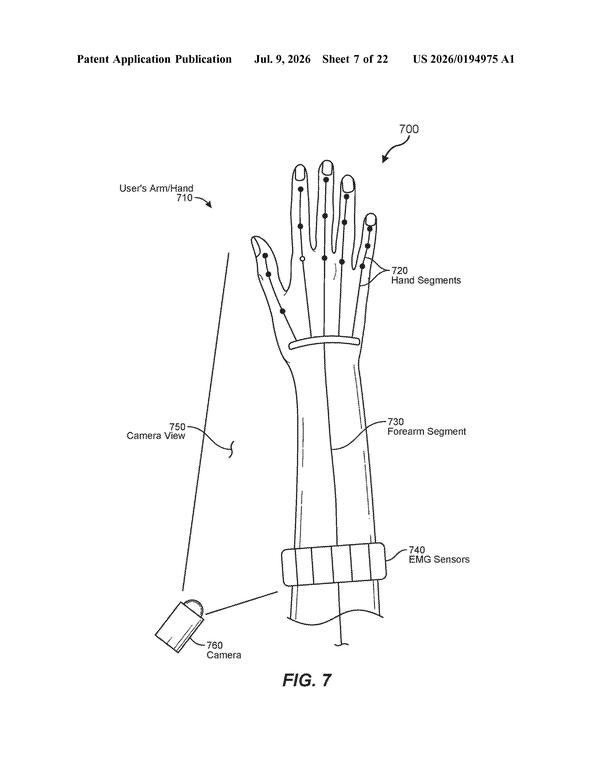
US 2026/0194975 A1
Detecting muscle signals when you point at someone lets the glasses know which person you mean without voice commands or hand gestures visible to others in the room.
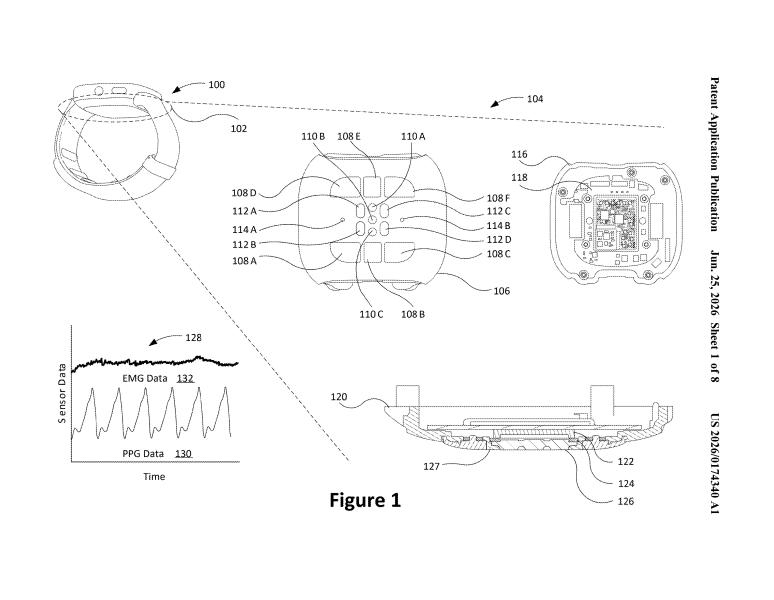
US 2026/0174340 A1
Getting muscle and heart signals out of one wristband housing without electrical interference between them. Meta's filing shows how to isolate two fundamentally different sensor types in the same small package.
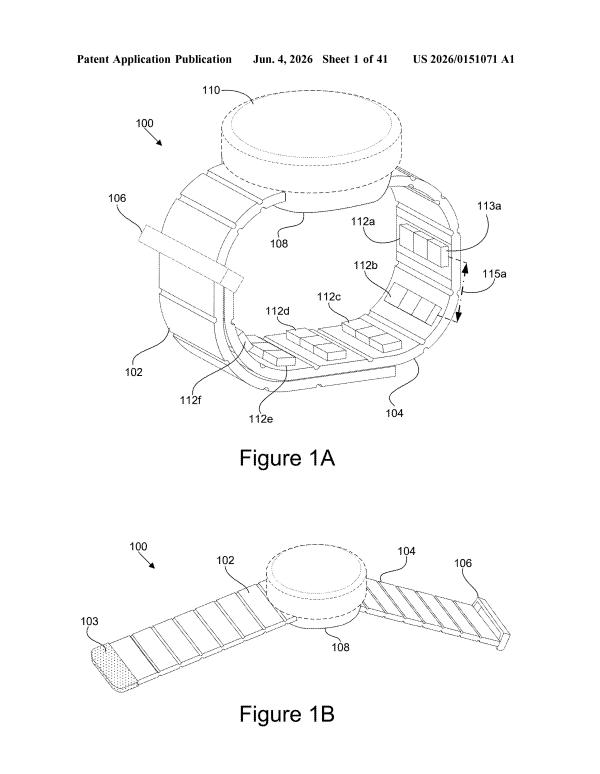
US 2026/0151071 A1
A wristband with sensors scattered around your wrist needs internal wireless links so all those sensors can report muscle signals back to one processing hub without creating interference or lag.
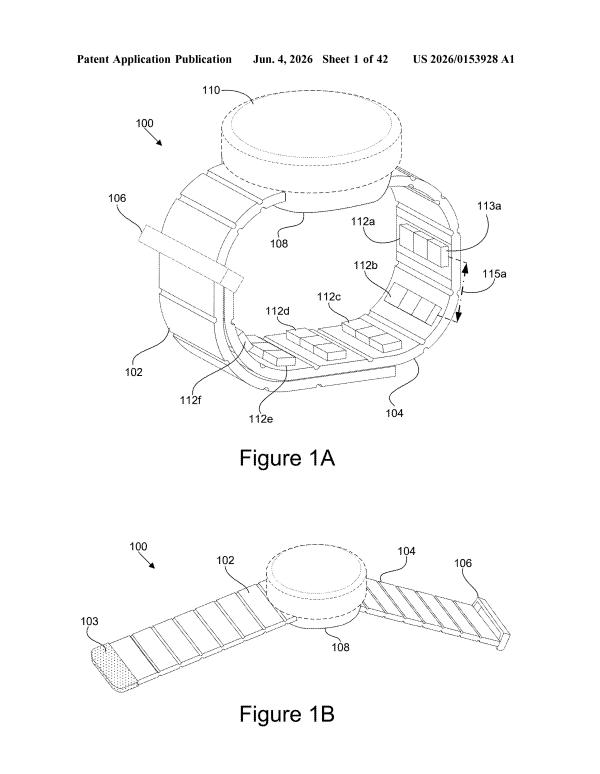
US 2026/0153928 A1
After years of filing on signal detection and processing, Meta now zeroes in on the physical form: embedding sensors into fabric and using magnets to keep the band stable against skin, solving the engineering problem of turning prototype into wearable.
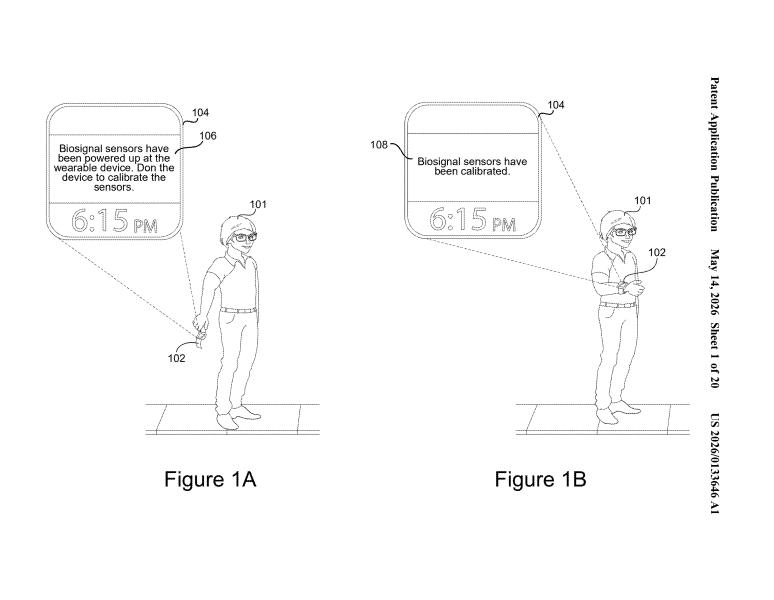
US 2026/0133646 A1
Voltage drift between the device and skin ground corrupts muscle signal readings. Meta's filing describes a real-time compensation circuit that tracks and corrects these mismatches, keeping signal quality steady during wear.
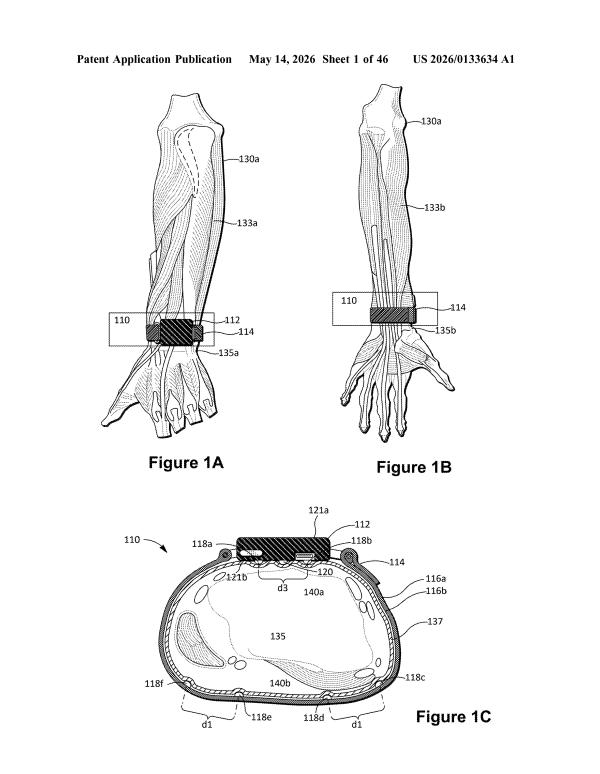
US 2026/0133634 A1
Shielding the sensor electrodes from ambient electromagnetic interference lets the wristband pick up muscle signals without getting swamped by noise from nearby devices like chargers and appliances.
Most of the engineering effort in this storyline goes into making the wristband's electrical readings reliable. One filing addresses voltage mismatches between the device and the skin with an active ground-tracking circuit, while another adds electromagnetic shielding so nearby electronics do not corrupt the muscle signal. A third patent maps out how internal components stay connected to each other, suggesting Meta treats signal integrity as a system-wide problem rather than a single sensor fix. Together these filings point to sustained work on making noisy biosignals usable outside a lab.
A second cluster of filings focuses on making the wristband wearable in everyday settings. One patent hides the muscle sensors inside ordinary fabric, and another packs an EMG sensor and a heart-rate monitor into the same capsule, with careful attention to keeping the two readings from interfering with each other. The recurring theme is isolation: keeping electrical noise, skin contact, and now other sensors from muddying the muscle signal. That problem echoes the grounding and shielding work in earlier filings, now applied to a more crowded device.
Readers should watch for whether future filings keep splitting into these two tracks: raw signal quality on one side, and physical form factor and sensor combinations on the other. The fabric and dual-sensor patents suggest Meta is thinking about a consumer-ready product, not just a research prototype, while the grounding, shielding, and connectivity filings show the underlying signal problems are still being solved piece by piece. Each new filing in this storyline tends to fix one specific weakness rather than redesign the whole wristband.
Meta has filed multiple patents describing a wristband that reads electrical signals from muscles, covering signal quality, internal wiring, fabric housing, and added heart-rate sensing. That volume of filings shows real engineering investment, but a patent only describes an idea Meta wants to protect. It is not confirmation that the product will ship or what it will look like when it does.
Wearables that read muscle signals have to deal with tiny voltage differences between the device and your skin, plus interference from nearby electronics. Meta's ground-tracking circuit patent and its electromagnetic shielding patent both target this noise problem from different angles, one at the skin contact point and one around the device itself, so the wristband can pick up a cleaner signal.
One filing describes building the muscle sensors into an ordinary-looking fabric wristband instead of a visible plastic or metal device. That points to Meta wanting the wristband to look and feel like a normal accessory rather than lab equipment, which matters if the goal is something people wear all day. The patent does not say when or whether this design reaches consumers.
Yes, at least one patent combines an EMG muscle sensor with a heart-rate monitor in the same wristband capsule, with specific attention to keeping the two sensors from interfering with each other. That suggests Meta is exploring a multi-purpose health and control device, though the filing describes an engineering approach rather than a finished, shipping product.
Which company should we read for you?
We track 17 companies here. Pro is the same weekly breakdown for any company you choose, delivered privately. Type a name and we'll scope it and send you a quote.