
Samsung Patents a Two-Step Gesture System for AR Wearables That Skips the Button-Tap
Tapping a tiny floating button in AR is harder than it sounds — Samsung's new patent sidesteps the problem entirely by watching where you point before you commit to any action.
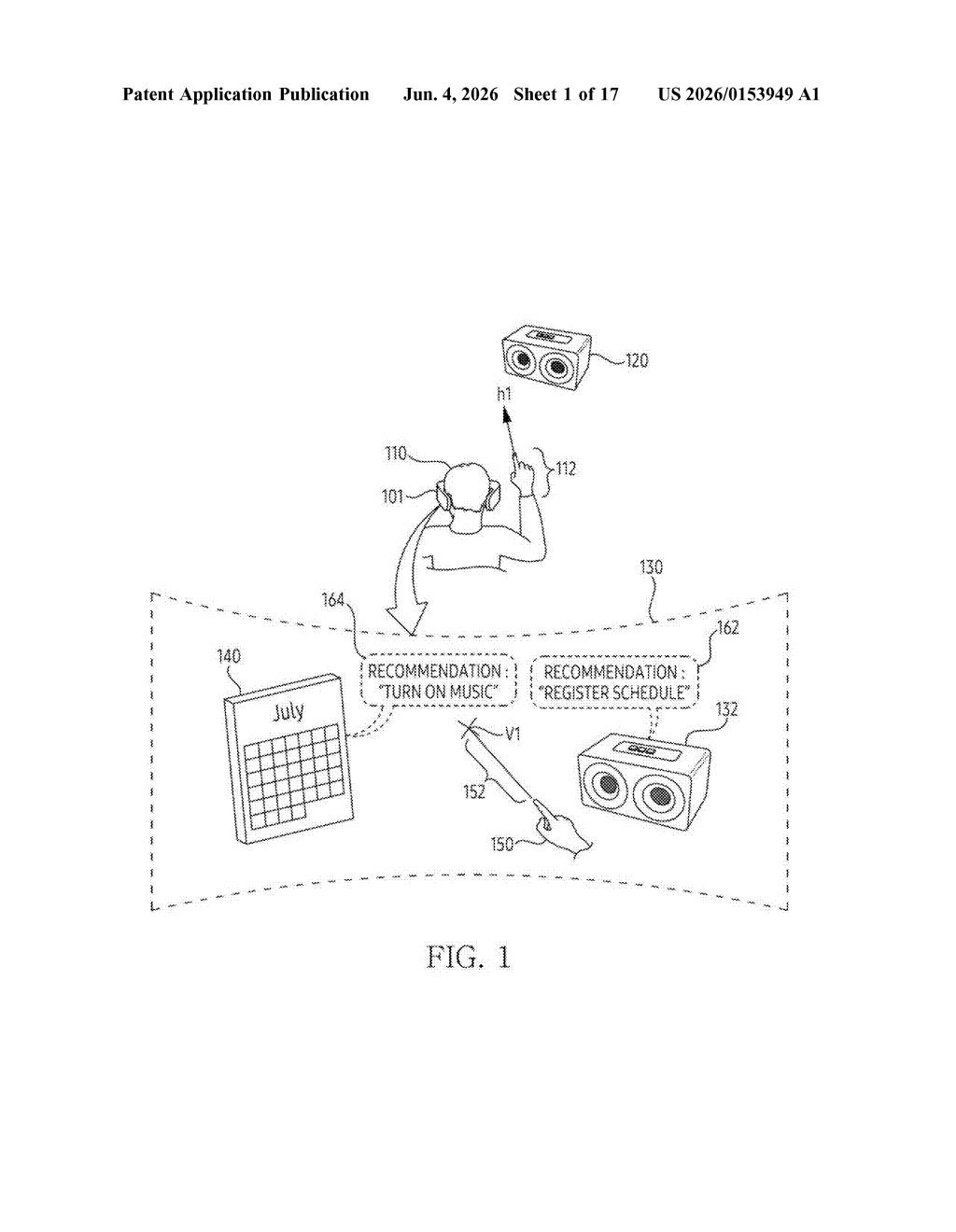
What Samsung's proximity-first AR input actually does
Imagine you're wearing AR glasses and a handful of virtual buttons are floating in your field of view. The annoying part: they're small, your hand isn't perfectly steady, and you have to nail the exact button to trigger the right thing. Samsung's patent describes a system that takes the pressure off that final tap.
Here's the flow: you point or gesture near a general area — not necessarily at a specific button — and the device logs that as a first signal. If you then make a second gesture in the same spot within a short window of time, the wearable figures out which nearby virtual object you were probably aiming for and shows you a visual cue for what to do next.
That third step — the visual cue — tells you how to confirm the action using a different sensor entirely (think an eye-blink, a finger pinch, or a voice command). It's a forgiving, multi-stage input model that doesn't require you to be pixel-perfect in mid-air.
How the three-input pipeline resolves your gesture intent
The patent describes a three-phase input pipeline for a wearable device (think AR glasses or a mixed-reality headset) that relies on at least two different sensors working in sequence.
Phase 1 — Proximity detection: The first sensor picks up a user input at a location that isn't directly on any virtual object. This is the "rough aim" — you're near the buttons but not touching any of them. The system registers this as a meaningful, intentional signal rather than noise.
Phase 2 — Intent confirmation: If a second input arrives at the same location within a preset duration (a configurable time window), the device interprets the two inputs together. It then identifies the virtual object or objects that are spatially closest to that location — essentially inferring which UI element you were probably pointing at.
Phase 3 — Guided confirmation: The wearable displays a visual object — an on-screen overlay or indicator — that shows the user what input a second sensor is waiting for to complete the action. That second sensor could be a camera watching for an eye gesture, a microphone, a biosignal sensor, or anything else the device supports.
The separation of "locate" and "confirm" across two sensors is the core idea: the first sensor handles spatial targeting, the second handles intentional execution.
What this means for hands-free AR control on Galaxy devices
Mid-air interaction with AR UIs is notoriously imprecise — your arm gets tired, your aim drifts, and false positives are annoying. By splitting the input into a rough-aim phase and a confirm phase that uses a different sensor, Samsung's approach could make AR interfaces feel much less like a frustrating game of darts. You don't have to be precise on the first move — the system meets you halfway.
This fits neatly into Samsung's broader wearables push, particularly as it expands into the AR/XR space alongside its Galaxy Ring and rumored glasses projects. A more forgiving input model could also reduce the need for precise hand-tracking hardware, potentially lowering the cost bar for capable AR wearables.
This is a genuinely practical UX patent — Samsung is solving a real pain point in AR interaction rather than patenting a vague concept. The two-sensor, three-phase approach is specific enough to be meaningful, and the core idea of decoupling 'aim' from 'confirm' is the kind of interaction design thinking that actually ships in products. Worth watching if you follow XR interface development.
There are more where this came from
We read every patent application Big Tech publishes and send you the ones worth knowing. Plain English, free, every week.
Want this weekly breakdown for a company we don't cover? Patentlyze Pro →