
Samsung Patents a Compact 4-Lens Camera Design for Wide-Angle Shots
Samsung is filing patents on a tightly constrained 4-lens optical system designed to pack wide-angle coverage into a physically small camera module — the kind of engineering tradeoff that defines every millimeter of smartphone camera design.
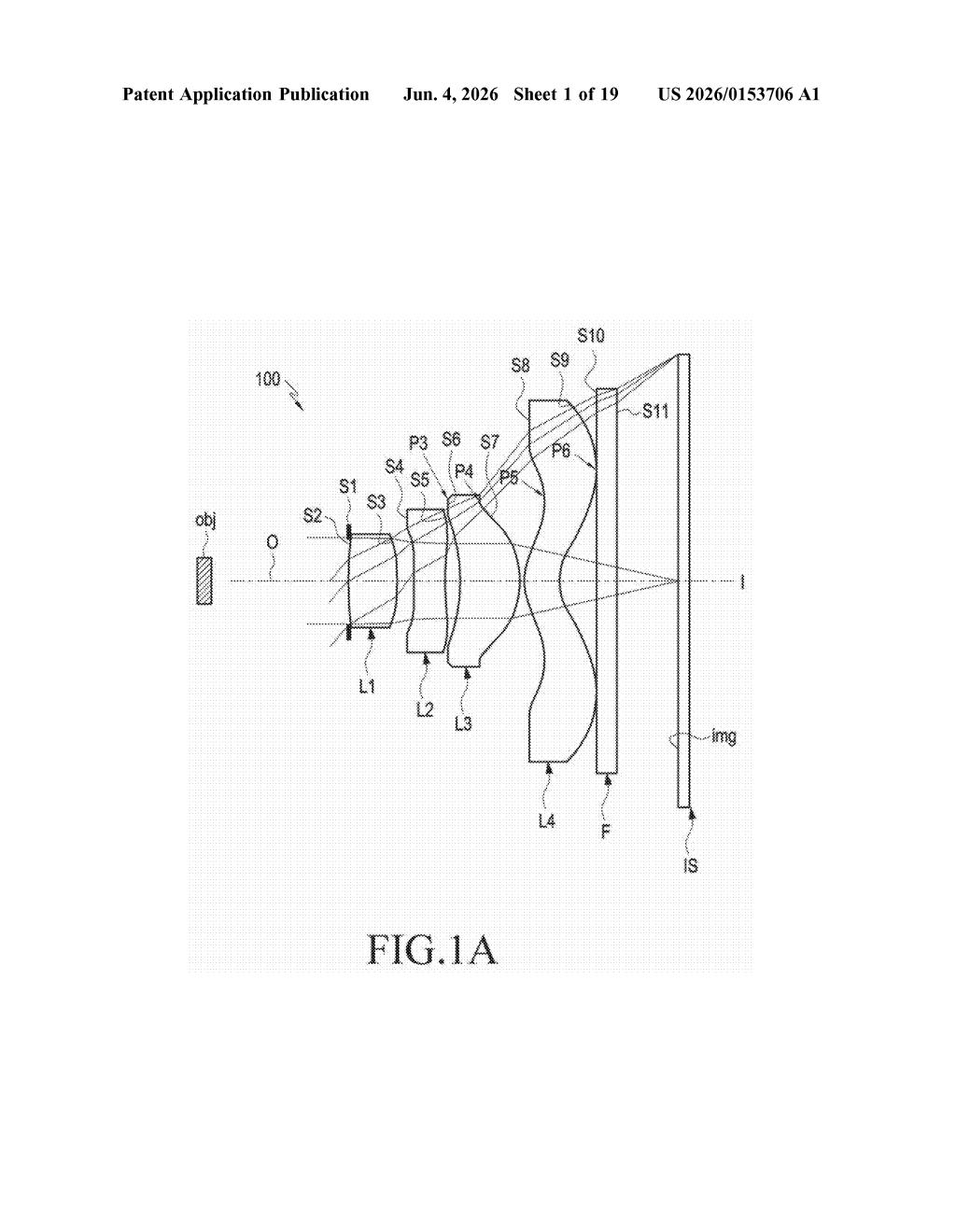
What Samsung's 4-lens wide-angle camera module actually does
Imagine trying to fit a wide-angle camera lens — the kind that captures a big room in one shot — into a phone that's barely thicker than a pencil. That's the core challenge this patent addresses. Samsung's design stacks four lenses in a specific sequence to capture a wide field of view without making the camera bump any bigger than it needs to be.
The key constraint here is balance: wider angles tend to distort images (hello, fisheye effect), and correcting that distortion usually requires more glass and more space. Samsung's design specifies exactly how large the lens stack can be relative to the angle it covers, keeping the whole system compact.
This is the kind of unglamorous but genuinely important optical engineering that separates a sharp, natural-looking ultra-wide photo from one that looks warped around the edges.
How Samsung's lens stack bends and corrects light
The patent describes a four-lens assembly arranged along a single optical axis, from the front of the camera (object side) to the image sensor at the back (image side). The lenses alternate in how they bend light:
- First lens: positive refractive power (converges light — pulls rays inward)
- Second lens: negative refractive power (diverges light — spreads rays out, correcting aberrations)
- Third lens: positive refractive power (converges again)
- Fourth lens: role unspecified in refractive power terms, but part of the full correction stack
The second lens is particularly notable: at least one of its surfaces has an inflection point — meaning the curvature of the glass actually reverses direction partway across the surface. This is a classic technique for controlling field curvature and distortion, especially important in wide-angle designs where off-axis light rays travel at steep angles.
The patent also locks in two key ratios. OAL/HFoV (the total lens stack length divided by the half-angle of view) must stay between 0.03 and 0.045 — a tight window that enforces physical compactness. And the full field of view must be between 80° and 110°, firmly in ultra-wide territory.
What this means for ultra-wide cameras in Galaxy phones
Ultra-wide cameras are now standard on mid-range and flagship Android phones, including Samsung's own Galaxy S series. But optical quality at wide angles is notoriously hard to maintain in a small package — distortion, softness at the edges, and chromatic fringing are all common failure modes. A carefully specified 4-lens design with tight OAL/FoV constraints is Samsung's attempt to define a reproducible, manufacturable solution to those problems.
For you as a user, this kind of patent work is what eventually shows up as a noticeably crisper ultra-wide lens when you're shooting architecture, landscapes, or group photos. It's not flashy, but it's exactly the kind of iterative optical refinement that moves the needle on real-world photo quality.
This is a competent, focused optical engineering patent — not a conceptual moonshot, but the kind of precise lens specification work that actually ships in products. The tight OAL/HFoV ratio is the interesting constraint: it signals Samsung is designing for a specific physical form factor, likely a slim phone body. Worth noting for anyone tracking Samsung's camera roadmap, but not a dramatic reveal.
There are more where this came from
We read every patent application Big Tech publishes and send you the ones worth knowing. Plain English, free, every week.
Want this weekly breakdown for a company we don't cover? Patentlyze Pro →