
Samsung Patents a Display Panel With a 5G Antenna Array Built Into Its Edge
Samsung Display is trying to solve one of mmWave 5G's messiest hardware problems — where to put the antennas — by building them directly into the display panel itself.
What Samsung's in-panel antenna design actually does
Modern high-frequency 5G (the kind that's blazing fast but struggles to travel far) needs antennas placed very precisely around a phone's body. Right now, those antennas are usually separate modules tucked behind or around the screen, eating up internal space and complicating the whole phone design.
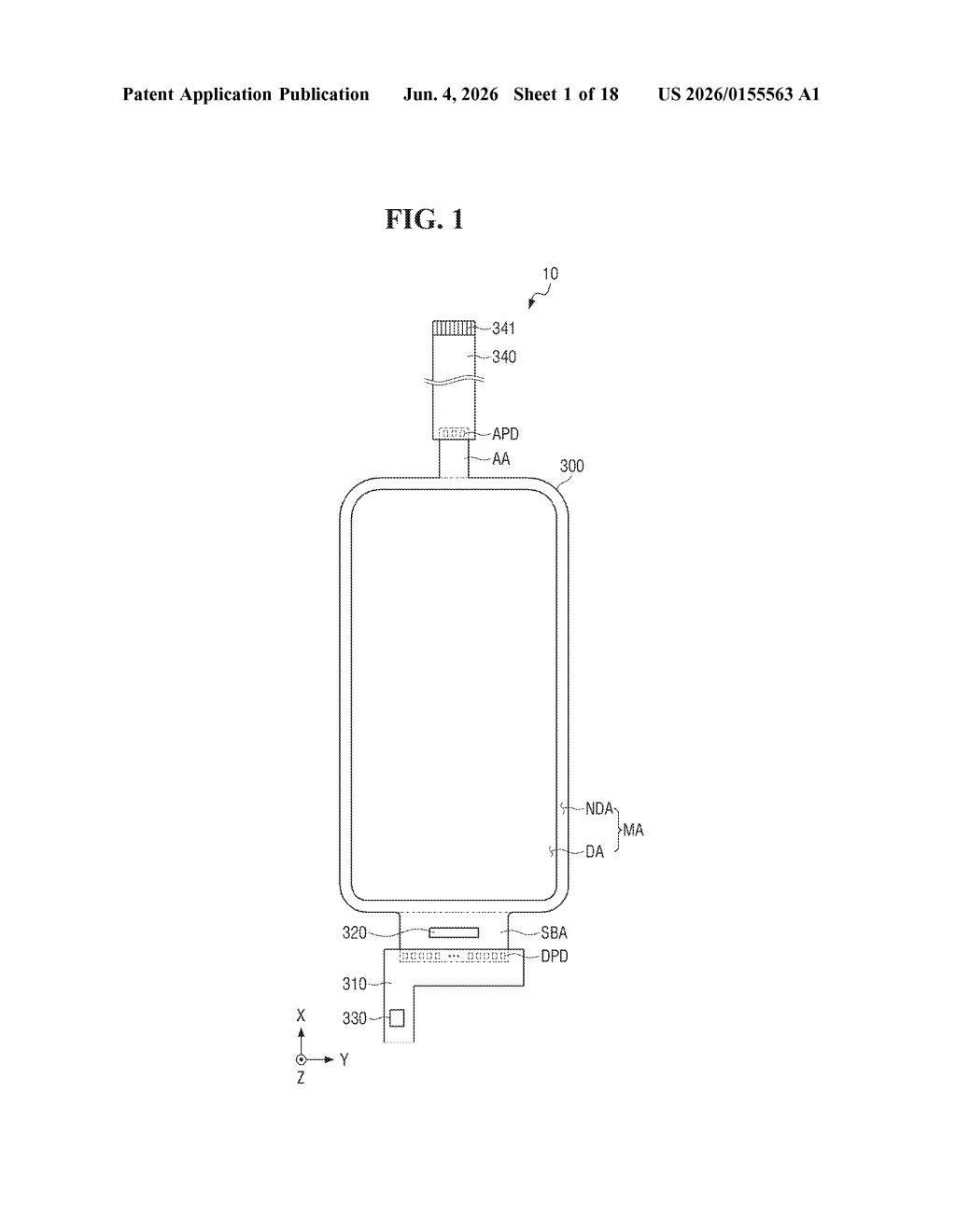
This patent describes a display panel where a narrow strip — called an antenna area — physically juts out from one edge of the screen. Tiny antennas sit right at the boundary where that strip meets the rest of the display frame. The clever part is that each antenna is separated from its neighbors by a T-shaped shielding member connected to a ground line, which stops the antennas from interfering with each other.
The result is a single panel that handles both your display and your 5G millimeter-wave radio needs, without requiring a separate antenna module crammed inside the phone.
How the shielding electrodes isolate each antenna element
The patent describes a display panel with three zones: the main display area (what you see), a non-display area (the bezel border), and a new antenna area — a tab-like protrusion that sticks out from part of the non-display area in what the patent calls the "first direction" (think: straight down or to the side).
An antenna array sits right at the boundary between that protruding tab and the adjacent bezel region. The antennas are arranged in a row along the second direction (perpendicular to the protrusion) and are designed to emit polarized waves — radio signals oriented in a specific plane, which helps with directional signal control in mmWave 5G systems.
The key engineering detail is the shielding member between each pair of adjacent antennas. It's T-shaped, with three electrodes:
- A first electrode running parallel to the protrusion direction
- A second electrode branching left from the tip
- A third electrode branching right from the same tip
This T-shape, tied to a ground line, creates an electromagnetic barrier that reduces inter-element interference (crosstalk between antennas that would degrade signal quality). The whole antenna array is driven by a separate substrate connected via pads near the end of the antenna tab.
What this means for 5G mmWave phones going forward
Fitting mmWave 5G antennas into slim phones has been a persistent hardware headache. mmWave signals are easily blocked by hands, metal frames, and even the display stack itself, so antenna placement is critical. By integrating the array directly into the panel edge, Samsung Display could simplify assembly and potentially enable thinner devices — the antenna module doesn't need its own dedicated space inside the chassis.
This is a component-level patent from Samsung Display (the panel-making subsidiary), not Samsung Electronics (the phone maker), which means the technology could theoretically be licensed or used across multiple device makers. If it ships, you'd likely notice it as better mmWave reception without any change to how the phone looks — which is exactly the kind of invisible hardware win that matters most.
This is solid, concrete antenna engineering — not flashy, but it tackles a real problem that has limited mmWave 5G adoption in slim consumer devices. The T-shaped shielding approach is a specific, defensible design choice rather than a broad concept grab, which makes it more likely to be practically useful than many display-adjacent patents. Worth watching if you follow 5G hardware integration.
There are more where this came from
We read every patent application Big Tech publishes and send you the ones worth knowing. Plain English, free, every week.
Want this weekly breakdown for a company we don't cover? Patentlyze Pro →