
IBM Patents a Risk-Scoring Guardrail That Stops AI Agents Before They Do Something Costly
AI agents that autonomously run business tasks are only as safe as the guardrails around them. IBM's new patent describes a risk-scoring layer that intercepts an AI agent's planned action, estimates the blast radius if it goes wrong, and decides whether to let it run, run it partially, or block it entirely.
What IBM's AI agent safety net actually does
Imagine you've deployed an AI assistant inside your company — a digital worker — that can send emails, update databases, trigger payments, or delete records without a human clicking approve each time. That's great for speed. But what happens when it decides to do something that could wipe out a customer account or fire off a thousand refund transactions?
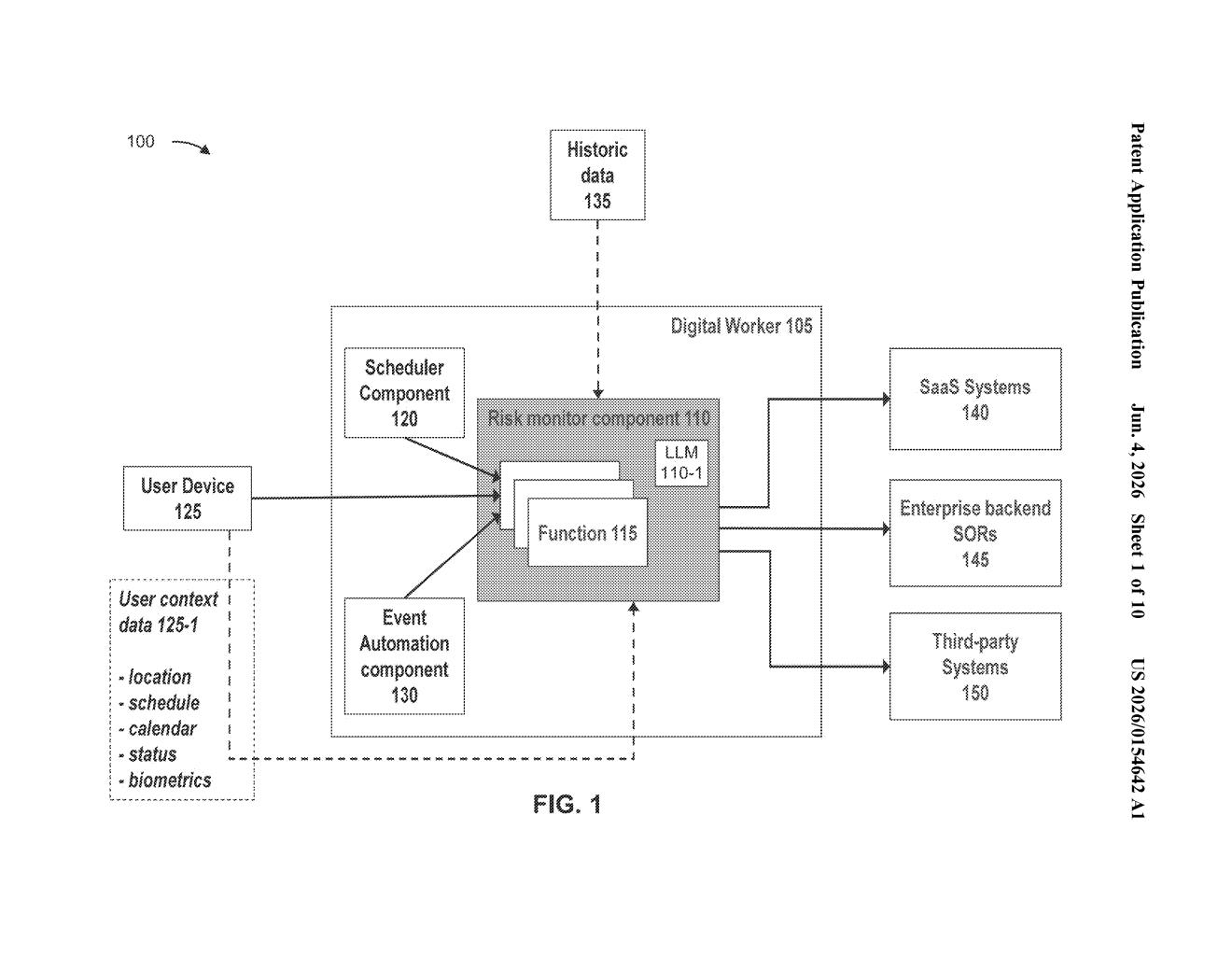
IBM's patent describes a risk monitor that sits between the AI agent and the systems it wants to act on. Before the agent executes anything, this monitor uses a large language model to reason about what the action would actually do — and how bad things could get if it went sideways.
Based on that analysis, the system assigns a risk score and routes the action down one of three paths: go ahead and run it, run only a safe portion of it, or block it entirely. Think of it as a traffic light for AI actions — one that actually understands what the car is trying to do before it decides whether to let it through.
How the LLM and fuzzy logic scoring work together
The core of the patent is a risk monitor component that intercepts function calls made by a digital worker — an AI agent operating autonomously on enterprise systems.
The monitor first hands the proposed action to an LLM, which generates a natural-language assessment of the potential impact: what systems are affected, what data could change, and what downstream consequences might follow. This replaces the need for hand-coded rules about every possible action the agent might take.
That qualitative impact assessment is then fed into a fuzzy logic-based scoring algorithm (a math framework that handles vague, probabilistic categories like "somewhat risky" rather than forcing hard yes/no thresholds). The algorithm compares the LLM's output against historical risk correlations — past actions and their real-world outcomes — and runs a process called defuzzification (converting the fuzzy, probabilistic score into a single crisp number) to produce a final risk score.
Based on that score, the system picks an execution path:
- Full execution — the action runs as requested
- Partial execution — only the low-risk parts of the action proceed
- Prevention — the action is blocked entirely
Why enterprise AI automation shops should pay attention
Enterprises deploying agentic AI — systems that can take real actions inside business infrastructure — face a genuine problem: how do you give the AI enough autonomy to be useful without letting it do something irreversible and expensive? Today, most solutions are either brittle rule lists or human-in-the-loop approvals that defeat the purpose of automation.
IBM's approach is interesting because it uses the LLM itself to reason about risk, not just execute tasks. That means the guardrail can adapt to novel actions the original developers never anticipated. For enterprise automation platforms — IBM's own watsonx, or competitors like ServiceNow and UiPath — this kind of adaptive safety layer could be the difference between a digital worker you trust with sensitive systems and one you keep on a very short leash.
This is genuinely useful infrastructure work for the agentic AI era. The combination of LLM-based impact reasoning with fuzzy logic scoring is a pragmatic approach to a real problem — most enterprise AI guardrails today are too rigid to handle the open-ended nature of LLM agents. IBM is staking out clear IP in the "AI agent safety layer" space, which is going to matter a lot as more companies hand autonomous agents access to production systems.
There are more where this came from
We read every patent application Big Tech publishes and send you the ones worth knowing. Plain English, free, every week.
Want this weekly breakdown for a company we don't cover? Patentlyze Pro →