
Adobe Patents an AI System That Cleans Up Sloppy Object-Removal Edges
Removing an object from a photo sounds simple until the AI leaves a halo of leftover pixels at the edge. Adobe's new patent tackles that exact problem with a two-pass masking approach that blends the filled-in area more cleanly into the original image.
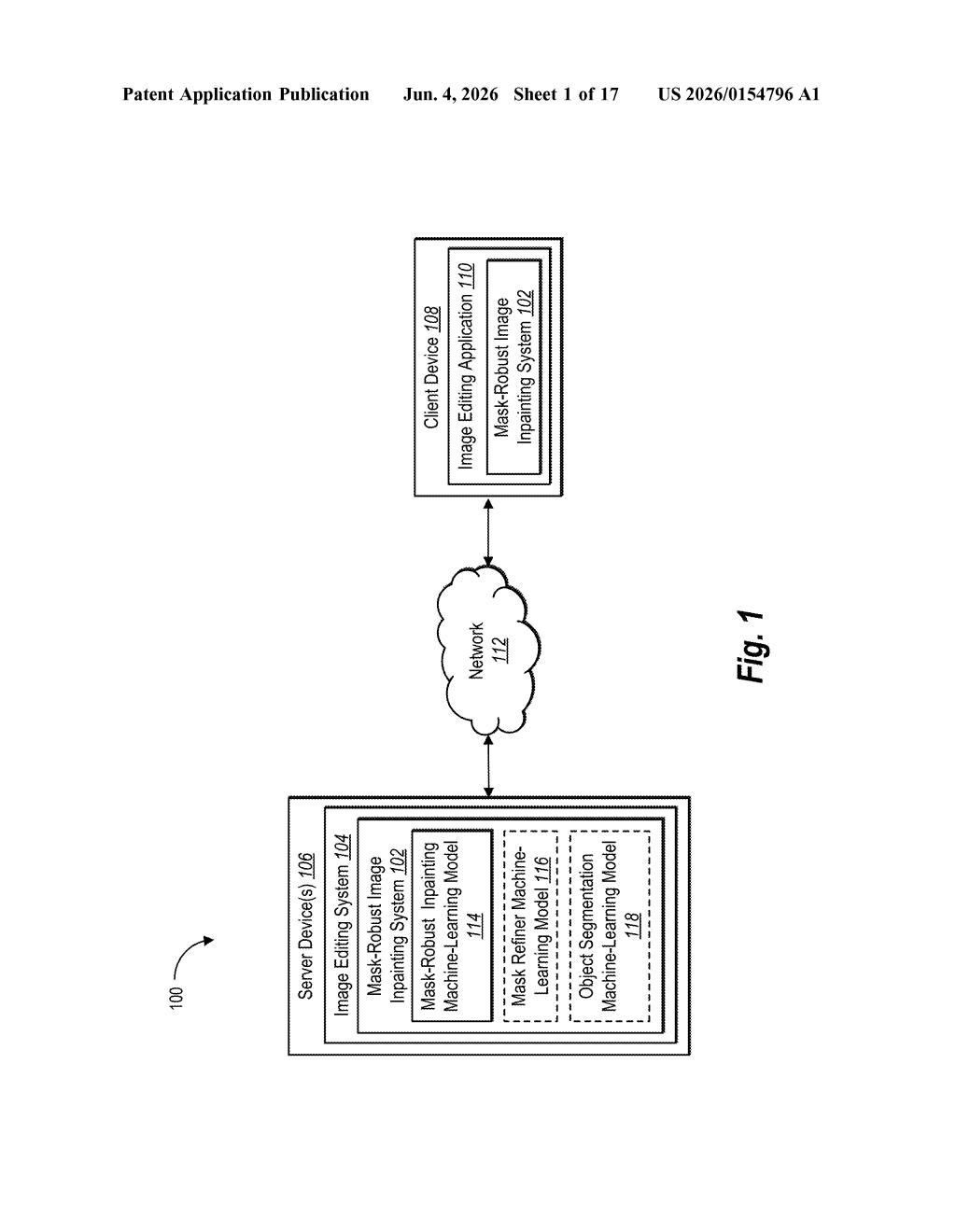
What Adobe's relaxed-mask inpainting actually does
Imagine you want to erase a person from a photo. You draw a rough outline around them, hit remove, and the AI fills in the background — but you're left with a fuzzy, slightly-off border where the selection met the original image. That edge artifact is one of the most common complaints with AI-powered object removal tools.
Adobe's patent describes a system that works around this by running the removal twice. First, it uses an AI model trained to be forgiving of imprecise masks to fill in the selected area. Then it expands the original selection slightly — creating a "relaxed mask" — and uses that wider boundary to blend the AI-generated fill back into the untouched parts of your photo.
The result is a composite where the seam between the AI-painted region and your original image is hidden inside a soft transition zone rather than sitting right at the edge of your shaky freehand selection. It's essentially a smarter way to hide the join.
How the mask expansion and compositing steps work
The system has four main steps:
- Initial mask acquisition — the system takes whatever selection the user drew (or that an upstream segmentation model generated) around the object to be removed.
- Mask-robust inpainting — a machine-learning model trained specifically to handle imprecise or noisy masks fills in the selected region, generating a fully inpainted version of the image.
- Relaxed mask generation — the original mask is expanded outward ("relaxed"), creating a slightly larger region that overlaps with the untouched background pixels.
- Compositing — the inpainted image and the original image are blended together using this relaxed mask as the mixing boundary, so the transition from AI-fill to real photo happens gradually across the expanded zone rather than at a hard edge.
The key insight is decoupling the inpainting step from the compositing step. The inpainting model doesn't need to produce a pixel-perfect edge; the relaxed-mask composite handles the visual seam separately. Training the inpainting model to be "mask-robust" — meaning it produces reasonable fills even when the mask is slightly wrong — means the fill under the relaxed zone is coherent enough to blend invisibly.
What this means for Firefly and everyday photo editing
Object removal is one of the most-used AI features in photo editing, and edge quality is the #1 reason results look fake. By separating the "fill the hole" problem from the "hide the seam" problem, Adobe's approach could make Generative Fill-style tools more reliable across the wide range of selection quality that real users produce — from careful pen-tool outlines to quick lasso scribbles.
For you as a user, this matters because it means less manual cleanup after a removal. The system is explicitly designed to be robust to the imprecise masks that come out of one-click or AI-generated selections, which is increasingly how people interact with these tools rather than hand-drawing precise outlines.
This is a focused, practical patent solving a real and widely-felt problem rather than a moonshot claim. The two-pass mask-relaxation idea is elegant in its simplicity and slots directly into Adobe's existing Generative Fill pipeline. It's worth paying attention to because it addresses the specific failure mode — the telltale halo — that makes AI object removal look amateurish.
Get our take in your Top Stories
Liked this breakdown? Add Patentlyze as a preferred source on Google, and our plain-English take shows up more often in your Top Stories the next time Adobe patent news breaks.
There are more where this came from
We read every patent application Big Tech publishes and send you the ones worth knowing. Plain English, free, every week.
Want this weekly breakdown for a company we don't cover? Patentlyze Pro →