
Adobe Patents a Drag-to-Transform Image Editing System
Adobe is patenting a way to let you drag part of an image — say, a person's arm or a car door — and have an AI model realistically redraw that object in its new position or shape. The trick is that it works from just a few sparse control points, not a full pixel-level mask.
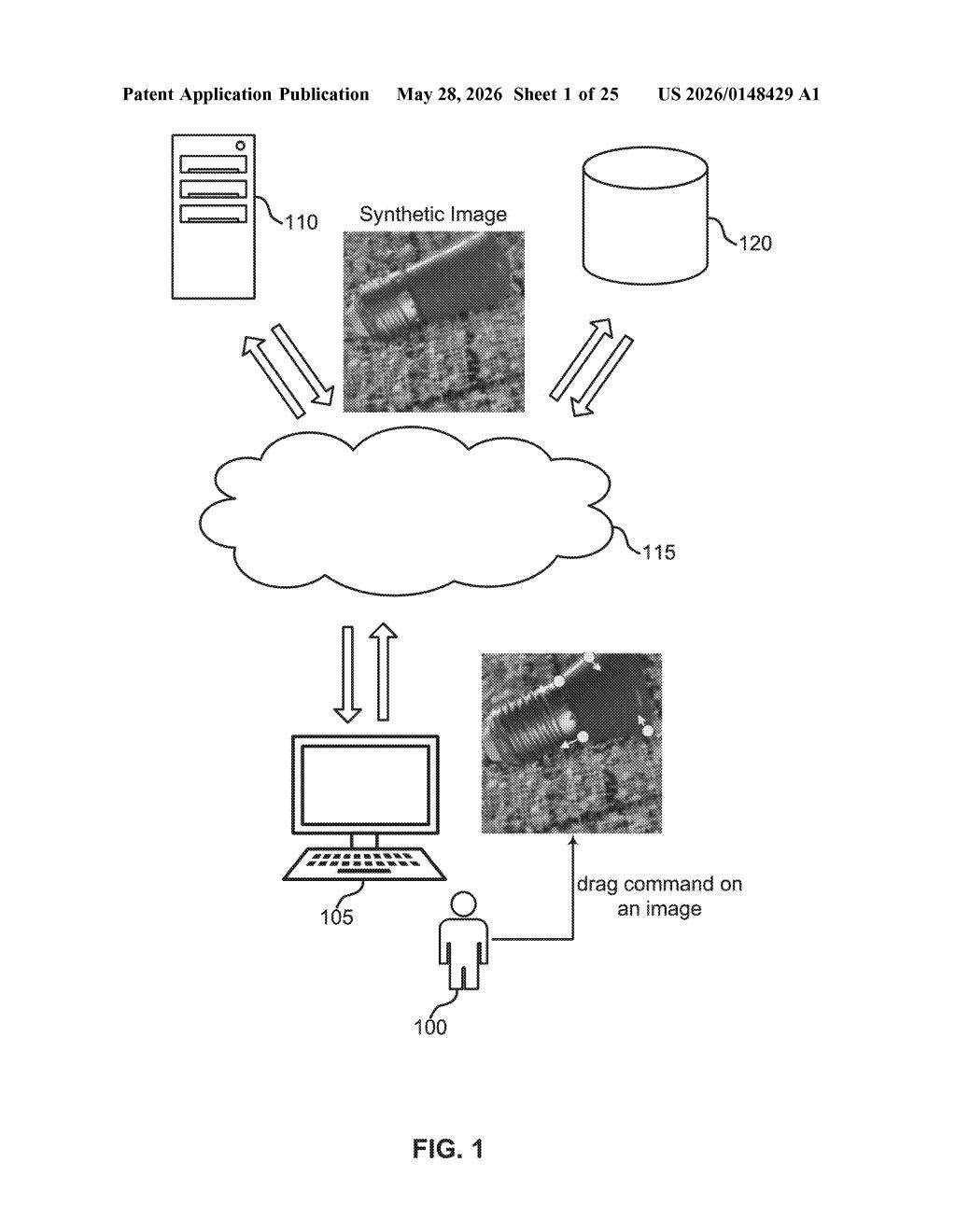
What Adobe's sparse-control image editing actually does
Imagine you're editing a photo and you want to stretch a model's pose slightly — maybe tilt their head or extend an arm. Today, doing that realistically requires careful masking, warping, and a lot of manual cleanup. Adobe's patent describes a much simpler interaction: you drag a point on the object, and the system figures out the rest.
Under the hood, the patent describes generating an internal feature map — a compact representation of what the object looks like — and then transforming that map based on your drag command. That transformed map is handed to an image generation model, which uses both the original image and the transformed map to produce a new, realistic version of the scene.
The key word in the patent title is "sparse" — your input doesn't need to be detailed. A single drag or a handful of control points is enough for the system to understand what you want changed, and it handles the visual complexity of making that change look natural.
How the feature map transforms a drag into pixel changes
The system takes two inputs: an input image (containing the object you want to modify) and a modification input (the sparse control signal — think a drag vector or a repositioned point). From there, it runs a three-stage pipeline:
- Feature map generation: The system encodes the object in the image into a feature map — a spatial representation that captures the object's structure without being tied to exact pixel values. This is similar in spirit to how diffusion models encode images into latent space.
- Feature map transformation: The modification input (your drag) is applied to that feature map, warping or shifting it to represent what the object should look like after the change. This is the "sparse control" step — the system infers the full transformation from minimal user input.
- Synthetic image generation: An image generation model (likely a diffusion model, based on Adobe's recent research trajectory) takes both the original image and the transformed feature map and produces a new, photorealistic output image that reflects the change.
The claim language is broad enough to cover a range of modification types — position changes, shape deformation, pose adjustment — as long as they can be encoded as a transformation of the feature map. The architecture separates what the object looks like from where and how it's positioned, which is what makes sparse input viable.
What this means for Photoshop's AI editing future
For Photoshop and Firefly users, this kind of patent points toward a future where object manipulation is as simple as grabbing and dragging — no masking, no clone stamping, no manual inpainting. Adobe has already shipped AI-powered "Generative Fill" features; a drag-based deformation system would be a natural next step that lowers the skill floor considerably.
More broadly, the patent reflects a real research trend: moving away from pixel-level editing instructions toward sparse, semantic control signals that AI models can interpret and complete. If Adobe can ship this reliably, it closes a significant gap between what professionals can do in hours and what a casual user can do in seconds.
This is a genuinely interesting filing from Adobe's research team — the "sparse control" framing is the right way to think about the next generation of AI-assisted editing, where users give hints and models do the heavy lifting. The pipeline they've outlined is technically coherent and aligns with current diffusion model research. Whether it ships as a polished Photoshop feature or stays in the lab is another question, but the underlying idea is worth tracking.
Get our take in your Top Stories
Liked this breakdown? Add Patentlyze as a preferred source on Google, and our plain-English take shows up more often in your Top Stories the next time Adobe patent news breaks.
There are more where this came from
We read every patent application Big Tech publishes and send you the ones worth knowing. Plain English, free, every week.
Want this weekly breakdown for a company we don't cover? Patentlyze Pro →