
Qualcomm Patents a System That Automatically Lowers GPU Work During Heavy Mobile Game Frames
Qualcomm is patenting a way for a phone's graphics driver to automatically detect when a game frame is about to be expensive to render — and quietly dial down the shading quality just enough to keep things smooth without asking the game developer to do anything.
What Qualcomm's auto-shading trick does for mobile games
Imagine your phone is running a mobile game and a big explosion or a crowd scene hits the screen. Suddenly the GPU is working overtime, the frame rate stutters, and your battery takes a hit. That's the kind of moment this patent is designed to handle automatically.
Qualcomm's idea is to have the graphics driver watch how a game draws its frames. When it spots that a particular draw call — essentially an instruction to render something on screen — is unusually heavy, it can step in and render that piece at a slightly lower quality. The difference is usually invisible to you, but the GPU does meaningfully less work.
The clever part is that this all happens without touching the game's code. The driver uses a set of rules (called a rule mask) tuned per-application to decide when to back off. It's the kind of behind-the-scenes optimization that could help Snapdragon-powered phones run games longer and cooler.
How the rule mask detects and throttles heavy draws
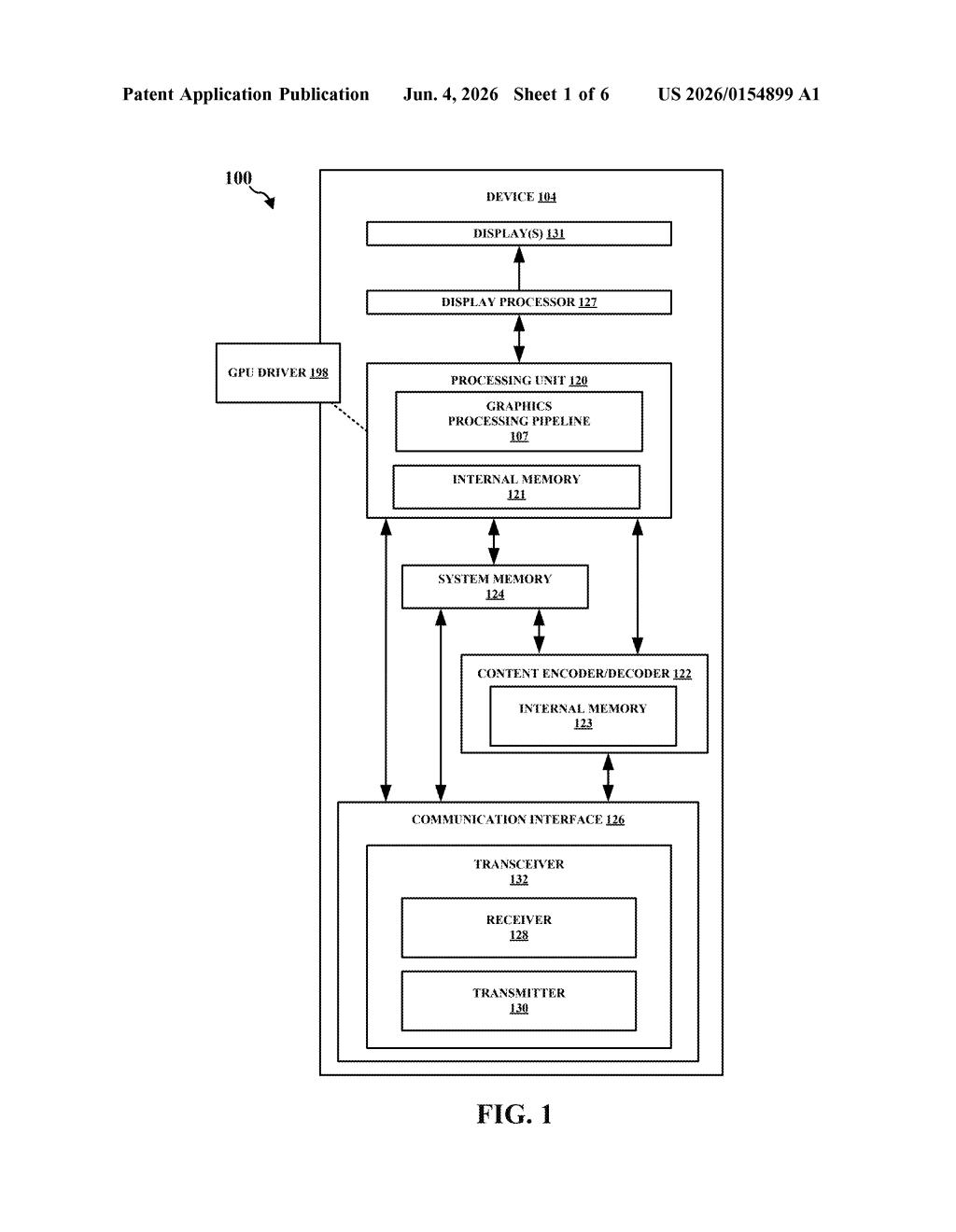
The system works at the GPU driver level, sitting between the CPU and the GPU. Here's the basic flow:
- The driver collects draw call information from the first frame of a gaming session — essentially a log of every render instruction the game issued and how expensive each one was.
- It maps that data to per-shader frame states, building a profile of which shaders (the mini-programs that calculate pixel colors and lighting) are doing the most work.
- Using a rule mask — a per-application set of heuristics (rule-of-thumb detection logic, not ML inference) — it predicts which draw calls in upcoming frames are likely to be heavy draws, meaning unusually GPU-intensive.
- For those predicted heavy draws, it tells the GPU to use a reduced shading rate (e.g., half-rate), meaning the GPU calculates full color only for every other pixel and interpolates the rest.
This technique is called Variable Rate Shading (VRS) — a standard GPU feature on modern hardware that lets you trade per-pixel precision for speed in areas where the eye won't notice the difference. Qualcomm's patent is specifically about automating when to apply it, using driver-level heuristics rather than requiring game developers to manually tag scenes.
What this means for mobile GPU efficiency and game performance
Mobile games are one of the biggest battery and thermal drains on any phone. Most VRS implementations today require the game developer to explicitly flag which parts of a scene can tolerate lower shading quality — which means the feature often goes unused. A driver-level heuristic that works transparently across games could bring real-world efficiency gains to a huge swath of titles without any developer effort.
For Qualcomm, this is also a competitive differentiator. If Snapdragon devices can run the same game with better frame pacing and lower heat than a competitor's chip — and do it automatically — that's a meaningful selling point for OEM partners and something you'd feel in your hand after a long gaming session.
This is a practical, unsexy optimization that could genuinely matter. Driver-level VRS automation is the kind of work that doesn't show up in spec sheets but does show up in real-world battery benchmarks and thermal performance. The fact that it's keyed to a per-app rule mask suggests Qualcomm has already done the legwork to tune it for specific game engines or titles — which is exactly the kind of vertical integration that makes Snapdragon competitive in mobile gaming.
There are more where this came from
We read every patent application Big Tech publishes and send you the ones worth knowing. Plain English, free, every week.
Want this weekly breakdown for a company we don't cover? Patentlyze Pro →