
Qualcomm Patents a Way to Locate Passive Backscatter Tags Using Round-Trip Timing
Qualcomm is working on a way to precisely locate tiny, battery-free radio tags — the kind you'd stick on a pallet or a hospital asset — using the same round-trip timing tricks that GPS-alternative positioning systems use today.
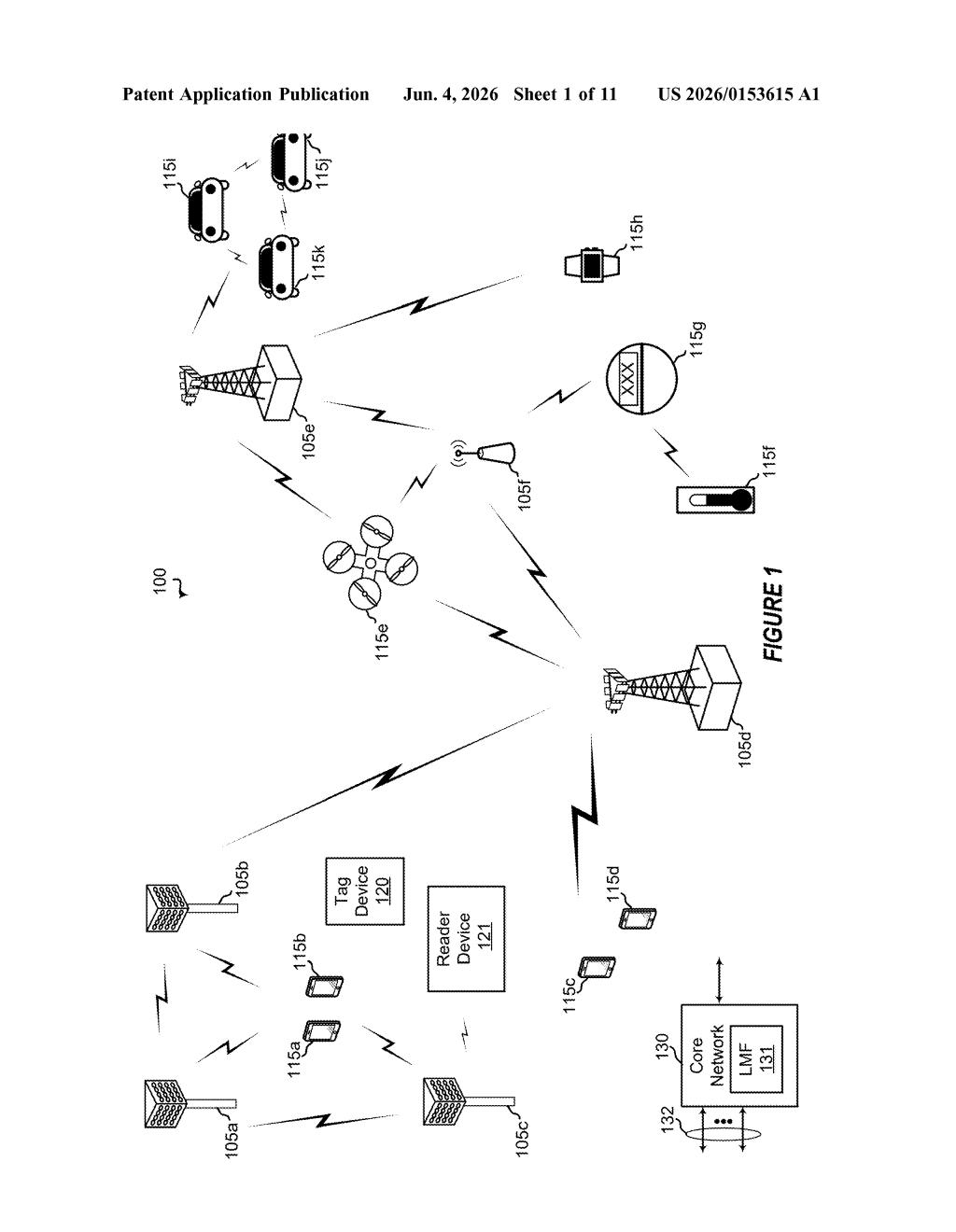
How Qualcomm wants to pinpoint cheap passive tags
Imagine sticking cheap, battery-free stickers on every item in a warehouse and being able to pinpoint each one in real time. That's the dream behind backscatter tags — tiny devices that don't broadcast on their own but instead reflect a radio signal sent by a reader, like a radar echo. The problem is that precisely locating them has been tricky.
Qualcomm's patent describes a system where a reader sends out a positioning reference signal (a known radio pulse used as a timing ruler), and each nearby tag bounces it back in a slightly different way — using its own assigned preamble or timing window so the reader can tell them apart. By measuring exactly how long the signal took to travel out and come back (the round-trip time), the system can calculate distance.
Do that with a few tags at known or estimated positions, and you can map out where things are without any battery in the tag itself. It's the kind of tech that could make item-level tracking in logistics, retail, or healthcare a lot more practical — and a lot cheaper.
How PRS signals and RTT math locate each tag
The patent describes a three-actor system: a base station or reader (likely a phone or network node), multiple tag devices (passive backscatter hardware), and optionally a location server that crunches the position math.
The reader first sends a tag configuration message that hands each tag its unique identity for the upcoming measurement round. That identity is encoded as a combination of a preamble sequence (a short intro pattern), a training sequence (a known bit pattern used to calibrate the channel), and a backscatter timeframe window (the specific time slot in which that tag is allowed to reflect). This is essentially a coordination layer so multiple tags don't collide when they all echo the same incoming signal.
The reader then broadcasts a Positioning Reference Signal (PRS) — a carefully designed waveform (borrowed from LTE/NR cellular positioning standards) whose timing is precisely known. Each tag reflects it back using its assigned configuration. The reader timestamps the return and computes a Round Trip Time (RTT) — the elapsed time from transmission to reception — for each tag individually.
- RTT ÷ 2 × speed of light gives a distance estimate for each tag
- Multiple RTT readings from different vantage points (or multiple readers) can triangulate a 2D or 3D position
- The tag itself needs zero battery — all computation happens at the reader side
What this means for warehouse and IoT tracking
Backscatter positioning isn't new as a research concept, but standardizing how tags are configured and how RTT is reported brings it into the same framework as 5G NR positioning — which means it could eventually be part of a 3GPP standard that chipmakers, phone OEMs, and infrastructure vendors all implement together. That's the part Qualcomm is quietly staking out here.
For you as a consumer, the near-term impact is probably invisible — this is infrastructure-layer work aimed at logistics, retail inventory, and smart building applications. But if this approach gets standardized, it could dramatically lower the cost of room-scale asset tracking compared to today's active BLE or UWB tag solutions, since the tags themselves would need no power source at all.
This is a solid, narrowly scoped patent that does one specific thing well: it maps an established cellular-positioning framework (PRS + RTT) onto the battery-free backscatter world. That's genuinely useful engineering, not just paper-filing. The real value isn't in the idea itself — researchers have chased backscatter positioning for years — it's in Qualcomm's ability to push this into 3GPP standardization and get it baked into future chipsets.
There are more where this came from
We read every patent application Big Tech publishes and send you the ones worth knowing. Plain English, free, every week.
Want this weekly breakdown for a company we don't cover? Patentlyze Pro →