
Qualcomm Patents a Way to Boost Indoor Positioning by Stitching RF Snapshots Together
GPS doesn't work well inside buildings, but your phone's radio is constantly picking up signals that are subtly shaped by the environment around you. Qualcomm wants to turn those subtle shapes into a precise location fix — by taking multiple radio snapshots across different frequency slices and combining them into one cleaner picture.
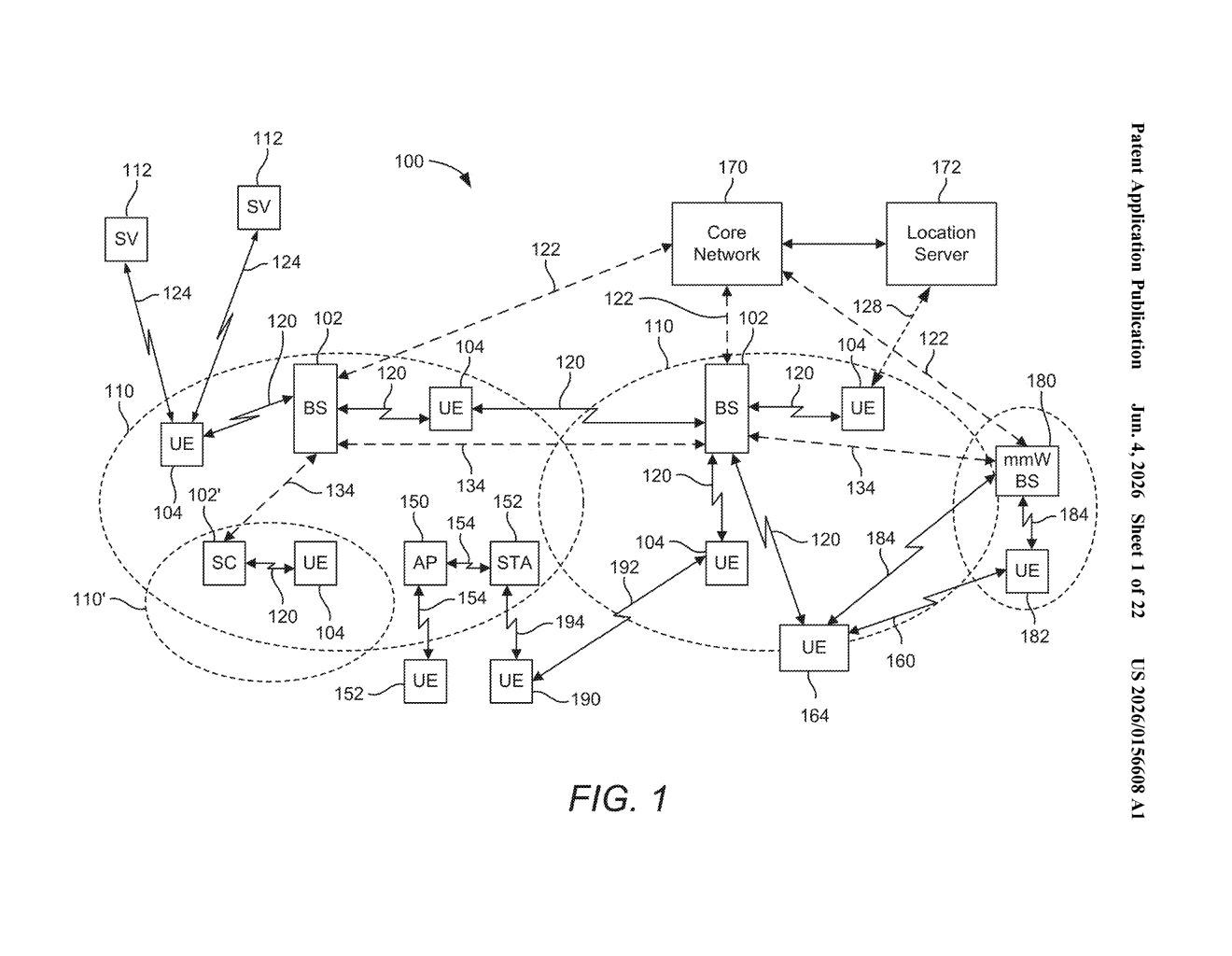
What Qualcomm's RF fingerprint location trick actually does
Imagine you're trying to recognize a song, but you only ever hear one short clip at a time. Now imagine you collect a dozen different clips and stitch them together — suddenly the song is unmistakable. That's roughly what this patent does for indoor positioning.
Your phone is constantly receiving reference signals from nearby cell towers and base stations. Each signal carries a kind of radio fingerprint — a pattern shaped by walls, furniture, and the geometry of your environment. Qualcomm's idea is to measure that fingerprint across several different frequency slices (bandwidth segments), one after another, then aggregate all those measurements into a single richer fingerprint before feeding it to a location model.
The result is a more confident location estimate, even without GPS. This matters most in places where GPS is unreliable: dense urban canyons, shopping malls, warehouses, and hospital corridors — anywhere you'd actually want precise indoor navigation.
How the UE collects and merges bandwidth segment measurements
The patent describes a method where a user equipment (UE) — meaning your phone or any 5G device — takes location measurements during what the spec calls a positioning session.
Instead of measuring one wide chunk of spectrum at once (which hardware limitations often prevent), the UE measures multiple bandwidth segments of a reference signal (RS) across separate time windows called RS occasions. Each measurement captures the radio fingerprint of that frequency slice — how the signal looks after bouncing around the physical environment.
Those individual RFFP (Radio Frequency Fingerprint Positioning) measurements are then aggregated into one combined measurement set. The aggregation step is key: it pools information across frequency bands that couldn't be observed simultaneously, effectively synthesizing a wider-bandwidth fingerprint than the hardware could capture in a single shot.
Finally, a positioning model — likely a trained neural network or lookup-based ML system — takes that aggregated fingerprint and outputs location parameters: think coordinates, floor level, or proximity estimates. The claim is broad enough to cover both on-device inference and server-side positioning servers.
What this means for GPS-free indoor and urban positioning
RF fingerprinting has been a research favorite for years, but its accuracy degrades when you can only observe a narrow slice of spectrum at once. By aggregating across bandwidth segments over time, Qualcomm's approach extracts more environmental detail from the same hardware — potentially closing the gap between fingerprinting and more expensive techniques like time-of-arrival or angle-of-arrival positioning.
For you as a user, this could mean more reliable turn-by-turn directions inside airports or hospitals, better asset tracking in industrial settings, and emergency 911 location fixes that actually work indoors. For the industry, it's a signal that Qualcomm is positioning its modem silicon as the compute substrate for next-generation 5G-based indoor location — a market that GPS simply can't serve.
This is a solid, pragmatic engineering patent rather than a flashy AI story. The core insight — synthesize a wide-band fingerprint from narrow-band slices taken over time — is the kind of practical constraint-busting that actually ships in modem firmware. Qualcomm controls a huge share of 5G modem silicon, so even an incremental improvement to RFFP accuracy here could affect hundreds of millions of devices.
There are more where this came from
We read every patent application Big Tech publishes and send you the ones worth knowing. Plain English, free, every week.
Want this weekly breakdown for a company we don't cover? Patentlyze Pro →