
Dynamic RF Power Cuts Trigger When Body Proximity Is Detected
Your iPhone already lowers its radio power when it thinks your body is nearby — Apple's new patent makes that system far more statistically rigorous, squeezing out extra performance while staying within regulatory RF exposure limits.
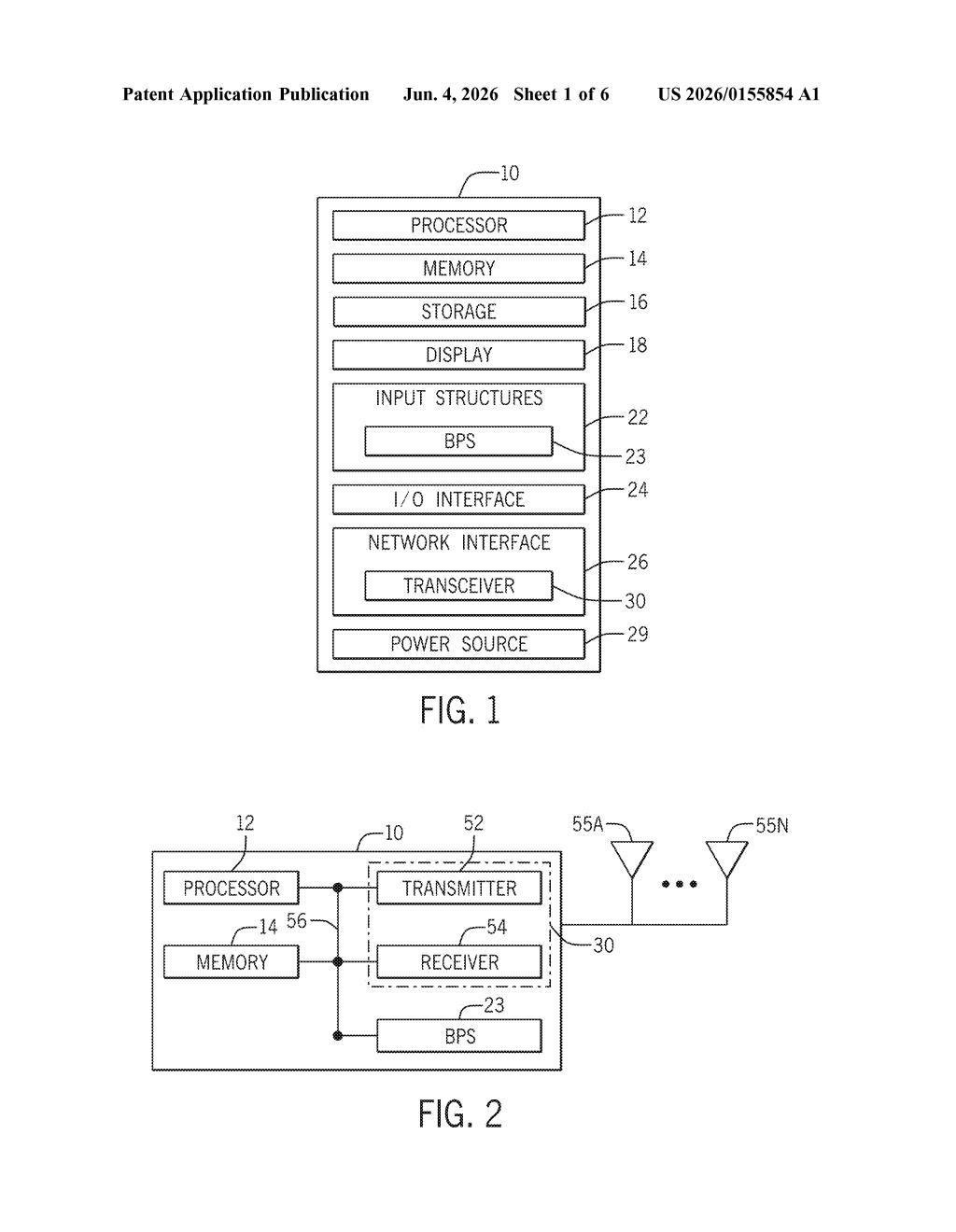
What Apple's body-proximity transmit power system actually does
Imagine your phone is sitting on a table across the room versus pressed against your ear or tucked into your shirt pocket. The amount of radio energy that reaches your body is completely different in those two situations. Regulators set strict limits on how much RF energy a device can expose you to on average — so phone makers have to be conservative.
What Apple is patenting here is a way to be smarter about that conservatism. Instead of always assuming the worst case (your body is always right there), the system uses a proximity sensor to detect whether you're actually nearby. When you're not, it can safely bump up the transmit power — which means better signal strength and faster data speeds.
The clever part is how it handles uncertainty. Proximity sensors aren't perfect: they sometimes miss your body (missed detections) or falsely report your presence when you're not there (false alarms). Apple's system mathematically accounts for both error types to ensure the long-term average RF exposure never exceeds the legal limit, no matter how the sensor misbehaves.
How the sensor's false-alarm rate shapes the power calculation
The patent describes a two-level power scheme. The device has a first (lower) transmission power level used when the body proximity sensor detects you nearby, and a second (higher) power level used when no body is detected. The key constraint is that the time-averaged power across both states must stay within the RF exposure limit set by regulators (like the FCC's SAR rules).
The interesting engineering is in how Apple accounts for sensor imperfection. Two statistical properties of the proximity sensor feed into the calculation:
- Probability of detection (Pd): how often the sensor correctly flags that your body is present
- False alarm rate (Pfa): how often the sensor incorrectly says your body is present when it isn't
From those two numbers, the system derives a transmission power gain — essentially, how much extra headroom it can safely claim on the high-power level. A more reliable sensor (high Pd, low Pfa) earns a bigger power bonus. A flaky sensor earns less.
The patent also describes storing multiple pre-computed pairs of first/second power levels and selecting among them based on which pair delivers the best gain for the sensor's current performance characteristics. This makes the lookup fast at runtime rather than recalculating everything on the fly.
What this means for 5G performance and RF exposure limits
RF exposure compliance is a ceiling that every cellular device lives under, and historically the safest engineering move has been to assume the body is always present and cap power accordingly. That leaves performance on the table whenever the device is actually far from the user — which is most of the time for a phone sitting on a desk.
By formally modeling sensor error rates into the power budget, Apple can reclaim that headroom in a way that's mathematically defensible to regulators. For you as a user, that could translate to better 5G uplink performance, more consistent call quality in fringe coverage areas, or longer battery life (since the radio reaches its target with less wasted power). It's the kind of under-the-hood optimization that never shows up in a spec sheet but accumulates into real-world improvements.
This is genuinely solid radio engineering — not a flashy AI feature, but the kind of careful probabilistic work that separates premium hardware from the pack. The false-alarm-aware power budget is a real contribution: it closes a loophole where a poorly-tuned proximity sensor could quietly let a device exceed its intended exposure limits at higher power settings. Worth paying attention to if you follow cellular baseband tech.
There are more where this came from
We read every patent application Big Tech publishes and send you the ones worth knowing. Plain English, free, every week.
Want this weekly breakdown for a company we don't cover? Patentlyze Pro →