Latest AI simulation patents, Page 12
World models and digital twins: AI that predicts physics, builds 3D scenes, and rehearses reality before acting in it. Early, strange, and worth tracking.
- in the Nov 19 release
- 7
- in November so far
- 17
- filings tracked
- 193
- last 90 days
- 75
Recent filings
Newest first · 193 total-
Nvidia · Published Jun 25
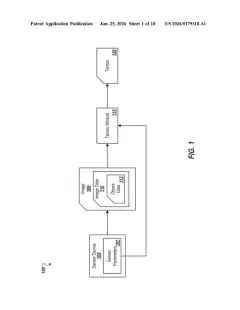
Nvidia Patents Software That Builds 3D Shapes From Flat Photos
Nvidia is patenting a system that lets a neural network look at ordinary flat images and reconstruct the three-dimensional shape of objects in them, a capability that sits at the core of robotics, autonomous vehicles, and spatial computing.
-
Nvidia · Published Jun 25
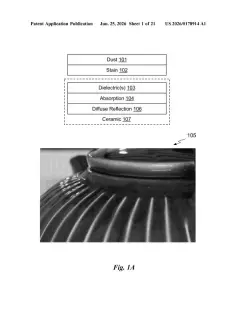
Nvidia Patents a Way to Train One AI Network Across Groups of Similar 3D Materials
Rendering realistic surfaces in 3D scenes, from scratched metal to wet concrete, is computationally expensive. Nvidia's new patent describes a way to teach one compact AI network to handle many materials at once by grouping similar ones together before training.
-
Samsung · Published Jun 25
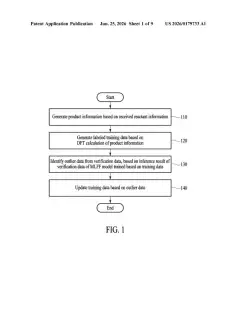
Samsung Patents a Self-Correcting AI for Simulating How Atoms Interact
Training an AI to predict how atoms and molecules behave is expensive, slow, and error-prone. Samsung's new patent describes a system that finds its own mistakes and fixes the training data automatically.
-
IBM · Published Jun 25
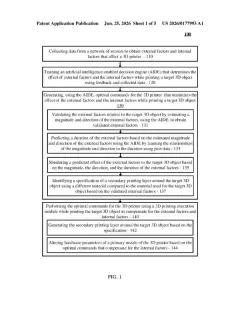
IBM Patents an AI System That Keeps 3D Printers on Track Mid-Print
A 3D print job can fail because the room got too warm, the filament shifted, or a vibration knocked something slightly off. IBM's new patent describes an AI engine that watches for all of that and corrects the printer before the damage shows up in the finished part.
-
Nvidia · Published Jun 25
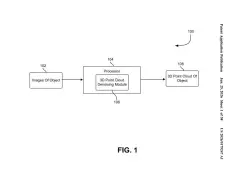
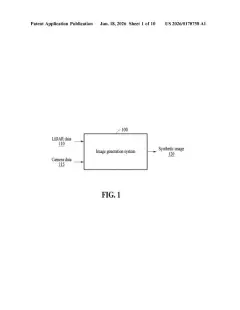
Nvidia Patents a System That Builds 3D Maps of Objects From Flat Sensor Readings
Most cameras only see the world in flat, 2D images. Nvidia's new patent describes a way for a machine to figure out where an object sits in full 3D space, without needing expensive extra sensors to do it.
-
Nvidia · Published Jun 18
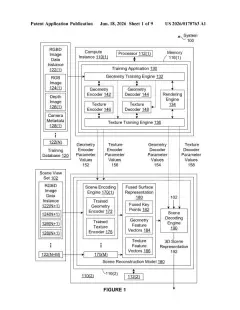
Nvidia Patents an AI That Rebuilds 3D Scenes From Flat Photos
Nvidia is teaching an AI to look at a flat photo — the kind you take with any camera — and reconstruct the full three-dimensional scene it came from. That's a problem that sounds simple but has stumped computer vision researchers for decades.
-
Nvidia · Published Jun 18
Nvidia Patents Software That Turns Still Images Into Smooth, Consistent Video
Nvidia is patenting a way to generate video that stays visually consistent frame-to-frame — by training neural networks on 3D point clouds, a kind of depth-mapped snapshot of a scene.
-
Disney · Published Jun 18
Disney Patents an AI That Stands In for Slow Resort Planning Simulations
Running a full simulation every time you want to test a scenario is expensive and slow. Disney's new patent describes a way to train an AI to produce the same answers much faster — by teaching it to mimic the simulation itself.
-
Samsung · Published Jun 18
Samsung's New Patent Teaches AI to Place Objects Into Photos at the Right Depth and Angle
Samsung is working on an AI image-generation system that doesn't just paste objects into photos — it uses 3D spatial data to make sure the object fits the scene the way a real camera would have captured it.
-
Nvidia · Published Jun 11
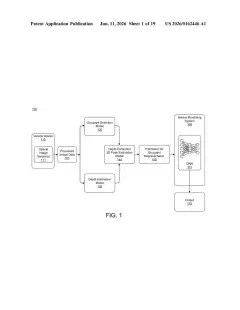
Nvidia Patents an AI That Maps Your Body's Position Inside a Moving Car
Nvidia is patenting a system that uses a single camera and AI to figure out exactly where your body is in three-dimensional space inside a vehicle — and even estimate how big you are — all in real time.
-
Nvidia · Published Jun 11
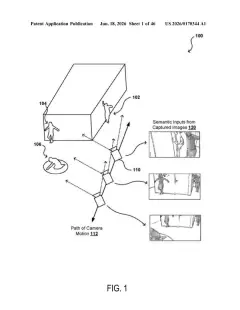
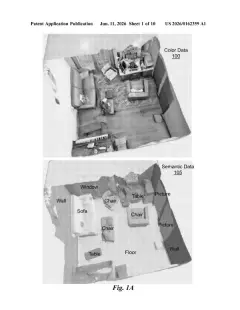
Nvidia Patents Technology That Rebuilds Real Locations in Three Dimensions from Phone Footage
What if your phone's camera — just one lens, no depth sensor — could reconstruct a full 3D model of everything it filmed? That's essentially what Nvidia is filing a patent to do.
-
Nvidia · Published Jun 11
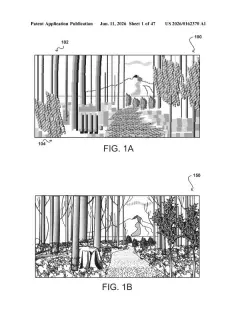
Nvidia Patents a Neural Network System for Rendering 3D Virtual World Images
Nvidia has patented a method for using neural networks to synthesize images directly from three-dimensional virtual environments — a technique that could reshape how AI generates realistic scenes for games, simulations, and training data.