Latest AI simulation patents, Page 13
World models and digital twins: AI that predicts physics, builds 3D scenes, and rehearses reality before acting in it. Early, strange, and worth tracking.
- in the Nov 19 release
- 7
- in November so far
- 17
- filings tracked
- 193
- last 90 days
- 75
Recent filings
Newest first · 193 total-
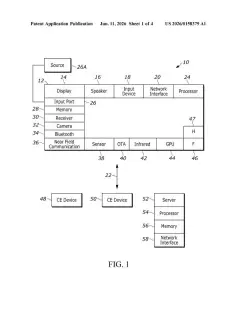
Sony · Published Jun 11
Sony Patents an AI That Tells Game Developers Which Parts of Their Game Are Boring
Imagine a game developer being able to pinpoint the exact chapter where players quit — not by guessing, but because an AI read through millions of play sessions and handed them a report card. That's what Sony is filing a patent for.
-
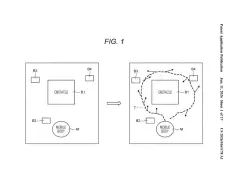
Sony · Published Jun 11
Sony Patents a Robot Navigation System That Imagines What's Around the Corner
Before taking a step, Sony's patented system has a robot mentally simulate what it would see if it shifted its position or tilted its sensors — and then use that imagined view to plan a smarter route.
-
Disney · Published Jun 11
Disney Patents an AI That Maps Key Points on Faces in 3D
Disney has patented a facial tracking technique that quietly sneaks a 3D model of a face into what's otherwise a flat-image recognition task — and that geometry is what makes the system train itself better.
-
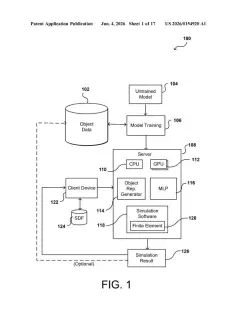
Nvidia · Published Jun 4
Nvidia Patents a Way to Teach AI How Soft and Flexible Objects Bend Under Pressure
Getting a computer to realistically simulate a squishy, stretchy, or bendable object is genuinely hard — and making that simulation fast enough to train AI on is even harder. Nvidia's new patent takes a neural network shortcut to solve both problems at once.
-
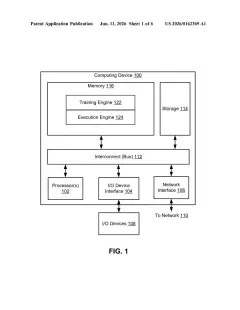
Microsoft · Published Jun 4
Microsoft Patents an AI Image Tool That Checks a Library Before Drawing Anything New
Running an AI image generator for every single request is expensive and energy-hungry — even when the image you need is something totally generic, like a stock cloud icon or a placeholder avatar. Microsoft's new patent proposes a much more frugal approach: check a pre-built library first, and only fire up the AI model if nothing there is good enough.
-
Google · Published Jun 4
Google Patents an AI That Builds a 3D Model of Your Specific Object From a Few Photos
Give Google's system a handful of photos of your coffee mug and a text prompt, and it will generate a full 3D model of that specific mug — not a generic one. That's the core promise of this patent.
-
Google · Published Jun 4
Google's New Patent Teaches AI to Find Drug Candidates Faster
Finding a drug that sticks to the right biological target is a needle-in-a-haystack problem — Google is filing patents on ways to teach AI to read the haystack faster.
-
Google · Published Jun 4
Google Patents an AI That Reconstructs 3D Objects From One Photo — and Admits When It's Guessing
Figuring out what a 3D object looks like from a single flat photo is genuinely hard — and most AI systems that try it won't tell you when they're guessing. Google's new patent tackles both problems at once.
-
Adobe · Published May 28
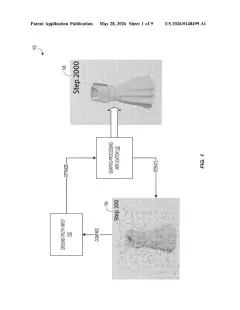
Adobe's New Patent Wants to Let AI Sculpt 3D Objects the Way It Generates Images
Adobe is patenting a way to make 3D mesh construction compatible with machine learning training loops — a longstanding headache in computer graphics that has blocked AI from directly sculpting geometry the same way it learns to generate images.
-
Adobe · Published May 28
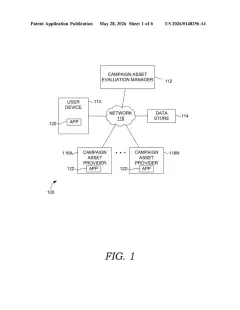
Adobe's New Patent Lets AI Pretend to Be Your Audience Before an Ad Goes Live
Before an ad campaign ever reaches a real audience, Adobe wants generative AI to simulate how that audience would likely respond — using persona representations as a kind of digital stand-in for real people.
-
Nvidia · Published Jun 4
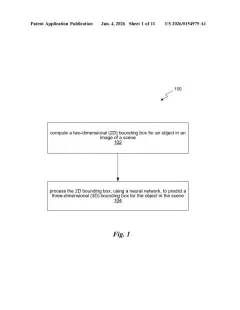
Nvidia Patents a Way to Spot 3D Objects Way Beyond Lidar's Reach
Lidar — the laser-based ranging tech that gives self-driving cars their 3D vision — has a hard distance limit. Nvidia thinks it can blow past that ceiling using nothing but a regular camera and a clever neural network.
-
Qualcomm · Published Jun 4
Qualcomm Patents a Way to Track 3D Objects Using Only 2D Camera Feeds
Most autonomous vehicle systems do heavy geometric lifting to convert camera images into a 3D "bird's-eye view" of the world — Qualcomm's new patent tries to skip that step entirely, going from flat 2D video straight to 3D object positions.