Latest AI training & infrastructure patents, Page 3
The unglamorous machinery underneath: training methods, inference speedups, model compression, and the scheduling tricks that make AI affordable to run.
- in the Nov 19 release
- 8
- in November so far
- 22
- filings tracked
- 324
- last 90 days
- 123
Recent filings
Newest first · 324 total-
Adobe · Published Oct 29
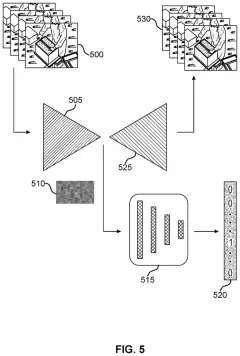
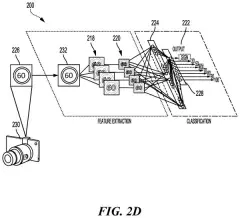
Adobe Files Patent for Training AI to Spot Actions in Compressed Video
Hours of store camera footage are expensive to send anywhere. Adobe's filing describes teaching an AI to figure out what people are doing from a shrunken copy of the video, so only a short label needs to travel.
-
Sony · Published Oct 29
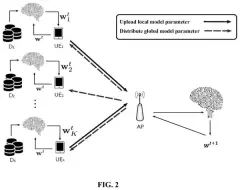
Sony Files Patent to Keep Shared AI Training From Hearing the Same Lesson Twice
When thousands of devices help train one AI over a crowded wireless network, most of what they send is repeat information. Sony's filing picks the devices whose data differs most, so each upload adds something new.
-
IBM · Published Oct 29
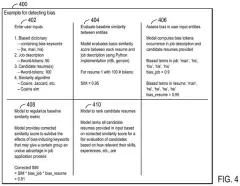
IBM Files Patent to Dock Points From Resume Scores That Lean on Gendered Words
IBM describes a way to dock a resume's match score when it and the job posting lean on the same gendered words, like 'he' and 'man.' It uses a simple word list and a bit of arithmetic, with no retraining of the AI.
-
Intel · Published Oct 29
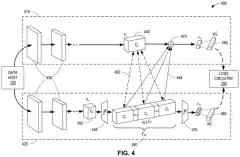
Intel Files Patent to Train Big and Small AI Models Together on One Device
Small AI models that run on your phone usually learn from a giant model that had to be trained first on expensive hardware. Intel's patent application describes training both at the same time, right on the small device.
-
Qualcomm · Published Oct 29
Qualcomm Files Patent to Adapt Finished AI Models to Different Chips Without Retraining
An AI model trained in one number format can choke on a chip that expects another, because some of its values get too big to store. Qualcomm's new patent application shrinks each layer's numbers by a custom amount so the model fits, with no new training run.
-
Google · Published Oct 29
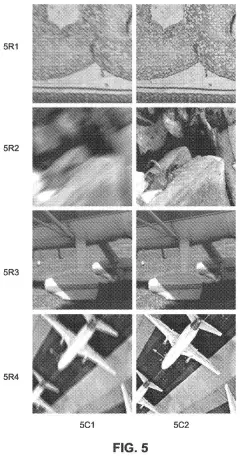
Google Files Patent to Fix Blurry, Grainy Photos by Training AI on Fake Flaws
Google's filing trains one compact photo-fixing model by having several specialist models teach it, each an expert in a different flaw like hand-shake blur, grain, or compression damage.
-
Adobe · Published Oct 22
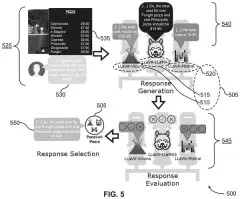
Adobe Files Patent to Have AI Models Grade Each Other's Answers
Adobe's filing has several AI models answer the same question about a photo, then grade one another's work and learn from the winners.
-
Google · Published Oct 22
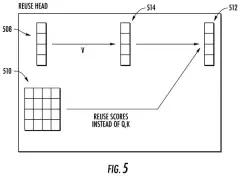
Google Files Patent to Let AI Models Reuse Work They Already Did
AI models spend a lot of effort re-deriving answers they already worked out one step earlier. Google's patent application lets them copy the old answer instead.
-
Google · Published Oct 22
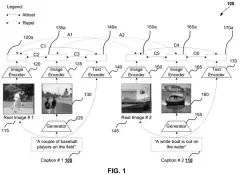
Google Files Patent for Training AI Image Makers to Match Your Words
Ask an AI for "a white boat out on the water" and you want a boat, not a vaguely nautical blur. Google's filing describes a training method that rewards the model for matching pictures to captions and punishes it for mismatches.
-
Sony · Published Oct 22
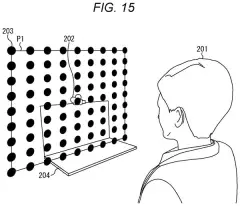
Sony Files Patent to Train Eye-Tracking AI on Computer-Generated Faces
Sony wants to teach software where you are looking by showing it thousands of computer-generated people instead of real ones. The filing describes a virtual studio that tilts faces, moves a camera and rejects bad pictures automatically.
-
Microsoft · Published Oct 22
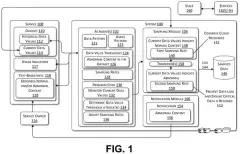
Microsoft Files Patent to Cut Cloud Record-Keeping Until Something Goes Wrong
Most of what a cloud service records is never looked at again. Microsoft's patent application has AI decide, moment by moment, how much to keep.
-
Qualcomm · Published Oct 22
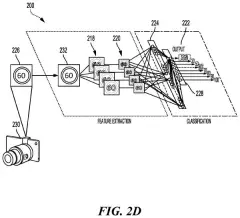
Qualcomm Files Patent to Speed Up Calculations That Power Camera AI Features
Qualcomm has a trick for a slow piece of camera AI: instead of adding numbers one after another, it rewrites the job as a single multiplication that chips already do very fast.