
Microsoft Files Patent to Cut Cloud Record-Keeping Until Something Goes Wrong
Most of what a cloud service records is never looked at again. Microsoft's patent application has AI decide, moment by moment, how much to keep.
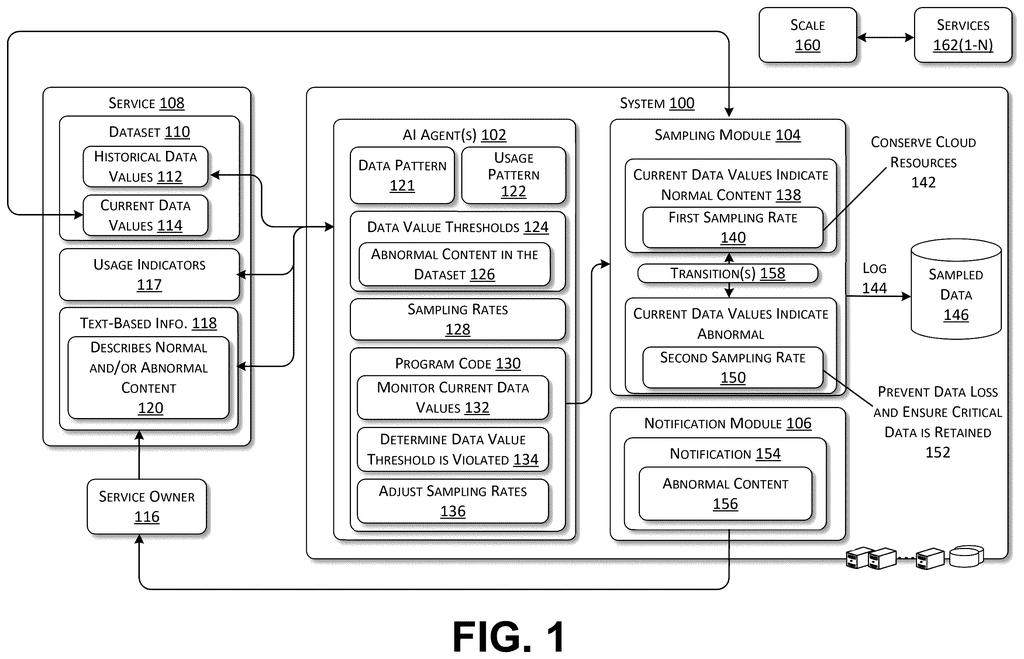
How Microsoft's patent decides what to record
A shopping app handles thousands of checkouts every minute, and almost every one goes fine. Yet the company running it often saves a record of a big slice of them anyway, just in case. All that storing costs real computing power.
Microsoft's patent application describes a pickier approach. While things look healthy, the system keeps only a small sample of records, and in some versions none at all. The moment the numbers drift outside a healthy range, such as pages loading too slowly, it ramps up and can save every record.
The twist is who sets it up. The team running the app writes plain-English notes, like "if a page takes over two seconds to respond, customers usually close the app," and AI writes the code that does the watching. You never see any of this, but it sits behind the apps you use every day.
… if the data to be logged indicates that the service is operating normally, then the sampling rate is adjusted lower as the logged data has limited purpose provided the service is likely not experiencing an issue.
Translation: When things run smoothly, the system records less data to save space.
How AI agents write the monitoring code
The system starts with two inputs: a history of numbers the service has produced (response times, failed payments, total requests) and plain-text notes from the team that runs it, describing what normal and abnormal look like. Both go to a set of AI agents, which the filing describes as separate roles.
- One agent interprets the owner's notes, such as "we want less than ten abandoned carts each hour."
- One studies the history, and how the team uses its data, to learn typical patterns.
- One sets thresholds (the lines between healthy and unhealthy numbers) and writes the program code that enforces them.
That code watches live numbers. While everything stays inside the thresholds, it keeps only a small share of records, for example 1%, 5% or 10%, and in some versions none. When a number crosses a line, it jumps to a higher share, anywhere from 15% up to 100%. The kept records go into a sampling cache (a holding area) that the tools used to diagnose and fix problems can read.
Thresholds can shift with the calendar: 9:00 a.m. on a Tuesday is compared with the same slot on earlier Tuesdays, so a normal rush does not set off alarms. The owner can review the generated code, edit the notes, and have it rewritten.
Why this matters for cloud bills and outages
For you, the effect would be indirect. The apps and websites you use run on cloud servers, and every record those servers store costs money and computing power. Recording less when things are healthy could trim that bill, while recording more at the first sign of trouble gives engineers better evidence to fix an outage faster. The filing also says the extra detail could help cut false alarms.
For Microsoft, the appeal is scale. Customers describe their needs in plain words and AI writes the code, so one setup could cover a huge number of services. The application is still early: the examiner's first review rejected the claims as filed, which is routine and usually followed by amendments.
Microsoft's 27th filing we've tracked in AI training and infrastructure since May follows earlier applications on cheaper math for AI parts and compressing AI math tables.
Storing a record of everything a cloud service does costs real money, and that bill arrives every month whether the data matters or not. Most providers respond by picking one fixed storage rate and applying it to everyone, which means paying full price for logs that describe nothing more than a quiet afternoon.
The approach here ties storage costs directly to whether something is actually going wrong. Capture less when the service looks healthy, capture more when it does not.
The honest risk is that the rules deciding what counts as "going wrong" could be wrong themselves, and missing that moment is precisely when the records matter most. The filing builds in a step where the people running the service can read and correct those rules before they go live, which is the right place to put that responsibility.
Get our take in your Top Stories
Liked this breakdown? Add Patentlyze as a preferred source on Google, and our plain-English take shows up more often in your Top Stories the next time Microsoft patent news breaks.
There are more where this came from
We read every patent application Big Tech publishes and send you the ones worth knowing. Plain English, free, every week.
The drawings
8 drawing sheets from US 2026/0329679 A1 · click any drawing to enlarge


Want this weekly breakdown for a company we don't cover? Patentlyze Pro →
Be the first to weigh in