Latest AR & VR patents
Headsets, smart glasses, and the displays, eye tracking and sensors that make them work, from Apple, Meta, Samsung, Sony and more. The augmented reality and virtual reality patent applications we have broken down from the companies we track, newest first.
- in the Nov 12 release
- 25
- in November so far
- 47
- filings tracked
- 690
- last 90 days
- 358
Recent filings
Newest first · 690 total-
Google · Published Apr 30
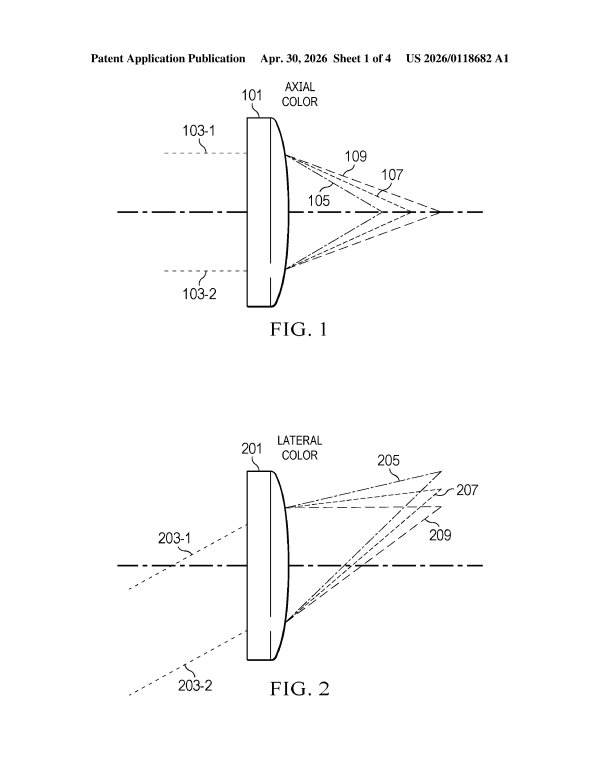
Google Patents a Color-Correcting Lens System for AR Waveguide Displays
Color fringing — that annoying rainbow halo you sometimes see on AR headset text — is a fundamental physics problem with waveguide displays. Google thinks a precisely placed corrective lens can solve it before the light even enters the waveguide.
-
Meta · Published Apr 30
Meta Patents an XR Headset That Self-Tunes to Cell Network Congestion
Your XR headset knows the cell tower is struggling — and it quietly adjusts what it renders before you even notice a glitch. That's the core idea behind Meta's latest patent.
-
Microsoft · Published Apr 30
Microsoft Patents a Shadow-Map GPU Trick to Fix VR Reprojection Glitches
When your VR headset redraws a frame a few milliseconds late, the seams show — ghosting, warping, visual tearing. Microsoft's new patent describes a clever GPU trick that exploits shadow-map rendering mode to fix those glitches without adding dedicated hardware.
-
Google · Published Apr 30
AR Headset Sensors Auto-Calibrate While Charging
Your AR headset's motion sensors drift over time — and most devices never fix that. Google's new patent describes a system that quietly recalibrates everything while the headset sits on its charger.
-
Meta · Published Apr 30
Meta Patents a System That Scans Real Clothes Into Virtual Avatars
Meta has filed a patent for a pipeline that takes a 3D scan of a person wearing real clothes and reverse-engineers the garment — its cut, its fabric physics, even how it drapes — into a form that can live inside a virtual world.
-
Apple · Published Apr 30
Apple Patents a Laser Sensor That Knows When Your Headset Slips
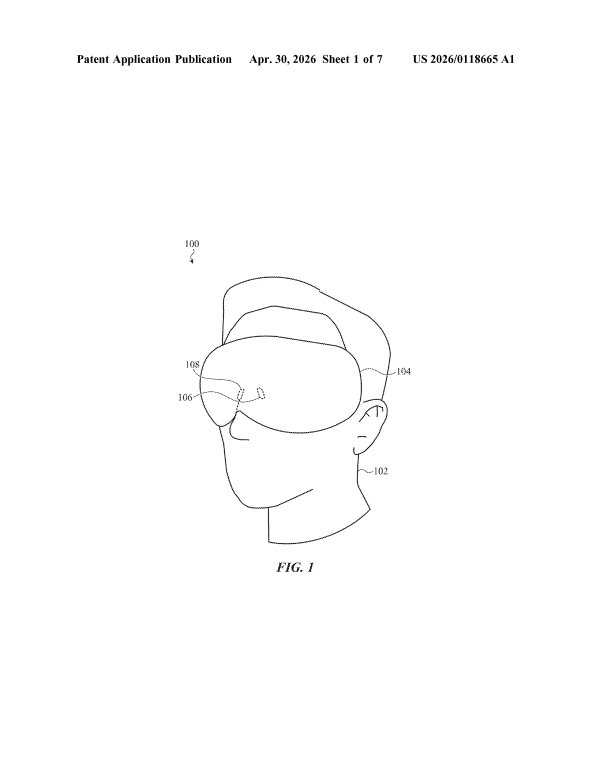
Apple wants your headset to know the moment it starts sliding down your nose — using the same laser-speckle physics that makes optical mice work, but aimed directly at your nasal bone.