Latest AR & VR patents, Page 57
Headsets, smart glasses, and the displays, eye tracking and sensors that make them work, from Apple, Meta, Samsung, Sony and more. The augmented reality and virtual reality patent applications we have broken down from the companies we track, newest first.
- in the Nov 12 release
- 25
- in November so far
- 47
- filings tracked
- 690
- last 90 days
- 358
Recent filings
Newest first · 690 total-
Apple · Published May 7
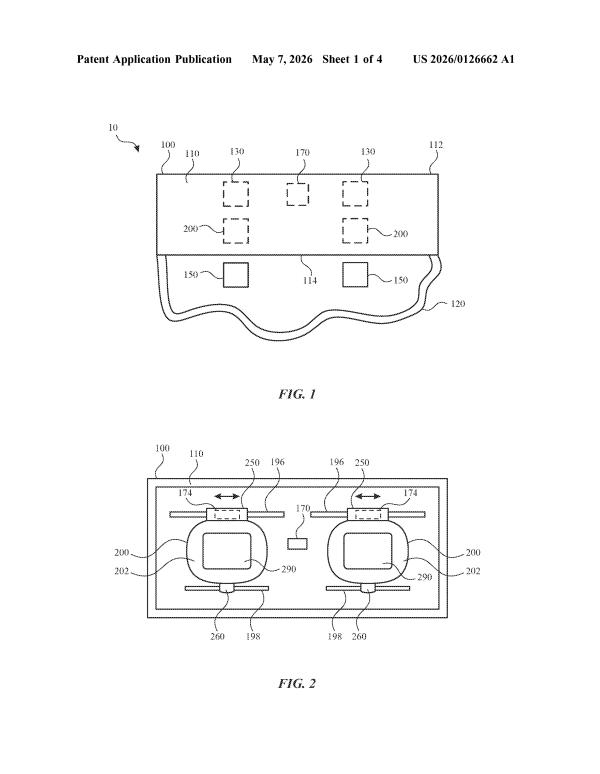
Apple Patents a Sliding Optical Enclosure for Head-Mounted Displays
Apple's latest patent digs deep into the physical plumbing of a VR/AR headset — specifically, how the lens assembly slides into position to line up perfectly with each user's eyes.
-
Apple · Published May 7
Apple Patents a Display System That Moves Content to Follow Your Eyes
Apple is exploring a display technique that physically repositions on-screen content in real time based on where your eyes are looking — not just what you're looking at, but compensating for the movement itself.
-
Apple · Published May 7
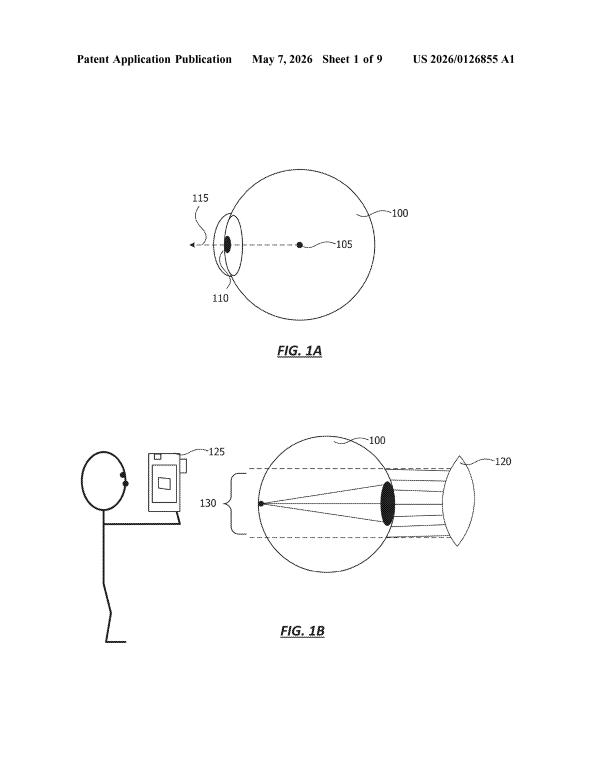
Apple Patents Eye-Tracking Filter That Corrects Gaze Data at Lens Boundaries
When you wear a headset and glance toward the edge of a lens, your eye tracker can pick up gaze data that's technically pointing at something you can't actually see — Apple's latest patent quietly fixes that.
-
Apple · Published May 7
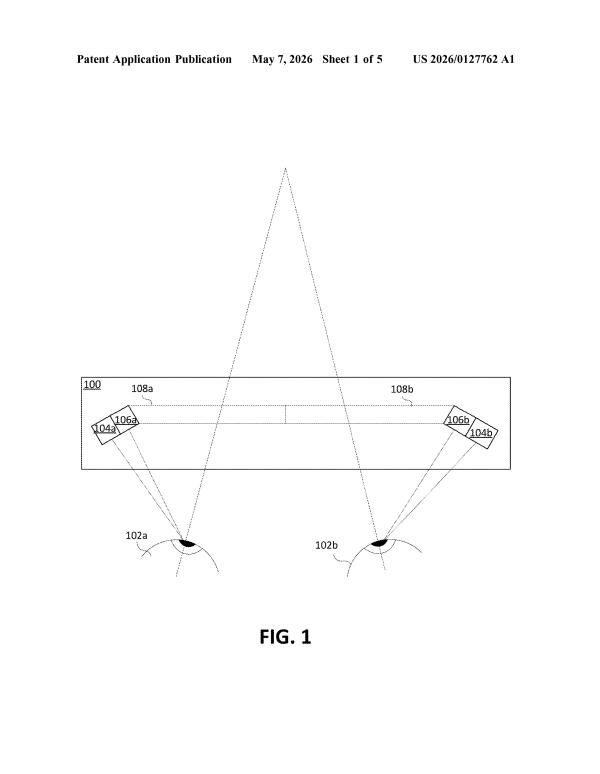
Apple Patents a System That Tracks Your Eye and Maps It in 3D at the Same Time
Apple's new patent describes a system that doesn't make you sit through a separate eye-enrollment process — instead, it quietly builds and refines a 3D model of your eye in the background while it's already tracking your gaze.
-
Meta · Published May 7
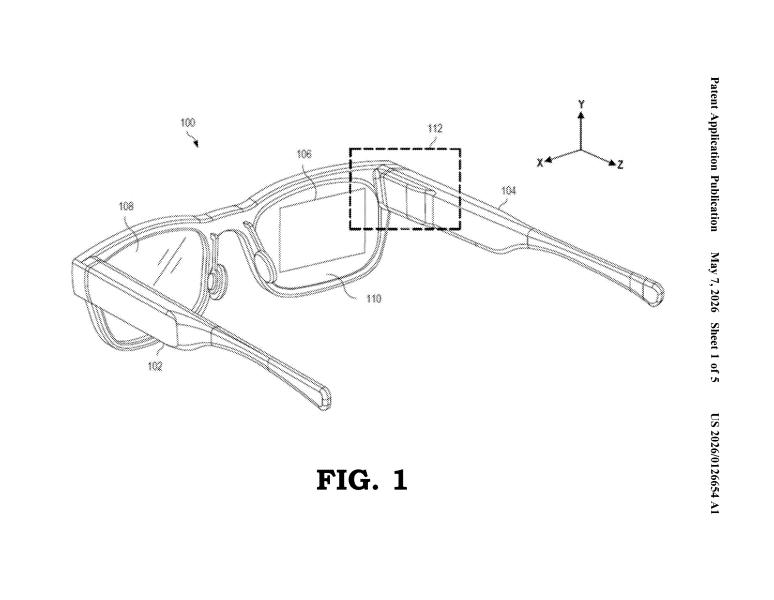
Meta Patents an Adjustable Hinged Nose Bridge for Smart Glasses
Smart glasses that don't fit right don't get worn. Meta is patenting a small but practical fix: a nose bridge that clicks into different positions to fit more face shapes.
-
Google · Published May 7
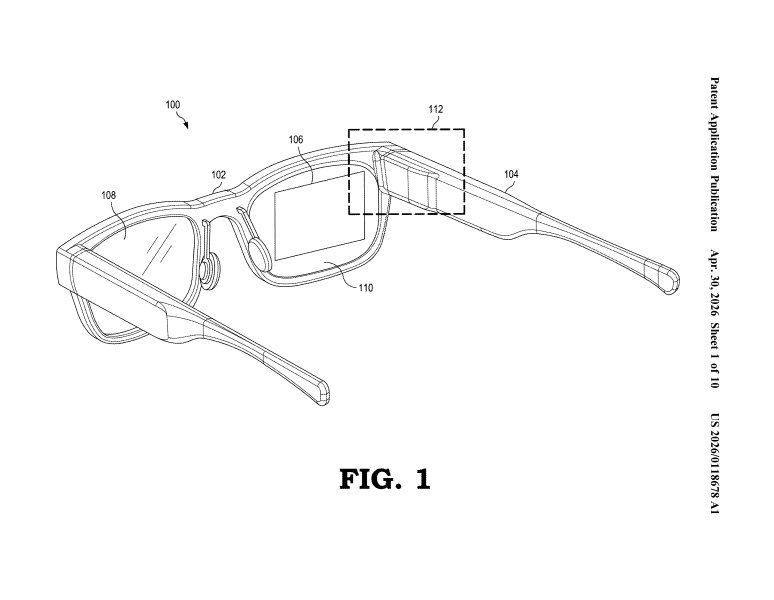
Google Patents a Curved Lightguide That Keeps AR Glasses Thin
Getting a wide, full-color image into a pair of glasses without making the lenses look like bricks is one of augmented reality's hardest engineering problems. Google thinks a cleverly curved piece of glass — and a trick borrowed from camera optics — might be the answer.
-
Google · Published May 7
Google Patents a Smarter Way to Measure Crosstalk in 3D Displays
When you put on a 3D headset and see ghosting — a faint double image bleeding from one eye's view into the other — that's crosstalk. Google has filed a patent for a more accurate way to measure it, by stripping out a sneaky measurement artifact called veiling glare.
-
Meta · Published Apr 30
Meta Patents Radar-Based Facial Expression Tracking for VR Headsets
Meta is filing patents for a system that uses radar — the same basic technology in your car's collision-avoidance sensors — to detect your facial expressions from inside a VR headset, no visible-light camera required.
-
Meta · Published Apr 30
Meta Patents a Metal-Sheathed Camera Lens Assembly for AR Glasses
Meta is patenting a very specific way to wrap a camera lens in metal — and the tiny air gap built into the design is doing more work than it looks.
-
Meta · Published Apr 30
Meta Patents a Flexible Facial Interface That Molds to Your Face
Getting a VR headset to seal comfortably against wildly different face shapes is one of the oldest problems in the industry. Meta thinks the answer is a two-layer facial interface — one part rigid, one part flexible — that can conform to your specific face without compromising the display position.
-
Google · Published Apr 30
Google Patents a Dual-Pupil Prism System for AR Waveguide Displays
Getting bright, crisp images into a thin AR lens without bulky optics is one of the hardest unsolved problems in wearable tech. Google's new patent attacks it by splitting a single light beam into two before it ever enters the waveguide.
-
Google · Published Apr 30
Google Patents a Self-Correcting LED Architecture for Light Field Displays
LEDs don't age gracefully — they dim and shift color over time, and that's a real problem for high-precision light field displays. Google's new patent describes a display that watches its own LEDs degrade and quietly reassigns the workload to keep the image consistent.