Latest camera patents, Page 13
How phones and headsets see: image sensors, lenses, autofocus tricks, and the processing that turns light into photos. We track every camera filing as it publishes.
- in the Nov 19 release
- 10
- in November so far
- 20
- filings tracked
- 279
- last 90 days
- 108
Recent filings
Newest first · 279 total-
Sony · Published Jul 30
Sony Patents a Camera System That Fixes Colors When Two Different Lights Hit the Same Scene
A candlelit dinner table next to a fluorescent kitchen is a nightmare for any camera's color system. Sony has filed a patent for a way to handle exactly that kind of scene, where two different light sources are fighting each other.
-
Qualcomm · Published Jul 30
Qualcomm Patents a Way to Build 3D Scenes from Just Two Photos
Most 3D scene-reconstruction systems need dozens of photos taken from every angle. Qualcomm's new patent describes doing it with just two.
-
Sony · Published Jul 30
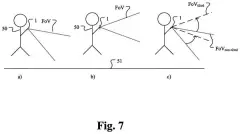
Sony Patents a Camera That Tilts Itself to Keep You Located
Sony is patenting a system that physically adjusts a camera's angle on the fly to improve how well a device knows where it is in space. It sounds simple, but the idea of letting the camera move to help with positioning rather than relying purely on software is an interesting hardware approach.
-
Qualcomm · Published Jul 30
Qualcomm Patents a Way to Recover Detail Lost During Low-Light Photo Cleanup
When a phone cleans up a grainy low-light photo, it often wipes out real detail along with the noise. Qualcomm's new patent describes a way to put some of that detail back, selectively.
-
Samsung · Published Jul 30
Samsung Patents a Way to Keep Colors Consistent Across Different Phone Cameras
Every camera sensor sees color a little differently, which is why a photo taken on your phone's main lens can look slightly off compared to one taken on its ultrawide. Samsung is patenting a method to fix that gap automatically.
-
Samsung · Published Jul 30
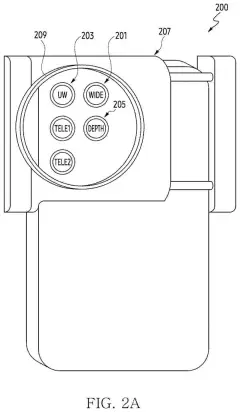
Samsung Patents a Camera That Switches Lenses Automatically When You Clip On an Accessory
Clip a lens attachment onto your Samsung phone and the camera reroutes itself to the right sensor without you lifting a finger. That's the core idea in this new Samsung patent.
-
Google · Published Jul 30
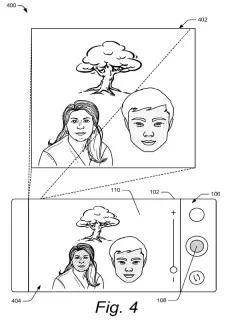
Google Patent Uses Face Recognition to Auto-Correct Skin Tone Colors in Photos
Your phone's camera doesn't know what you actually look like. Google is patenting a system that does, and uses that knowledge to make sure your skin tone looks right every time you take a photo.
-
Samsung · Published Jul 23
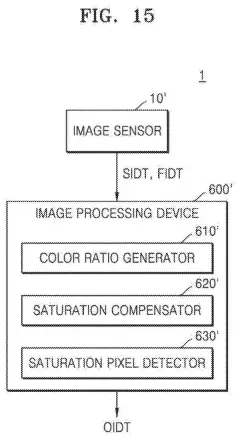
Samsung Patents a Camera Sensor That Recovers Color from Blown-Out Highlights
When part of a photo is so bright the camera just records white, color data is usually gone for good. Samsung's new patent describes a sensor that keeps a backup reading handy so it can reconstruct what that color should have been.
-
Samsung · Published Jul 23
Samsung Patents a Photo-Sharpening Method That Prevents Bright Rings Around Edges
Sharpening a photo sounds simple, but the standard technique leaves glowing rings around edges called halos. Samsung's new patent tries to fix that without sacrificing the crispness you want.
-
Sony · Published Jul 23
Sony Patents a Fix for Uneven Dimming in Cameras With Swappable Lenses
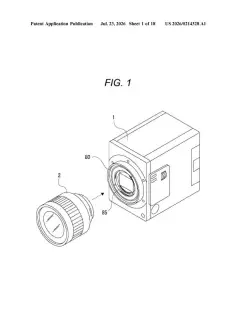
Sony is patenting a way to automatically fix a known visual flaw that appears when a liquid crystal dimmer is placed in front of a camera sensor, an artifact that can ruin otherwise clean footage or photos.
-
Sony · Published Jul 23
Sony Patent Uses Event-Based Sensors to Sharpen Imaging of Fast-Moving Cells
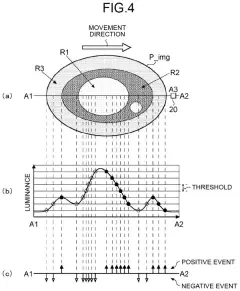
Photographing a single cell rushing through a laser beam is surprisingly hard. Sony thinks a type of sensor borrowed from high-speed robotics cameras can fix that.
-
Google · Published Jul 23
Google Patents a Compact Camera Lens Built to Capture Broad Scenes
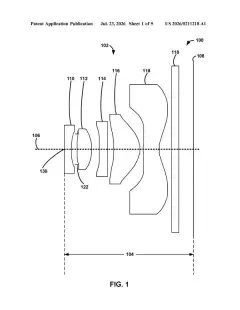
Google has patented a specific wide-angle lens arrangement that keeps the front element unusually small relative to the overall lens length, a design choice that affects how compact the whole optical stack can be.