Latest battery & energy patents, Page 12
Batteries, charging and power management, from Samsung, Apple, Sony, Toyota, Honda and more. The battery, charging and energy patent applications we have broken down from the companies we track, newest first.
- in the Nov 19 release
- 13
- in November so far
- 24
- filings tracked
- 148
- last 90 days
- 70
Recent filings
Newest first · 148 total-
Apple · Published May 28
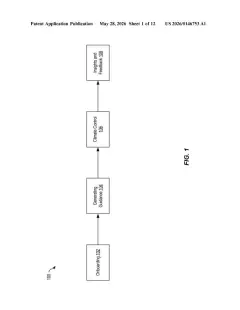
Apple Patents an Energy Guidance System for Climate Control Accessories
Apple is patenting a way for a user device — think iPhone or HomePod — to act as a middleman between your power source and your climate control system, telling your HVAC what it can and can't do based on where the energy is coming from.
-
Samsung · Published May 28
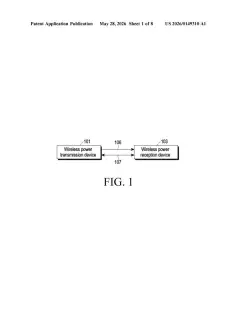
Samsung Patents a Wireless Charger That Negotiates Voltage on Both Ends
Most wireless chargers accept whatever voltage the wall adapter feeds them and deal with the rest internally. Samsung's new patent describes a charger that, when a phone asks for less power, turns around and asks the wall adapter to dial down too — trimming waste at both ends of the chain.
-
Samsung · Published May 28
Samsung Patents an Adaptive Voltage-Shifting System for Wireless Charging
Wireless charging can stall when the charger and battery aren't in sync — Samsung's new patent tackles that by automatically bumping the voltage reference when charging current drops too low for too long.
-
Samsung · Published May 28
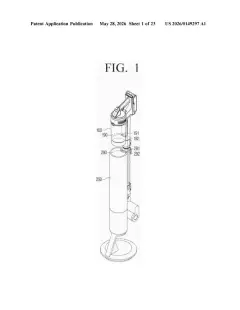
Samsung Patents an Error-Detecting Charging System for Cordless Vacuums
Samsung is patenting a vacuum cleaner that watches its own charging process in real time — comparing voltages at both ends of the charging connection to catch faults before they damage the battery.
-
Samsung · Published May 28
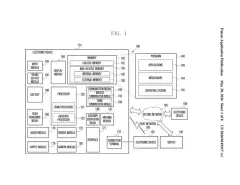
Samsung Patents a Wearable That Dials Down Radio Power During Music Playback
Your wireless earbuds are constantly juggling two jobs at once — playing music and maintaining a radio link. Samsung's new patent is about making that juggling act a lot less clumsy.
-
Samsung · Published May 21
Samsung Patents New Chloride-Based Solid Electrolyte for Solid-State Batteries
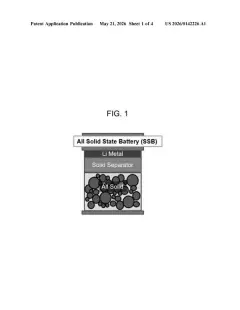
Samsung is exploring a new family of chloride-based solid electrolyte materials — compounds built from lithium, sodium, magnesium, and chlorine — that could slot into next-generation solid-state batteries as a safer, more stable alternative to liquid electrolytes.
-
Apple · Published May 14
Apple Patents a Lithium-Ion Battery Electrolyte That Ditches a Key Solvent
Apple is experimenting with a battery electrolyte recipe that removes ethylene carbonate — a near-universal ingredient in lithium-ion cells — and replaces it entirely with a fluorinated cousin. That's a meaningful chemistry bet.
-
Apple · Published May 7
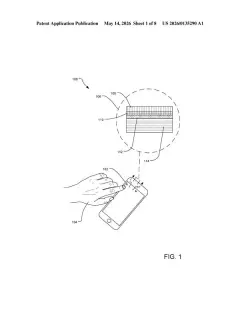
Apple Patents a System That Detects When Your Device Is in a Case and Dials Back Its Radio
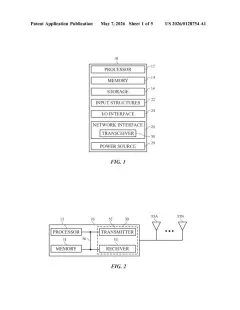
Your iPhone already knows when it's in Low Power Mode — Apple's new patent wants it to also know when it's stuffed inside a case, and automatically turn down its radio to avoid signal chaos.
-
Microsoft · Published May 14
Microsoft Patents a Layered Capacitance Sensor for Body-Proximity Antenna Detection
Microsoft is quietly working on a way for devices to sense when your hand is near their antenna — and automatically adjust transmit power before your body absorbs too much radio energy.
-
Tesla · Published May 14
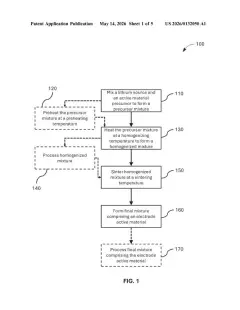
Tesla Patents a Simplified Electrode Material Process That Skips Costly Milling
Tesla is patenting a way to make the active materials inside EV battery electrodes without a grinding step that currently adds cost and complexity to the manufacturing line.
-
Tesla · Published May 14
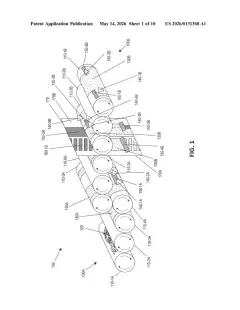
Tesla Patents a Precision Trimming System for Dry Electrode Battery Manufacturing
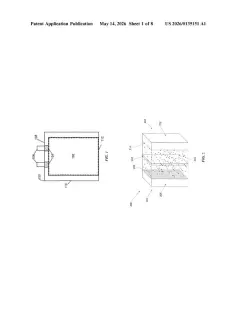
Tesla is filing patents deep in battery manufacturing process engineering — and this one tackles one of the trickiest steps in making dry electrodes: cutting them cleanly without ruining the film.
-
Tesla · Published May 14
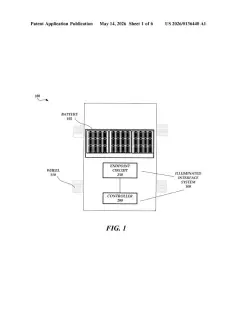
Tesla Patents a Single-Wire System for Lit Buttons That Also Sense Touch
Tesla is trying to make illuminated buttons smarter and simpler — combining the LED power wire and the input-detection wire into a single conductor.