
Samsung Patents Technology to Route Emergency 5G Calls Through Dedicated Priority Channels
When you dial 911 over a 5G network, your phone has to figure out which internal data channel to use, and fast. Samsung's new patent addresses exactly what happens when that decision needs to carry emergency-specific context.
What Samsung's emergency session routing fix actually does
Imagine calling 911 and your phone has to connect through a 5G network that slices itself into separate virtual lanes: one for regular calls, one for video streaming, one for emergency services. Your phone needs to know which lane to use and pass that information down to the radio hardware before the call goes through.
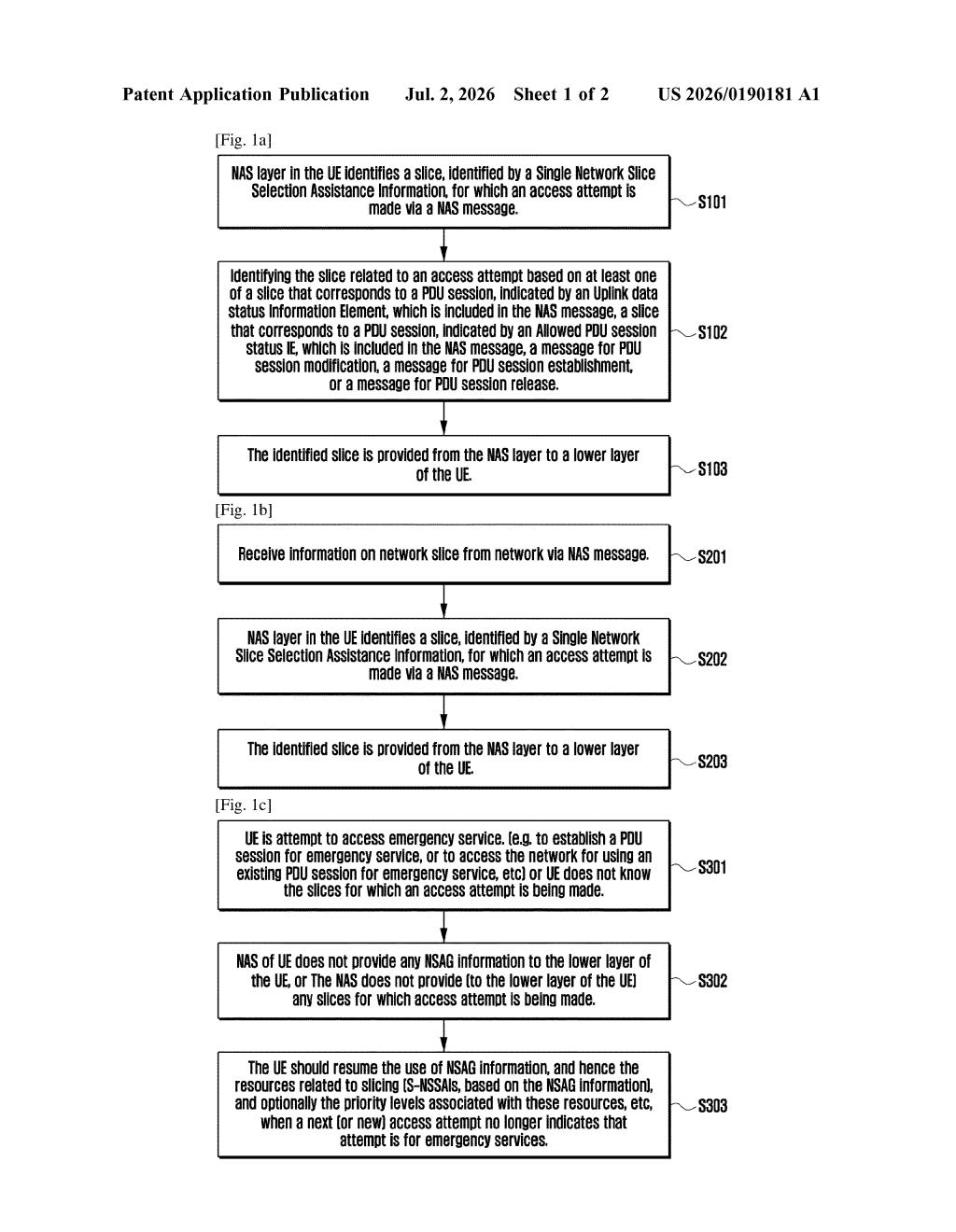
Right now, the software layer in your phone that handles network registration (called the NAS layer) doesn't always pass along the details about which virtual lane, or "network slice," an emergency session needs. Samsung's patent describes a fix: that software layer should identify the relevant slice information and explicitly hand it off to the lower radio layer, bundled inside messages the two layers are already exchanging.
The result is that your phone's radio hardware knows which 5G slice it's connecting through, even during the rushed conditions of an emergency call. It's a coordination fix inside the phone, not a new antenna or chip.
How the NAS layer passes slice data to lower radio layers
The patent targets a specific handoff problem inside 5G-capable devices. A phone's software stack has layers: the NAS (Non-Access Stratum) layer handles high-level network registration and session management, while lower layers handle the actual radio transmission. Normally these layers exchange status messages, but those messages don't always carry network slice information (a network slice is a logically separate virtual network running on the same physical 5G infrastructure, dedicated to a specific use case like emergency services).
Samsung's method requires the NAS layer to:
- Identify which network slice is relevant to the current access attempt
- Bundle that slice information into one of three existing message types: uplink data status, allowed PDU session status (PDU sessions are the data pipes between your device and the internet), or a PDU session-related message
- Send that combined package down to the lower radio layer so the radio hardware knows the slice context
The patent frames this specifically around emergency sessions, where the phone may be attempting to connect under constrained or unusual conditions and the slice routing has to be correct from the first transmission attempt.
What this means for 5G emergency call reliability
5G networks are built around the idea of slicing, where carriers dedicate separate virtual network paths to different applications. Emergency services are one of the clearest intended beneficiaries: regulators in multiple countries expect carriers to maintain a dedicated, high-priority slice for 911 and equivalent calls. If a phone's internal software doesn't correctly identify and communicate which slice it's using, that priority guarantee can break down at the device level before the call even reaches the tower.
For most users this is invisible infrastructure, but it's exactly the kind of coordination detail that determines whether emergency calls get the priority treatment networks are designed to give them. Samsung, as both a major phone maker and a 5G network equipment supplier, has direct interest in making this coordination work consistently across devices.
This is a narrow but legitimate standards-level patent aimed at a real coordination gap in 5G emergency calling. It won't generate headlines, but the category it addresses (reliable slice routing during emergencies) is one where regulators are paying close attention. Worth filing; not worth excitement.
Get our take in your Top Stories
Liked this breakdown? Add Patentlyze as a preferred source on Google, and our plain-English take shows up more often in your Top Stories the next time Samsung patent news breaks.
There are more where this came from
We read every patent application Big Tech publishes and send you the ones worth knowing. Plain English, free, every week.
Want this weekly breakdown for a company we don't cover? Patentlyze Pro →