
Adobe Patents an Auto-Tuning Guidance System for Diffusion Model Image Generation
Getting AI-generated images to look right often comes down to a single finicky dial — the guidance scale — that you have to tune manually for every prompt. Adobe's new patent wants to make that dial automatic.
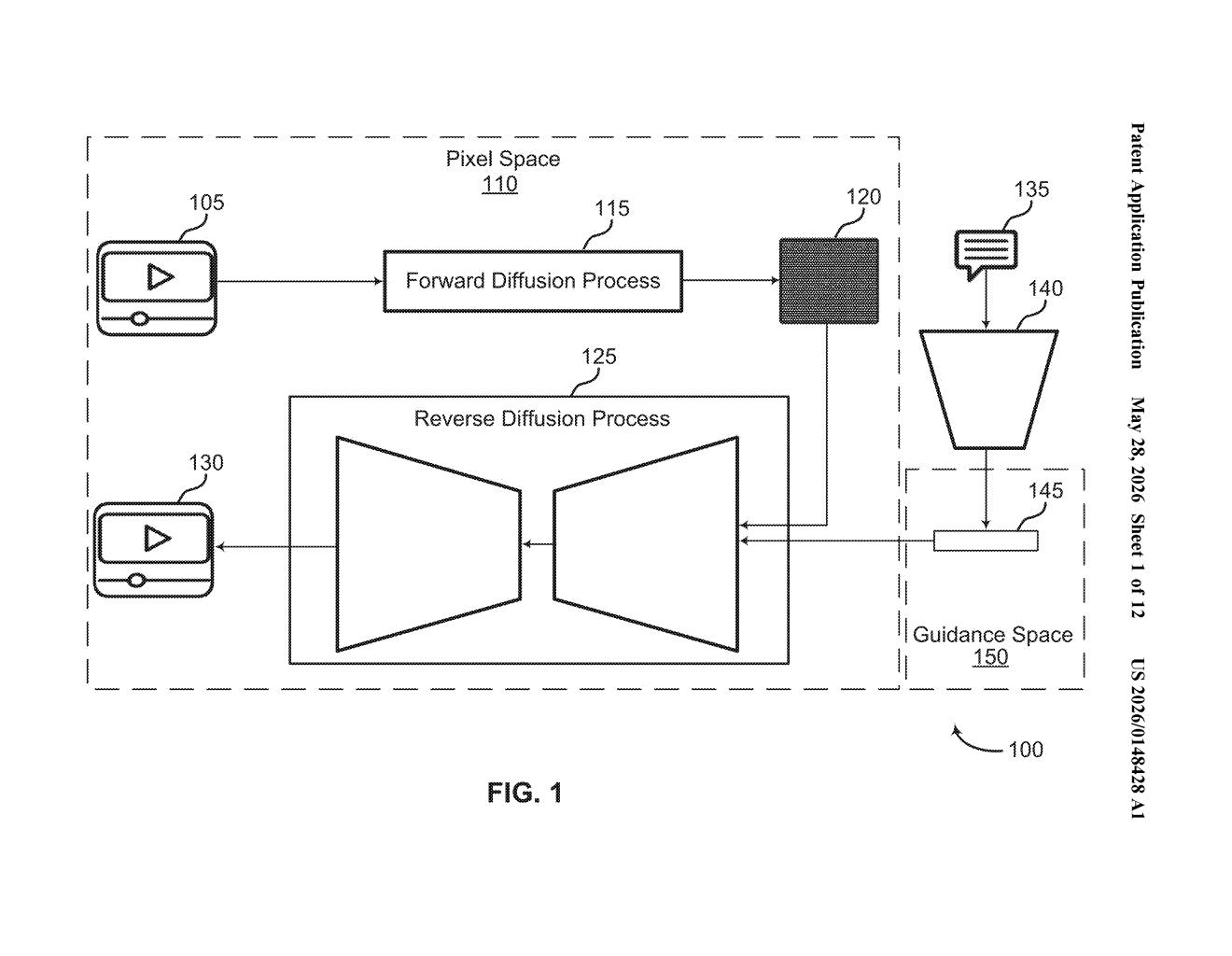
What Adobe's adaptive guidance actually changes for AI images
Imagine you're using an AI image generator and you type in a prompt. Behind the scenes, the model is constantly balancing two competing signals: one that's shaped by your specific prompt, and one that's a kind of generic baseline with no instructions at all. How hard the model leans on your prompt — versus that generic baseline — is controlled by a number called the guidance scale. Set it too low and your image looks washed out and vague; set it too high and you get over-saturated, artifacty weirdness.
Right now, most systems make you pick that number, or they use a fixed value for every prompt. Adobe's patent describes a system that computes the right guidance strength automatically, based on what your specific prompt is asking for.
The result is that the model could self-correct for tricky or ambiguous prompts without you tweaking any sliders. Think of it like cruise control for image fidelity — the system reads the road conditions and adjusts on its own.
How the adaptive guidance strength is computed per prompt
The patent describes a method that sits inside the reverse diffusion process — the part of a diffusion model (like Stable Diffusion or Adobe Firefly) where noisy pixels are iteratively cleaned up into a coherent image.
At each step, the system produces two tensors (think of a tensor as a big grid of numbers encoding visual information):
- A conditioned tensor — shaped by the user's guidance condition, i.e., the prompt or reference image element
- An unconditioned tensor — a baseline prediction made with no prompt at all
In standard classifier-free guidance (CFG) — the dominant technique in most diffusion models today — these two tensors are blended using a fixed scalar weight. Adobe's patent replaces that fixed weight with an adaptive guidance strength that is computed dynamically from the guidance condition itself and the relationship between the two tensors.
The final blend (the scoring tensor) is then fed into the image generation model to produce the output image. Because the guidance strength adapts to each prompt rather than staying constant, the model can theoretically handle a wider range of prompts without manual tuning or per-prompt hyperparameter search.
What this means for Firefly's image quality control
For Adobe Firefly users, this kind of improvement would show up as more consistently accurate images across diverse prompts — fewer cases where a perfectly reasonable description produces a muddy or over-cooked result. It also reduces the burden on power users who currently dial in guidance settings manually in tools like Stable Diffusion WebUI.
More broadly, adaptive CFG is an active research area in the diffusion model space. If Adobe can make this work reliably, it's a meaningful quality-of-life improvement baked into the model pipeline itself — not a UI band-aid. It also signals that Adobe is investing in the core inference machinery of Firefly, not just surface-level features.
This is a focused, technically credible patent in a real and active research area — adaptive classifier-free guidance is a known pain point in diffusion models, and automating it is genuinely useful work. It's not a flashy product announcement, but it's exactly the kind of under-the-hood improvement that separates good AI image generators from great ones.
There are more where this came from
We read every patent application Big Tech publishes and send you the ones worth knowing. Plain English, free, every week.
Want this weekly breakdown for a company we don't cover? Patentlyze Pro →