
Adobe Patents a Way to Train AI Image Generators on a Brand's Visual Style
Adobe has figured out a way to teach an AI image generator what a brand "looks like" without requiring designers to hand-label thousands of examples. The trick is a clever comparison trick: show the AI what's right and what's generic, then let it figure out the difference.
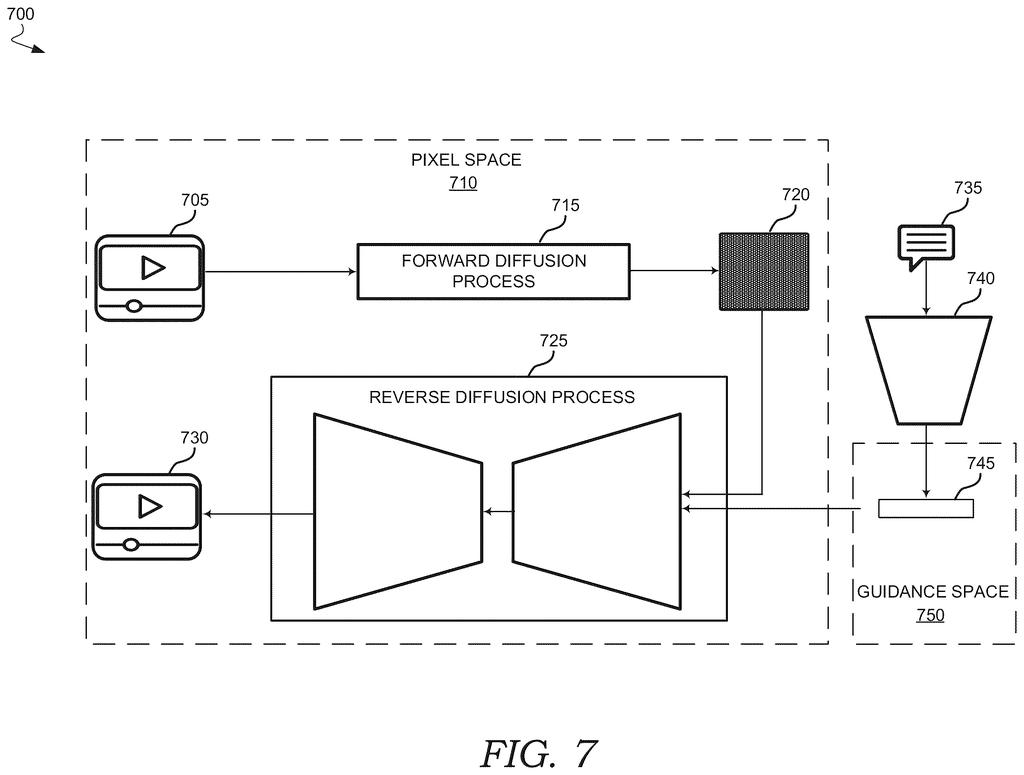
How Adobe's brand-style AI image training actually works
Imagine you work in marketing and you need a hundred product images that all feel unmistakably "on brand", the right colors, the right mood, the right composition. Getting an off-the-shelf AI generator to do that today is a frustrating game of prompt trial and error, and the results often look like stock photos, not your brand.
Adobe's patent describes a system that learns a brand's visual identity from examples the company already has. The system takes real, approved brand images, writes a text description of each one, and then generates a generic version of that same image using a standard AI tool. Now it has a pair: the brand version and the bland version. Those pairs become the training signal that teaches a custom AI model to always reach for the brand version.
You'd end up with an AI that already "knows" your brand's style before you type a single prompt, so every image it generates starts from the right visual vocabulary instead of a generic one.
receiving a brand-aligned image; generating a caption describing the brand-aligned image, using a caption generation component; generating a non-brand-aligned image based, at least in part, on the caption, using a generic image generation model …
Translation: The system takes a company's image, describes it in text, and then asks a standard AI to create a generic version of it.
Inside Adobe's paired-image preference training loop
The system is built around a training method called Direct Preference Optimization (DPO), a technique (borrowed from how companies tune AI chatbots to give better answers) that teaches a model to prefer one output over another by showing it ranked pairs rather than grading every output individually.
Here's how the pipeline works:
- A caption generation component looks at an existing brand-approved image and writes a neutral text description of it, essentially stripping out the brand feel and just describing the content.
- A generic image generation model takes that caption and creates a fresh image. Because it has no brand knowledge, the result looks competent but flat.
- The two images (the original branded one and the generic one) are bundled into an image pair that labels which is preferred.
- A brand-aligned image generation model is then trained on many such pairs, learning to consistently produce outputs that resemble the brand examples.
The key insight is that the system generates its own training data. You don't need humans to score thousands of AI outputs. You only need a library of good brand images you already own, and the pipeline creates the negative examples automatically by running them through a generic model.
The claim covers the full pipeline as a computer system, meaning the caption writer, the generic generator, the pairing logic, and the training loop are all described as interconnected components in a single architecture.
The brand-aligned image and the non-brand-aligned image form an image pair that is used to train the brand-aligned image generation model.
Translation: The software learns to mimic a specific brand style by comparing the company's original images to generic AI results.
What this means for marketers using AI image tools
Brand consistency is one of the most time-consuming parts of marketing work, and it's the main reason many creative teams are still cautious about AI image tools. A generic AI doesn't know that your brand never uses white backgrounds, always shoots at eye level, or favors warm earth tones. This patent describes a way to bake those unwritten rules into the model itself, so the brand guardrails are structural rather than something a designer has to catch in review.
For Adobe, the practical application fits neatly into tools like Adobe Firefly, which is already pitched at professional creative workflows. The self-generating training data approach is also notable from an efficiency standpoint: it sidesteps the expensive, slow process of human annotation. That said, the latest Big Tech patents covering AI image generation, including this one, are clustered around brand and enterprise customization, which tells you where the competitive heat in AI creative tools is right now.
That makes this Adobe's 19th filing we've tracked since May in our controllable AI image work, which has covered ideas like text-driven character animation and layered prompt compositing.
The system avoids expensive human labeling by automatically generating the "bad" comparison image, but that shortcut carries a real cost. A generic AI image could accidentally match part of a brand's visual style, and a truly off-brand image might never appear in training at all, leaving the model with a blurry sense of what it's supposed to avoid.
The caption step compounds this. Turning a brand image into a text description strips out the subtle visual qualities that make it on-brand in the first place, so the generated "bad" image may end up too similar to the original to teach the model anything useful.
Both risks are real, but paying humans to score thousands of image pairs would price most companies out of building this at all. For a first version, the trade reads as worth it, with the understanding that caption quality and comparison accuracy would need to improve before the system handles very different brand styles reliably.
Get our take in your Top Stories
Liked this breakdown? Add Patentlyze as a preferred source on Google, and our plain-English take shows up more often in your Top Stories the next time Adobe patent news breaks.
There are more where this came from
We read every patent application Big Tech publishes and send you the ones worth knowing. Plain English, free, every week.
The drawings
14 drawing sheets from US 2026/0253263 A1 · click any drawing to enlarge


Want this weekly breakdown for a company we don't cover? Patentlyze Pro →
Be the first to weigh in