
Adobe Patents a Two-Pass AI Inpainting System for Sharper Fill Results
Adobe's latest patent tackles one of the most persistent frustrations with AI image editors: fill results that look globally plausible but locally wrong. The fix is a two-pass system that sees the whole picture first, then zooms in to get the details right.
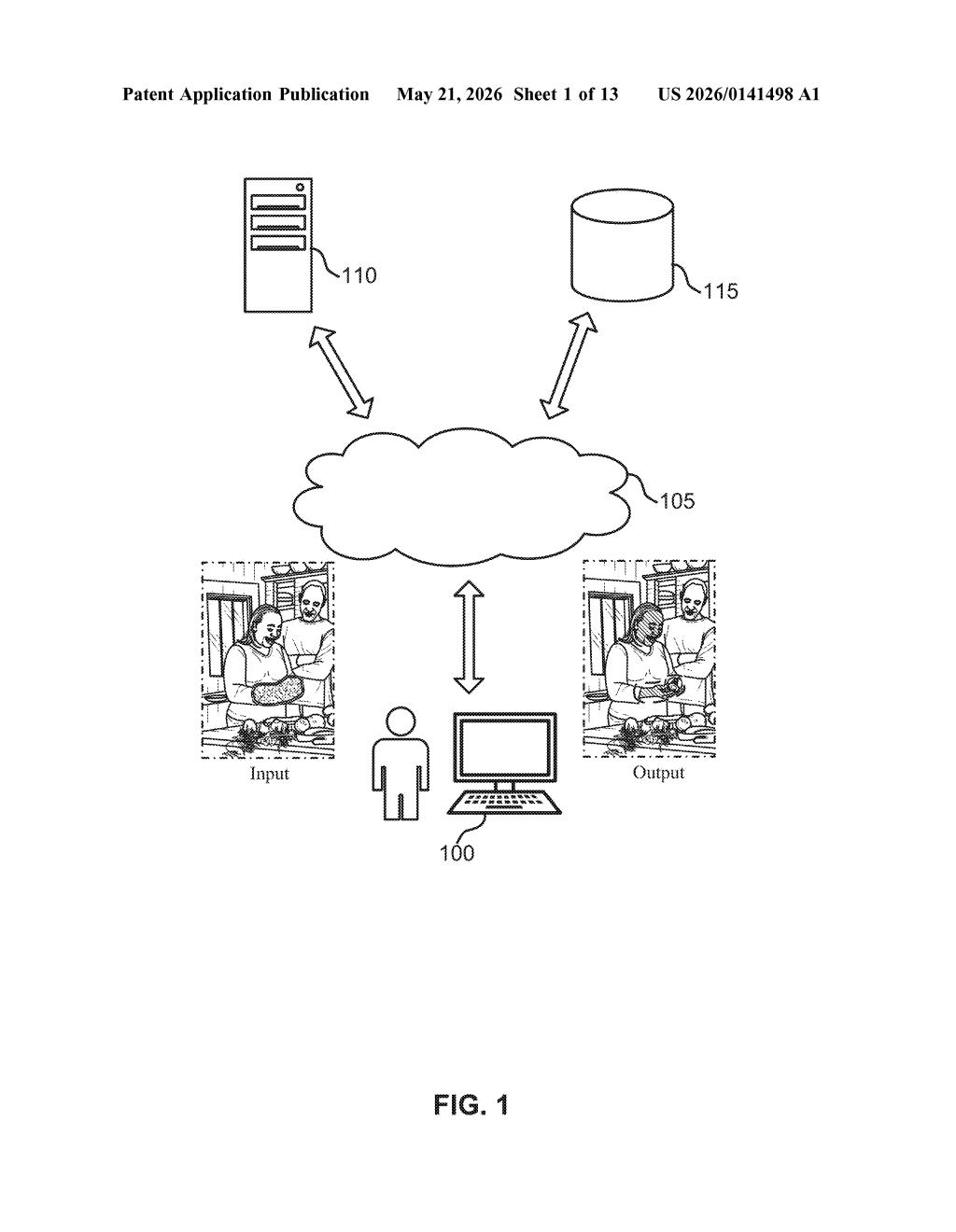
What Adobe's dual-crop inpainting actually does
Imagine you take a photo of a busy street and want to remove a parking meter from the shot. You ask an AI tool to fill in that space — and it does, but the replacement looks slightly off. Maybe the pavement texture doesn't quite match, or the perspective is subtly wrong. That's a common failure mode in AI inpainting tools today.
Adobe's patent describes a smarter approach: instead of filling in the gap in one shot, the model works in two passes. First, it looks at the whole image to understand the overall scene — lighting, color palette, spatial layout — and generates a rough intermediate result. Then, it zooms into the local area around the gap to refine the fill with fine-grained texture and detail.
The idea is that global context gives the model the "big picture" it needs to make a plausible fill, while the local crop gives it the pixel-level precision to make that fill convincing. You'd most likely see this in a tool like Adobe Firefly's generative fill, where getting both coherence and sharpness right is the whole game.
How Adobe's two-pass crop pipeline fills image gaps
The patent describes a method called dual crop sampling, where an image generation model processes an image in two sequential stages rather than one.
In the first pass, the model receives a global context crop — a downsampled or full view of the input image — along with an inpainting mask indicating which region needs to be filled. The model generates an intermediate inpainting result: a complete but not yet finalized version of the scene. This pass is primarily about structural coherence — making sure the new content makes sense within the broader composition.
In the second pass, the model takes that intermediate result and feeds it alongside a local context crop — a tighter, higher-resolution view of just the area around the masked region. This pass refines the fill, focusing on fine texture, edge continuity, and local detail that the global view may have glossed over.
- Global pass: scene-level understanding, rough fill generation
- Intermediate result: bridges global and local passes
- Local pass: high-fidelity refinement of the target region
The dual-pass architecture addresses a well-known tension in generative models: high-resolution local detail and low-resolution global coherence are hard to optimize for simultaneously in a single forward pass.
What this means for Firefly's generative fill quality
For anyone who uses Adobe Firefly or any AI-powered remove/fill tool, this patent points toward a concrete quality improvement. The most common complaint about generative fill is that results look uncanny up close — the surrounding context looks fine but the filled patch has wrong textures or mismatched grain. A two-pass pipeline that explicitly separates global reasoning from local refinement is a direct engineering answer to that problem.
Broader than Firefly, this approach could apply anywhere Adobe embeds inpainting — from Photoshop's Content-Aware Fill to video editing workflows. It's also a meaningful signal that multi-stage inference is becoming standard practice for production-quality generative image tools, not just a research curiosity.
This is the kind of unglamorous engineering patent that actually ships into products and quietly makes them better. Dual-pass inpainting isn't conceptually wild, but Adobe filing on it specifically suggests they've found a version that works well enough to protect. If you care about generative fill quality in Firefly or Photoshop, this is worth tracking.
Get our take in your Top Stories
Liked this breakdown? Add Patentlyze as a preferred source on Google, and our plain-English take shows up more often in your Top Stories the next time Adobe patent news breaks.
There are more where this came from
We read every patent application Big Tech publishes and send you the ones worth knowing. Plain English, free, every week.
Want this weekly breakdown for a company we don't cover? Patentlyze Pro →