
Adobe Patents an AI Image Builder That Assembles Scenes Layer by Layer
Most AI image generators produce a picture all at once, treating layout, background, and objects as a single chaotic output. Adobe's new patent breaks that process into ordered steps, where each piece of the image is built on top of what came before.
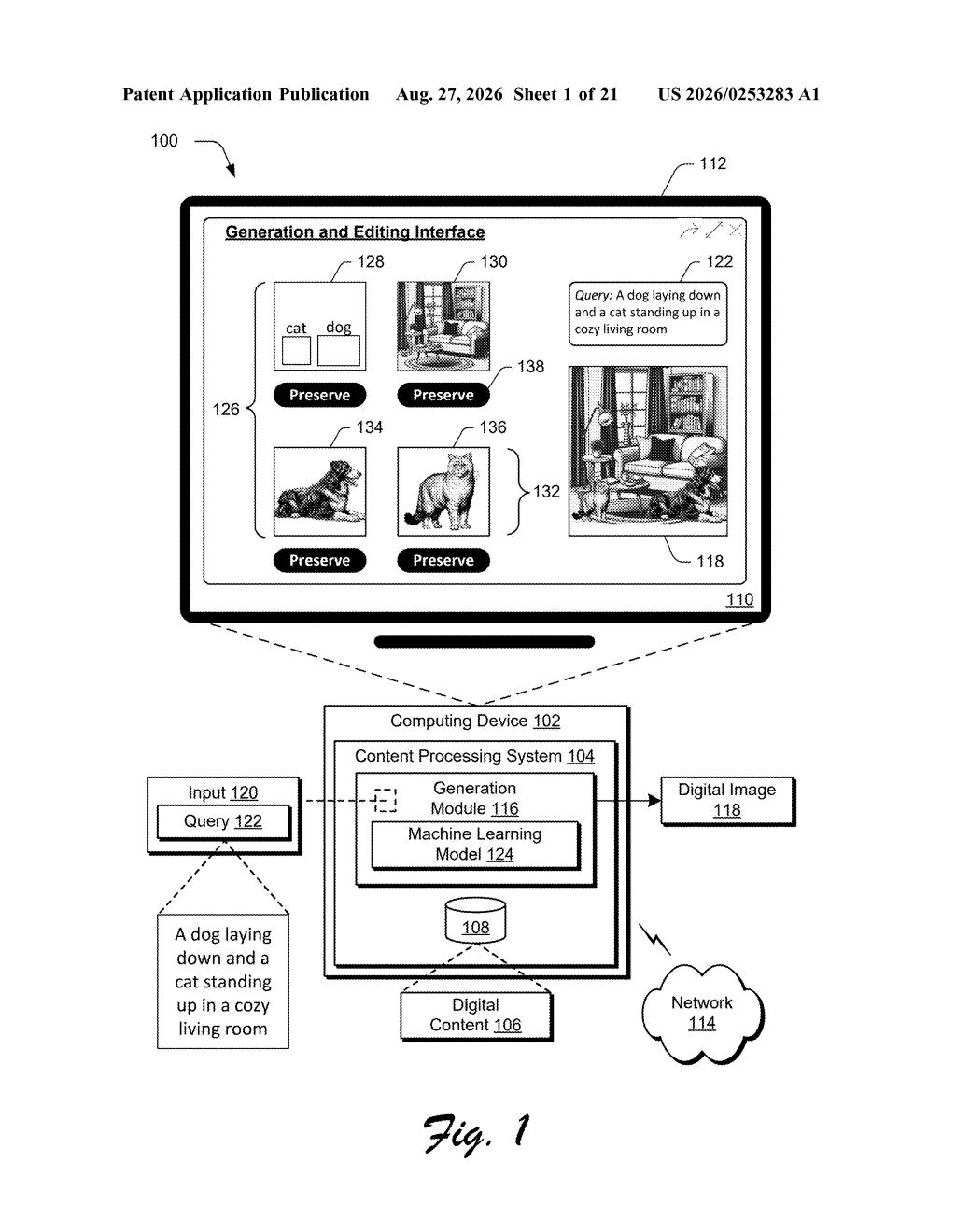
How Adobe's layered image generator actually works
Every time a designer types a prompt into an AI image tool, the system has to juggle dozens of decisions at once: where should objects sit, what should the background look like, how do the pieces fit together? Most tools handle all of that in one pass, which is part of why AI images sometimes produce weird compositions with misplaced arms or objects floating in the wrong spot.
Adobe's patent describes a different approach. Instead of generating everything at once, the AI builds an image in sequence: first a rough layout showing where things will go, then a background to fill that space, then the individual objects placed into the scene. Each step is informed by the one before it, so the background is designed to match the layout, and the objects are placed knowing both.
The result is a more controlled, editable process. Because each component is generated separately, you could in theory swap out just the background or move an object without regenerating the whole image from scratch. That kind of targeted editing has been a persistent frustration with current AI tools.
… sequentially generating, by the machine learning model, image components that represent the visual aspects, each image component conditioned on previously generated image components …
Translation: The AI builds the image one piece at a time, with each new layer based on the parts it already created.
How each image layer conditions the next in Adobe's model
The patent describes a sequential image generation system built around a machine learning model that breaks image creation into distinct, ordered stages rather than producing everything simultaneously.
The process follows a layered structure:
- Layout representation: the model first generates a structural map of the image, defining where different elements will appear spatially.
- Background representation: using the layout as a guide, the model generates the background environment that fits the planned composition.
- Object representations: individual objects or subjects are generated one by one, each aware of the layout and background already established.
The key technical idea is conditioning: each new image component is generated with knowledge of all previously generated components. Think of it like a painter who sketches the composition first, paints the background second, and adds foreground subjects last, where each decision is made with the full context of what's already on the canvas.
The system is also designed for editing, not just generation. Because the image is built from separable components, a user querying the model can modify one layer (say, the background) without discarding the layout or object placements. The patent also describes the model integrating these components into a final unified digital image at the end of the pipeline.
Each image component, e.g., a layout representation, a background representation, and/or one or more object representations, is conditioned on previously generated image components.
Translation: The system creates the scene by layering the layout, background, and objects in a specific order.
What this means for Adobe's Firefly AI tools
For anyone using AI image tools professionally, the biggest practical headache is targeted editing. Current systems often require regenerating an entire image to fix one element, which wastes time and frequently breaks parts of the image that were already correct. A sequential, component-based architecture addresses that directly by treating the image as a set of editable parts rather than a monolithic output.
Adobe already sells Firefly, its commercial AI image platform embedded across Photoshop, Illustrator, and Express. A sequential generation model maps naturally onto Photoshop's existing layer-based workflow, where designers routinely separate foreground subjects, backgrounds, and compositional guides into distinct layers. Adobe's image-generation patents are among the interesting tech patents that show how major creative software companies are rebuilding their core tools around AI from the ground up, not just bolting AI onto existing features.
This is the 20th Adobe patent we've tracked since May in our controllable AI images watchlist, following applications like one on brand style training and one on character animation.
The sequential approach trades speed for control: generating a layout, then a background, then objects one after another takes longer than producing a single image in one pass. More importantly, each step can inherit mistakes from the last, and the system has fewer chances to catch them.
That cost is real, but it fits the audience. Designers working in Photoshop already build images in layers and expect to wait for quality. A tool that matches that habit and lets them adjust each piece separately is more useful than a faster one that hands them a finished image they can only accept or reject.
The tradeoff reads as worth it here, specifically because precision matters more than speed in professional creative work. Where it would break is in any consumer product where people expect instant results and have no interest in managing the pieces themselves.
Get our take in your Top Stories
Liked this breakdown? Add Patentlyze as a preferred source on Google, and our plain-English take shows up more often in your Top Stories the next time Adobe patent news breaks.
There are more where this came from
We read every patent application Big Tech publishes and send you the ones worth knowing. Plain English, free, every week.
The drawings
21 drawing sheets from US 2026/0253283 A1 · click any drawing to enlarge


Want this weekly breakdown for a company we don't cover? Patentlyze Pro →
Be the first to weigh in