
Adobe Patents a Way to Guess Missing User Details From Crowd-Level Statistics
Adobe has filed a patent for a system that can infer things about individual users that were never directly measured, by working backward from statistics collected at the group level. It's a technique that could make audience targeting sharper without requiring more personal data collection.
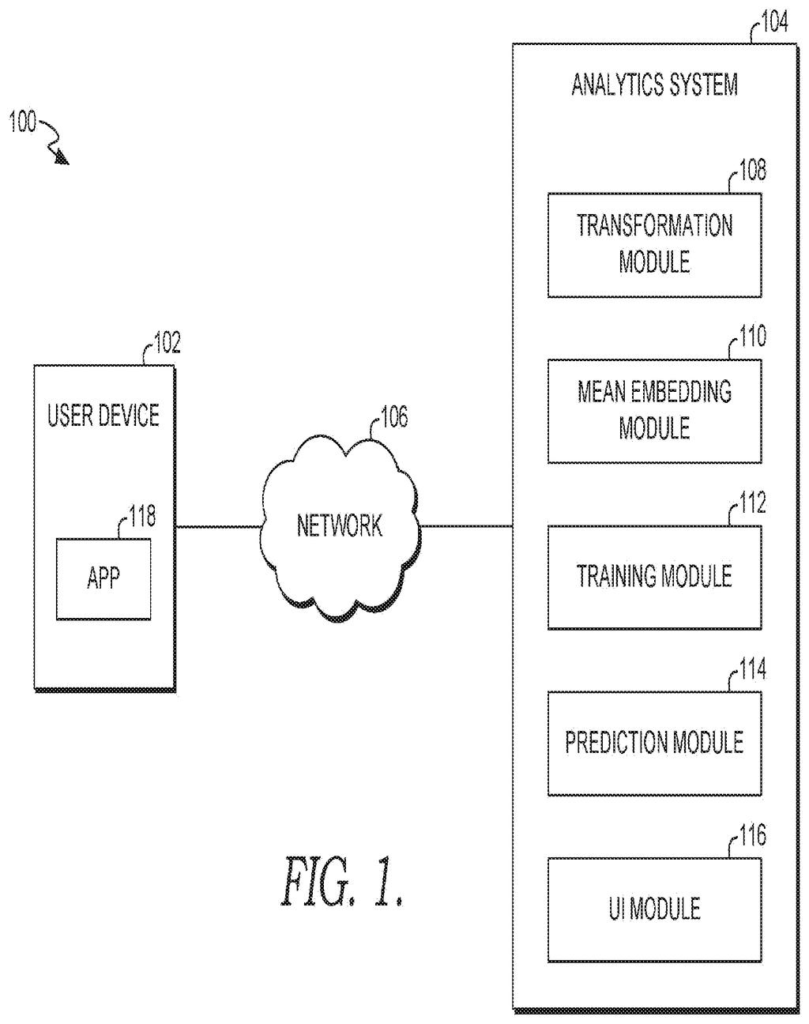
How Adobe fills in the blanks about individual users
You're a marketing analyst looking at survey data, and you know the average income of people in each zip code, but you don't know any individual person's income. Adobe's patented system is designed to solve exactly that kind of problem: it takes group-level averages and uses them to make educated guesses about individual people in that group.
The system doesn't just predict one missing detail at a time. It predicts several missing details together, which helps it spot patterns between those traits. If higher income tends to go with certain purchase habits, the model picks that up and uses it.
The result is a dataset that feels more complete. Each individual record gets filled in with predicted values for the traits that were never directly measured, and companies can then use that enriched data for things like ad targeting or customer segmentation without having collected all that personal information directly.
… training, using the transformed representation and the aggregate data, a joint predictive model configured to learn inter-feature dependencies among the two or more unobserved individual-level features; …
Translation: The system trains an AI model using group averages to figure out how missing personal details relate to each other.
How the model learns hidden traits from group averages
The patent describes a machine-learning pipeline built around a specific statistical challenge called aggregate-to-individual inference (reasoning from group summaries down to individual-level predictions).
Here's how it works step by step:
- Start with what you have: The system takes a dataset where each row represents one person or record, and some columns (features) are present while others are missing at the individual level.
- Access group summaries: For the missing columns, only aggregate data is available, such as average age or average spending per region, not per person.
- Transform and encode: The system maps the existing individual-level data into a higher-dimensional space (a mathematical representation that captures relationships between data points more richly than the raw numbers do). It then calculates bag-wise mean embeddings, which are compact summaries of each group that preserve those richer relationships.
- Train a joint model: Using both the group summaries and these richer embeddings, the system trains a single model that learns the dependencies between all the missing features at once, rather than predicting each one in isolation.
- Predict and augment: For any new individual record, the trained model outputs predicted values for every missing feature simultaneously, and those predictions are attached to the record.
The key claim is that predicting multiple missing features jointly (together) outperforms predicting them one by one, because real-world traits tend to be correlated.
An analytics system jointly predicts values for multiple unobserved individual-level features using aggregate data for those features.
Translation: Software guesses multiple missing personal data points at once by looking at group statistics.
What this means for ad targeting and data privacy
For advertisers and data companies, this kind of system is useful because it can enrich thin customer records without needing to ask users for more information directly. Adobe's analytics and marketing tools already serve large enterprise customers, and a technique that makes incomplete audience data more actionable fits squarely into that business.
For everyday users, there's a more complicated angle. A system like this effectively infers personal characteristics about you from group statistics, which means your privacy may feel protected (nobody asked you directly) while your data profile still gets filled in. Adobe's run of analytics and audience-data filings suggests this kind of inference work is a consistent research priority, not a one-off experiment.
Adobe's 21st filing in the Enterprise AI work we've tracked since May adds to a run that includes one rewriting weak site copy and one building job flows by typing.
Claim 1 is written broadly. It covers any system that takes aggregate data for two or more unobserved features, builds a joint predictive model from that data, and uses the model to fill in individual records. That scope doesn't limit Adobe to a particular industry, a particular type of data, or even a particular model architecture.
In practice, that breadth could give Adobe a wide blocking position over joint aggregate-to-individual inference in commercial analytics software, if the patent is granted and survives scrutiny. The claim would apply whether the missing features are income and age, purchase intent and device type, or dozens of other paired attributes. That's a large surface area for a single independent claim.
Whether the claim is actually novel enough to survive examination is a separate question. The core idea of inferring individual attributes from group statistics has a long history in statistics and market research. The specific contribution here, using mean embeddings in a higher-dimensional space to learn inter-feature dependencies jointly, is a real technical choice, but the claim language doesn't require that particular approach. Examiners may push back on that gap.
There are more where this came from
We read every patent application Big Tech publishes and send you the ones worth knowing. Plain English, free, every week.
The drawings
6 drawing sheets from US 2026/0289425 A1 · click any drawing to enlarge


Want this weekly breakdown for a company we don't cover? Patentlyze Pro →
Be the first to weigh in