
Qualcomm Patent Divides AI Model Processing Between Devices and Network
Running a large AI model on your phone is expensive in battery and memory. Qualcomm's latest patent describes a way for your phone to tell the network exactly what AI work it can handle, so the heavy lifting gets divided up automatically.
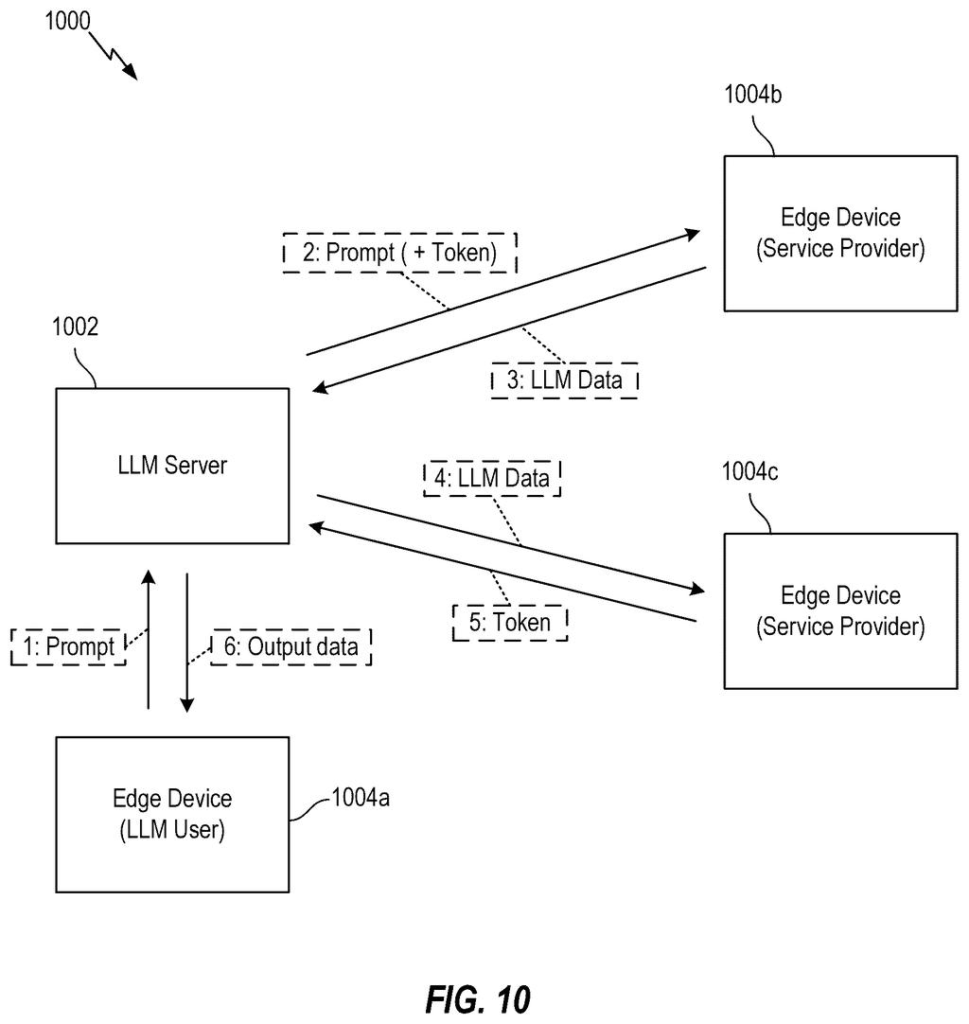
How Qualcomm wants your phone to share AI work with towers
Imagine you and a coworker are building a piece of furniture together. Before you start, you tell them which steps you can do yourself and which ones you need help with. Qualcomm's patent applies that same idea to running AI on your phone.
A large language model (the kind of AI behind chat assistants) is made of dozens of processing steps called layers. This patent lets your phone tell the wireless network which of those layers it can handle on its own, based on how much memory and processing power it has available right now. The network can then decide which layers to send to the phone and which to keep in the cloud.
The phone doesn't just report its abilities once. It sends regular updates as conditions change, so if you open a heavy app and your phone gets busier, the network finds out and adjusts. The goal is faster, cheaper AI responses without draining your battery or waiting for a round-trip to a distant server.
How the capability-reporting protocol actually works
The patent describes a communication protocol between a user device (like a phone or tablet) and a wireless network node. The device sends a capability report that tells the network two things: what AI processing hardware it has, and which specific layers of a pretrained large language model (a pre-built AI whose internal structure is fixed) it can run locally.
Large language models are stacked sequences of mathematical operations called layers. By telling the network which subset of those layers it can handle, the device enables a split-inference arrangement where the model is divided mid-stack: the phone runs the first N layers, passes the intermediate output over the air, and the network runs the rest (or vice versa).
Beyond the one-time capability handshake, the patent introduces dynamic status reporting. The network can instruct the device to send periodic or event-triggered updates about available compute resources. Because a phone's free memory and CPU headroom fluctuate constantly, these follow-up reports let the network reshuffle which layers go where in near real time.
- Initial capability report: which LLM layers the device can access and what hardware backs them
- First status report: available resources at one point in time
- Second status report: available resources at a later point, reflecting changed conditions
What this means for running AI on phones without the cloud
Running full AI models entirely on a phone is hard because modern large language models are enormous. Running them entirely in a remote data center adds delay and network cost. Splitting the model across both is the obvious middle path, but it only works if the network knows, in real time, how much the phone can actually contribute. This patent gives that coordination a formal protocol.
For Qualcomm, whose business is selling the chips inside phones, this is a natural extension of its 5G modem work into AI territory. If this approach gets incorporated into wireless standards (Qualcomm files heavily with 3GPP), phone makers could one day advertise AI split-compute as a feature alongside download speed, and Qualcomm's chips would be the ones making it happen.
This is a standards-positioning patent as much as a product one. Qualcomm is trying to write the rules for how phones negotiate AI workloads with the network before that category fully exists. If distributed LLM inference becomes a real 5G feature, being the company that defined the capability-reporting format is enormously valuable. Worth watching, but the payoff is years away.
There are more where this came from
We read every patent application Big Tech publishes and send you the ones worth knowing. Plain English, free, every week.
The drawings
16 drawing sheets from US 2026/0222831 A1 · click any drawing to enlarge


Want this weekly breakdown for a company we don't cover? Patentlyze Pro →
Be the first to weigh in