
Sony Patents an AI Upscaling System That Uses 3D Game World Data to Sharpen Frames
Sony's latest patent describes an AI upscaling system that doesn't just blindly enlarge a frame — it feeds the machine learning model extra context about the 3D game world itself, so the AI knows what it's actually looking at before it fills in missing pixels.
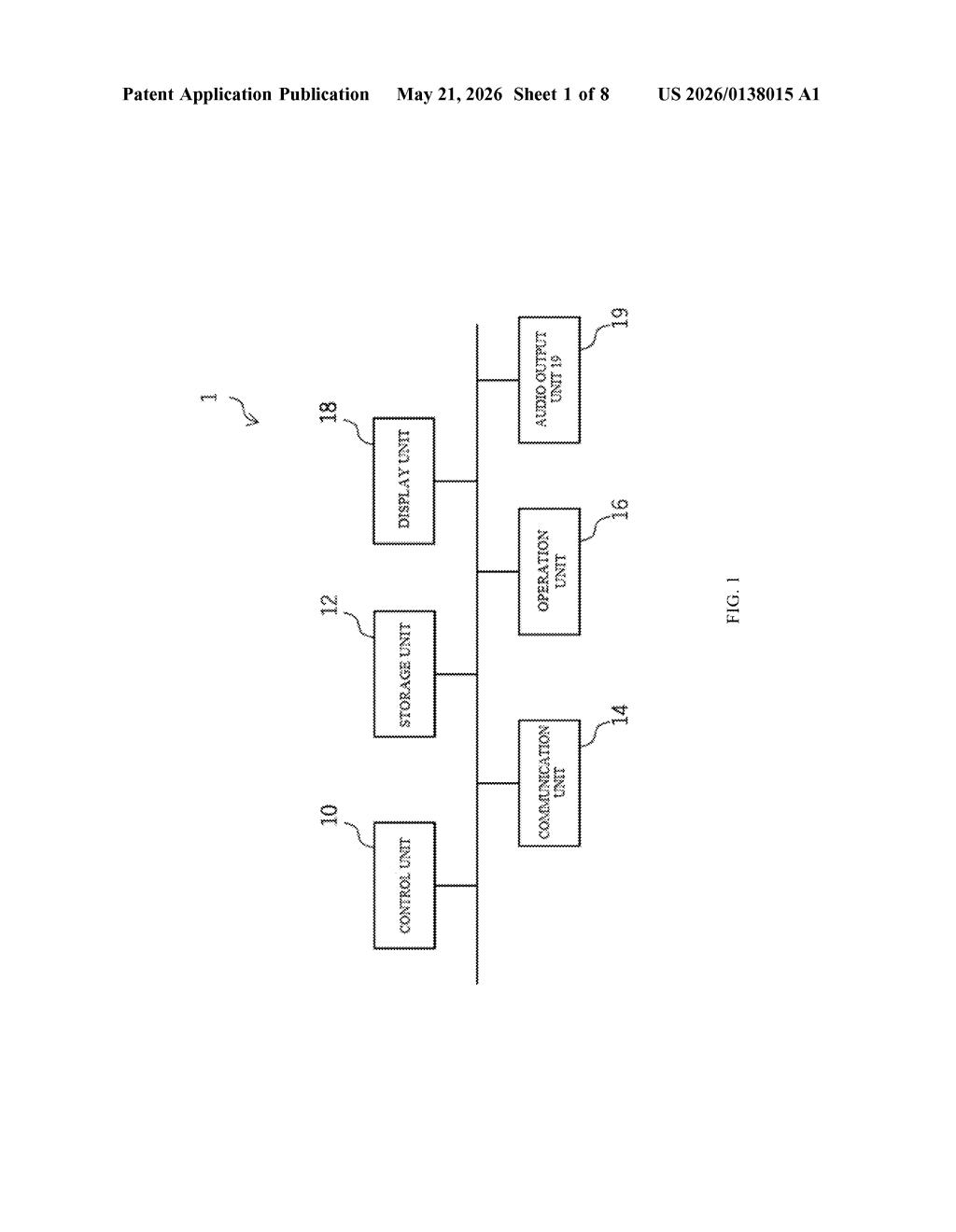
What Sony's game-aware AI upscaling actually does
Imagine your console renders a game frame at a lower resolution to hit a smooth frame rate, then quietly blows it up to 4K before it ever hits your screen. That's already how technologies like DLSS and FSR work today — but Sony's patent takes the idea a step further.
Instead of asking an AI to upscale a frame using only that image's pixel data, Sony's system also hands the model information about the 3D virtual world — things like object positions and geometry — that was used to generate the frame in the first place. The idea is that if the AI knows a pixel should be the edge of a character's helmet, it can make a much better guess about what the high-resolution version should look like.
The model is trained on matched sets of low-resolution inputs, 3D world data, and high-resolution ground-truth outputs, teaching it to use that extra context rather than guessing from pixels alone.
How the ML model uses virtual space data to reconstruct pixels
The system takes a processing target frame — a game image rendered at a baseline resolution — and optionally upsamples it to produce an input frame at the same or higher pixel count. That input frame alone isn't enough. The system also collects virtual space information: structured data about the 3D scene that was used to render the frame, such as object geometry, depth, positions, and orientations.
Both the input frame and the virtual space information are fed into a machine learning model (a neural network trained specifically for this task), which outputs an estimated frame at a higher resolution than the input. The key insight is that scene-level 3D data gives the model semantic grounding — it's not just pattern-matching textures, it understands the underlying geometry.
The model is trained on triplets of:
- A low-resolution training input image
- The corresponding 3D virtual space information for that scene
- A high-resolution ground-truth target image
By learning from thousands of these matched examples, the network develops the ability to use 3D context — not just neighboring pixels — when deciding how to reconstruct fine detail at higher resolutions.
What this means for PlayStation rendering and game performance
AI upscaling is already a fiercely competitive space — Nvidia's DLSS, AMD's FSR, and Intel's XeSS all let games render at lower resolutions and reconstruct a sharper image in real time. Sony's angle here is to bake 3D scene knowledge directly into the upscaling pipeline, which could meaningfully reduce the ghosting and blurring artifacts that current methods sometimes produce around fast-moving or geometrically complex objects.
For PlayStation hardware specifically, this matters a lot. The PS5 Pro already ships with Sony's own PlayStation Spectral Super Resolution (PSSR) AI upscaler, and this patent looks like it could reflect the research direction behind a future iteration of that technology — one that leans harder on the engine's own scene data rather than purely image-based signals.
This is a technically credible step forward in console AI upscaling, and it's the kind of research that explains why Sony launched PSSR instead of just licensing AMD's FSR. Using 3D scene data as a training and inference signal isn't a wild leap — it's a logical evolution that addresses known weaknesses in purely image-based approaches. Whether it ships in a PS6 chip or a PSSR 2.0 firmware update, the direction is clear.
Get our take in your Top Stories
Liked this breakdown? Add Patentlyze as a preferred source on Google, and our plain-English take shows up more often in your Top Stories the next time Sony patent news breaks.
There are more where this came from
We read every patent application Big Tech publishes and send you the ones worth knowing. Plain English, free, every week.
Want this weekly breakdown for a company we don't cover? Patentlyze Pro →