
Sony Patents an AI That Types Text in Your Own Handwriting
Imagine typing a message and having it appear on screen in your own handwriting — not a generic font, but something that actually looks like you wrote it. That's the core idea behind Sony's latest AI patent.
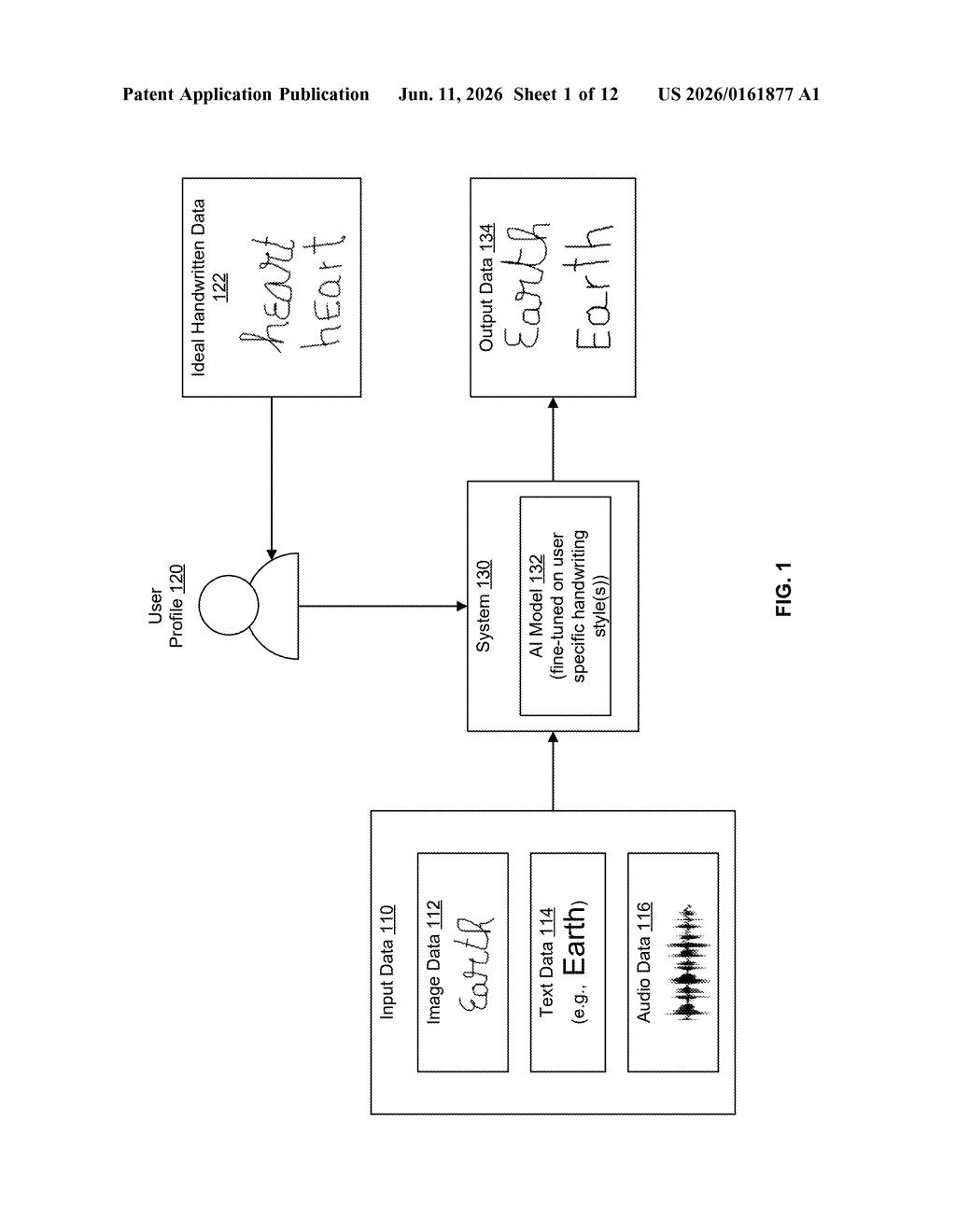
What Sony's handwriting-style AI actually does
Most of us type everything now, but there's something personal about handwriting that a standard font just can't replicate. Sony's patent describes a system where an AI model learns what your handwriting looks like — and then uses that to render any text you type as if you'd written it by hand.
The idea is straightforward: you interact with some kind of interface, tell the system what text you want written, and the AI — already trained on samples of your personal handwriting style — produces an output that looks like the real thing. That output then shows up on a screen, either the same one you're using or a different one entirely.
Think of it like a personalized handwriting font that's unique to you, generated on the fly. Instead of picking from a list of generic cursive fonts, the AI reconstructs the quirks and curves of your actual writing. Sony, best known for PlayStation, could use this across gaming, messaging, or creative apps.
How the AI model learns and reproduces your handwriting
The patent describes a computer-implemented method with four main steps:
- Input capture: A user interacts with a first interface and specifies text they want rendered in their personal handwriting style.
- Input data generation: The system converts that request into structured input for an AI model — essentially packaging the text and style instructions in a format the model understands.
- AI model inference: The AI model, which has been pre-trained (trained in advance, before the moment of use) on the user's specific handwriting style, processes the input and produces output data representing the text visually rendered in that style.
- Presentation: The rendered handwriting is displayed on a second user interface, which may be the same screen or a different one — allowing for cross-device or cross-app delivery.
The key technical claim is that the AI model is trained at least partially on the user's own handwriting, meaning Sony's system likely involves a personalization or fine-tuning step where handwriting samples are collected and used to adapt a general model to a specific person's style.
The patent doesn't detail the underlying model architecture, but this kind of approach is common in generative AI systems that handle stylized image or vector output — where the model learns to reproduce visual characteristics rather than just words.
What this means for PlayStation messaging and digital notes
For Sony's PlayStation ecosystem, this could mean personalized in-game messages, handwritten-looking notes in social features, or custom text in creative tools — adding a human touch to digital communication that currently feels cold and generic. If you've ever wished a birthday message to a friend in a game felt a little more personal than a typed chat line, this is the kind of feature that addresses that.
More broadly, as AI-generated content becomes harder to distinguish from human-made work, a system that ties your specific handwriting to generated text also raises interesting questions about authenticity and identity. It's a personalization tool, but it's also a form of digital signature — and that dual nature makes it worth tracking.
This is a genuinely interesting personalization idea that sits at a sweet spot between AI utility and human expression. It's not the most technically complex patent Sony has ever filed, but the use case is concrete and the appeal is obvious — especially for a company trying to make PlayStation social features feel warmer and more personal. Worth watching to see if it surfaces in PS5 or PS6 software.
There are more where this came from
We read every patent application Big Tech publishes and send you the ones worth knowing. Plain English, free, every week.
Want this weekly breakdown for a company we don't cover? Patentlyze Pro →