
Qualcomm Patents a Self-Monitoring AI System for Phone Wireless Chips
Qualcomm is patenting a way for the AI running inside your phone's wireless chip to watch itself for errors, without having to ask the cell tower every time something looks off.
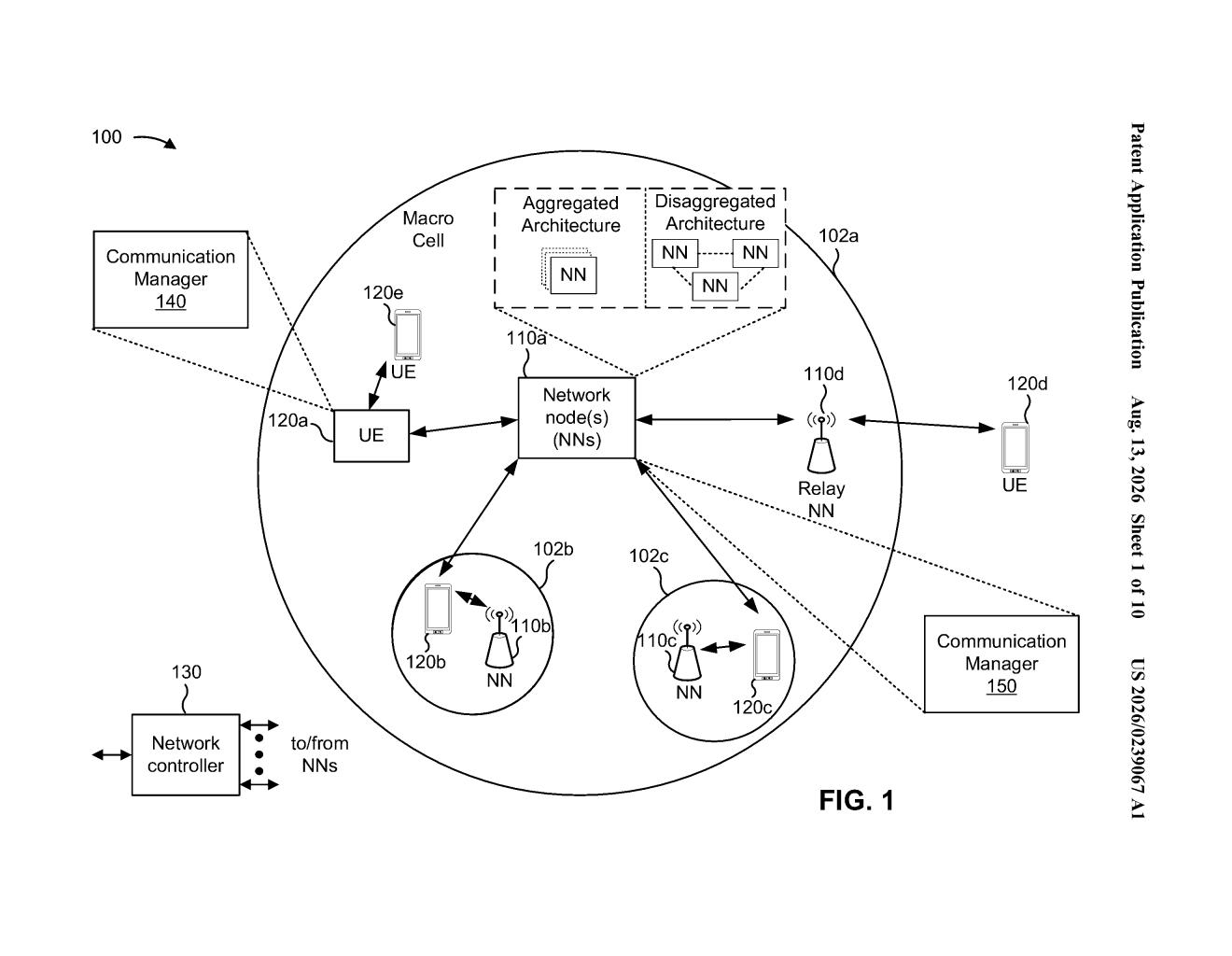
How Qualcomm's phone AI keeps tabs on itself
Imagine your phone's wireless chip has a small AI model helping it manage your signal. That model makes decisions constantly, but what happens when it starts making bad ones? Right now, catching those errors often requires back-and-forth with the cell network, which is slow.
Qualcomm's patent describes adding a second, smaller AI called a proxy model that rides alongside the main one. The proxy's only job is to watch: it takes the same data the main model sees and judges whether the main model is still doing its job well. Think of it like a co-pilot whose only task is to monitor the pilot, not fly the plane.
When the proxy spots a problem, your phone can send a report to the network node (the cell tower or base station) only when it matters, rather than constantly. That targeted reporting saves battery and network resources, while still keeping the carrier in the loop when something is genuinely wrong.
generate a proxy model to be used for monitoring a UE model, the proxy model being configured to receive an input that corresponds to an input of the UE model, an intermediate result associated with the UE model, or an output of the UE model …
Translation: The phone creates a secondary AI to watch its primary AI and track how it processes data.
How the proxy model watches the main wireless AI
The patent describes a two-model setup inside a user equipment (UE), meaning your phone or any other device connecting to a cellular network.
The UE model is the primary AI doing useful work, such as compressing and sending channel state information (CSI) back to the network. CSI is essentially the phone's way of telling the tower what the wireless signal looks like right now, so the tower can adjust how it sends data.
The proxy model is a secondary, lighter-weight AI that monitors the UE model. It can examine:
- The same raw inputs the UE model receives (signal measurements)
- Intermediate results the UE model produces partway through its calculations
- The UE model's final outputs
The proxy then produces its own output, which maps to a system performance metric (like overall throughput), an intermediate key performance indicator (a mid-process health check), or a prediction of what the network's own model would reconstruct from the UE's compressed data. That last point is significant: the proxy is essentially simulating what the network sees, so the phone can self-assess without waiting for feedback from the tower.
Based on the proxy's findings, the phone selectively transmits a monitoring report to the network. Selective transmission means the phone decides when reporting is worth doing, cutting down on unnecessary signaling overhead.
The UE may monitor the UE model using the proxy model. The UE may selectively transmit, to a network node, a report associated with monitoring the UE model using the proxy model.
Translation: The phone checks its own AI performance and decides when to send a status report to the cellular network.
What self-monitoring AI means for your phone calls
For most people, this is about fewer dropped calls and more stable connections in places where your signal is already marginal. If the AI managing your phone's wireless link drifts out of calibration, today's networks catch it slowly. A proxy model that flags the problem from inside the device means the network can recalibrate faster, before you notice the call quality deteriorating.
From a battery and data-overhead perspective, the selective reporting piece also matters. Phones that constantly check in with towers use more power and contribute to network congestion. Qualcomm's approach shifts the burden of detecting AI degradation onto the device itself, which is a pattern appearing across new Big Tech patents in wireless chip and on-device AI filed in the past year.
The concrete payoff here is error recovery speed: a phone that catches its own AI failures and reports them only when necessary gives you a better shot at smooth calls and steady data speeds without burning extra battery on constant check-ins. That said, this is infrastructure plumbing aimed at 5G and future 6G network standards, so the benefit lands at the chipset and carrier level long before any individual user would notice a change in their settings or their phone's behavior. The average person will never see a proxy model, but they may eventually stop seeing as many sudden signal drops.
There are more where this came from
We read every patent application Big Tech publishes and send you the ones worth knowing. Plain English, free, every week.
The drawings
10 drawing sheets from US 2026/0239067 A1 · click any drawing to enlarge


Want this weekly breakdown for a company we don't cover? Patentlyze Pro →
Be the first to weigh in