
Apple Patents Technology That Predicts Where Code Will Jump Before It Leaps
Every time a processor hits a 'jump instruction' that points to an unpredictable destination, it slows down. Apple's latest patent describes a circuit that watches for jumps that almost always land in the same place, and treats them as if they were hard-coded shortcuts.
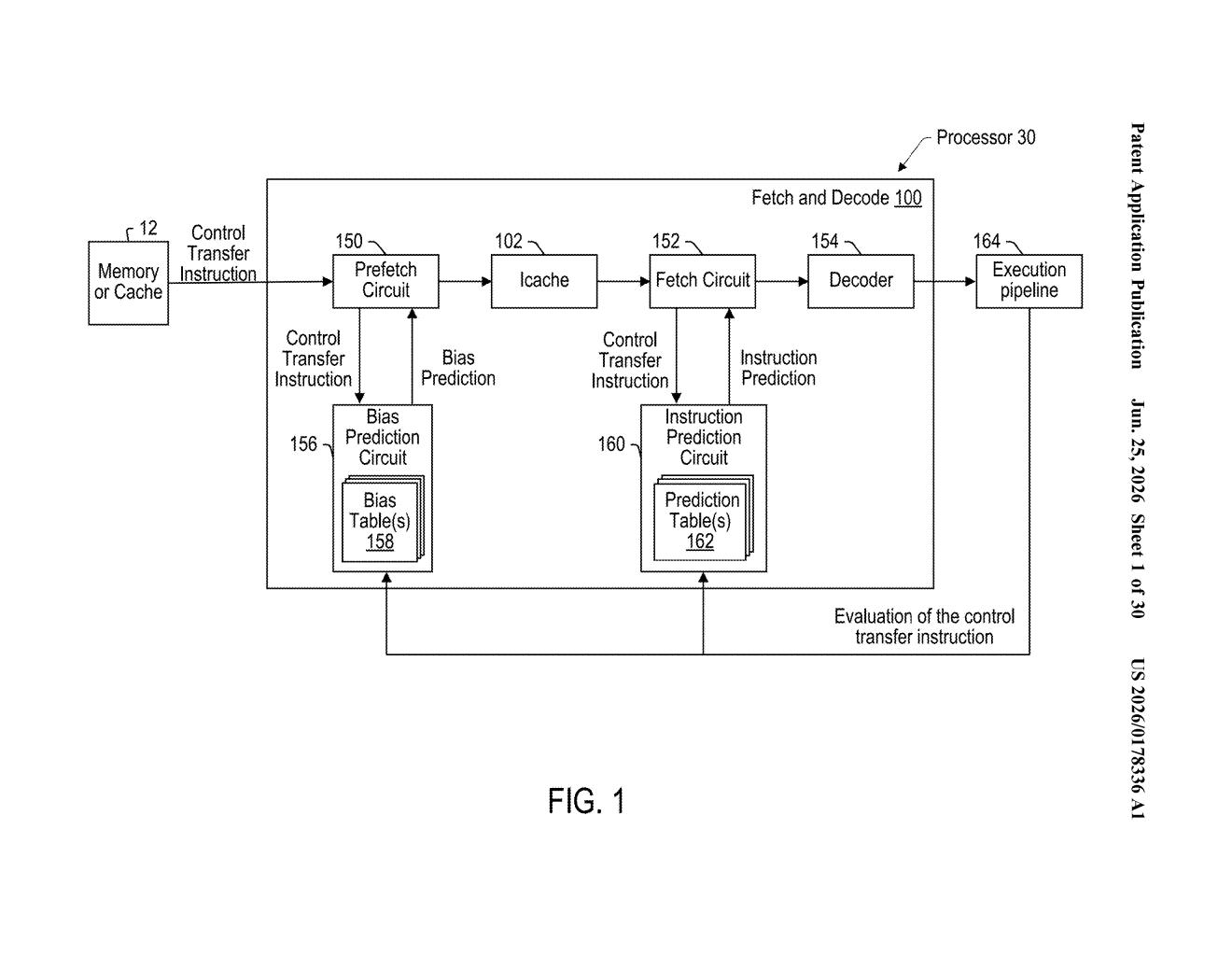
What Apple's branch-prediction shortcut actually does
Imagine a GPS that has to recalculate your route every single time you leave the driveway, even though you take the exact same road to work every day. That constant recalculating wastes time. Your processor faces the same problem millions of times per second with instructions that say 'jump to wherever this variable points.'
Apple's patent covers a circuit that watches those 'jump to a variable location' instructions and notices when they almost always go to the same destination. Once the circuit is confident enough, it stops treating the jump as a mystery and handles it like a hard-coded 'always go here' instruction instead.
The result is a faster pipeline: the chip doesn't have to wait and double-check as long, because it has already decided with high confidence where the jump will land. This happens during the very first stage of pulling the instruction out of memory, before most of the chip's heavy lifting even begins.
How the circuit rewrites indirect jumps at fetch time
Processors handle two main kinds of jump instructions (called control transfers). A direct jump always goes to the same fixed address, which is cheap and fast to predict. An indirect jump goes to an address stored in a register or memory location, which can change at runtime, making it expensive to predict.
Apple's patent describes an indirect control transfer prediction circuit that operates during the fetch stage, the very moment an instruction is being pulled from memory into the instruction cache. At that early point, the circuit evaluates whether a given indirect jump is biased, meaning it has a strong historical tendency to always land at the same target address.
If the circuit predicts the instruction is biased, it tells the rest of the pipeline to treat it as if it were an unconditional direct jump to that predicted target. This is a meaningful optimization because:
- Direct jumps resolve earlier in the pipeline, reducing stall cycles.
- Acting at fetch time, before decode or execution, gives the chip the maximum possible head start.
- If the prediction turns out to be wrong, the chip can still recover by flushing and re-executing, but those cases are rare for truly biased instructions.
The core claim covers both the prediction hardware and the mechanism that converts the execution path based on that prediction.
What this means for Apple chip performance
Branch mispredictions are one of the most persistent performance costs in modern processors. Indirect branches are particularly tricky because compilers can't resolve them ahead of time, which is also why they're a common target in security exploits like Spectre. A circuit that can catch the predictable subset of indirect jumps early, before they even enter the main pipeline, shaves real cycles off common workloads like running apps, interpreting scripts, or dispatching virtual function calls in object-oriented code.
Apple designs its own chips, from the M-series in Macs to the A-series in iPhones, so improvements like this go straight into products rather than being licensed from outside vendors. A fetch-stage optimization of this kind would benefit everything those chips run, without requiring any changes from app developers.
This is exactly the kind of low-level microarchitecture work that doesn't make headlines but adds up to the sustained performance edge Apple's chips have maintained over the past several years. It's not flashy, but a fetch-stage bias detector for indirect branches is a real and specific optimization, not a paper exercise. Worth filing away as evidence that Apple's silicon team continues to go deep on pipeline design.
There are more where this came from
We read every patent application Big Tech publishes and send you the ones worth knowing. Plain English, free, every week.
Want this weekly breakdown for a company we don't cover? Patentlyze Pro →