
Apple Patents a Camera Effects Mode Built Directly Into iMessage
Apple has filed a patent that would let you flip on face avatars, stickers, and screen effects without ever leaving a text conversation. The camera and the chat live in the same flow, and the effects are baked right into the capture step.
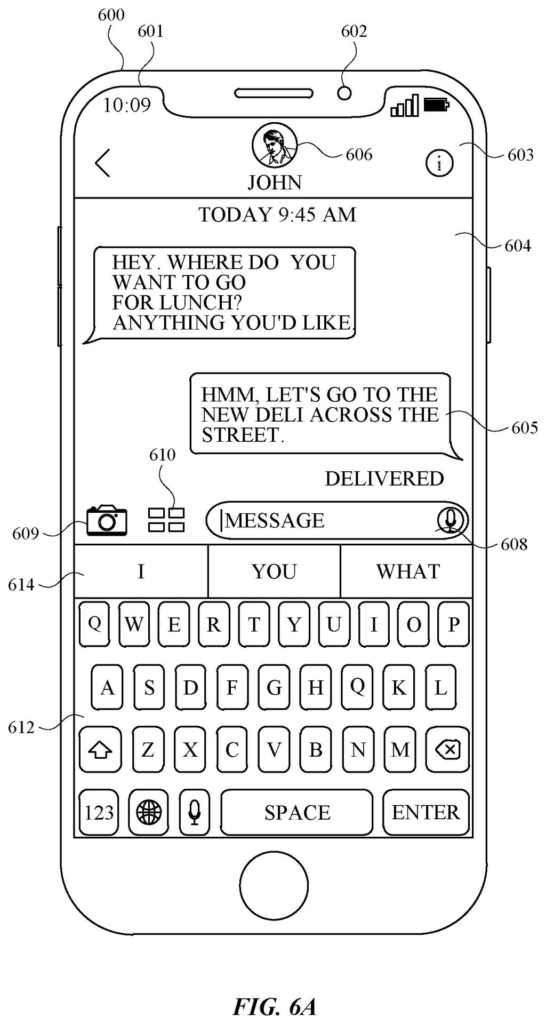
What Apple's in-chat camera effects button actually does
You're texting a friend and want to send a funny photo with a cartoon face over yours. Right now that might mean switching to another app, taking the shot, saving it, and coming back to paste it in. This patent describes a way to skip all of that.
Apple's filing covers a camera mode that you can reach from inside a message thread. You tap a camera button in the chat, a full camera view opens, and right there alongside the shutter button is an option to turn on visual effects: animated avatars that sit on your face, stickers you can place on the image, and full-screen decorative overlays. Tap that, and the phone shifts into an effects-enabled mode before you even take the shot.
Once you capture the image with effects on, the usual send button is replaced by a dedicated sharing step that routes the photo back to that specific conversation. The whole thing stays inside the Messages flow from start to finish.
… an effects mode affordance associated with a mode in which visual effects are enabled for display in image data that is captured …
Translation: A button activates special effects that modify the photos or videos you take.
How the effects mode affordance switches camera states
The patent describes an effects mode affordance (basically a button) sitting inside a camera interface that itself is launched from a messaging thread. Tapping it triggers a formal mode switch in the device, moving from a standard camera state to one where visual effects are active and visible in the live preview before you capture anything.
The claim specifically covers three categories of effects:
- Avatars displayed on the user's face, using the front camera and facial tracking
- Stickers applied on top of the captured image data
- Screen effects, which are full-frame decorative overlays
The patent also notes that effects can be modified based on depth data in the image. That means the device uses its depth-sensing hardware (the same tech behind Portrait Mode and Face ID) to understand what's foreground and background, letting effects behave more realistically, for example, having a sticker tuck behind a hand or follow a face as it moves in 3D space.
After capture, the interface hides the shutter button and surfaces a new control that initiates sending the image directly to the open conversation. The state machine described in the claim is quite precise: each user input triggers a specific transition, which is the kind of detail that makes this a patentable interaction design rather than a general idea.
… visual effects include an avatar displayed on a user's face. In some examples, visual effects include stickers applied to image data …
Translation: The system can put digital avatars over your face or stick graphics onto your photos.
What this means for iMessage as a creative platform
For regular users, this is about reducing the number of steps between "I want to send something funny" and actually sending it. Keeping the camera, effects tools, and the send action inside one unbroken flow is the kind of friction reduction that tends to produce a real bump in feature usage. Snapchat built an entire company on a similar insight: effects that live at the moment of capture, not after.
For Apple, filing this kind of interaction-design patent signals continued investment in iMessage as a platform rather than just a messaging protocol. Camera effects in Messages already exist in a limited form, so the patent may be protecting a more structured, mode-based version of that system. Coverage of this filing and others like it is part of the broader stream of interesting tech patents tracking where messaging and creative tools are converging at the OS level.
This is the 339th Apple filing in our Apple coverage since May, adding to work like the two-sender audio check and the pre-send data safety check.
From a ship-path perspective, this is about as close to shippable as a patent filing gets. There is no new sensor, no exotic material, and no chip architecture that has to exist first. The hardware Apple already ships in every modern iPhone, front camera, depth sensor, display, and the A-series processor, is everything this feature needs. The claim is essentially a formalization of a user flow. The effects themselves (avatars, stickers, screen overlays) are already part of iOS.
What the patent locks in is the specific sequence: enter from a chat thread, activate an effects mode via a dedicated affordance, capture, and send, as a defined state machine. That level of specificity is often what separates a patent that survives challenge from one that doesn't.
The shortest route to a product here is a software update to Messages. The interaction design is the work, and that work is largely described in the document itself.
Get our take in your Top Stories
Liked this breakdown? Add Patentlyze as a preferred source on Google, and our plain-English take shows up more often in your Top Stories the next time Apple patent news breaks.
There are more where this came from
We read every patent application Big Tech publishes and send you the ones worth knowing. Plain English, free, every week.
The drawings
249 drawing sheets from US 2026/0255047 A1 · click any drawing to enlarge


Want this weekly breakdown for a company we don't cover? Patentlyze Pro →
Be the first to weigh in