
Apple Files Patent for a Headset That Notices When You're Upset and Suggests a Break
Apple has filed a patent application for a headset that reads your frown, your racing heart, or your arms shielding your body, then decides when you've had enough. It can even flag the avatar that's making you uncomfortable.
What Apple's comfort-sensing headset actually does
Ever felt your stomach tighten when a stranger stood a little too close, before you could even say why? In a shared virtual room, another person's avatar can crowd you the same way, and a headset on your face makes it easy to miss how rattled you are.
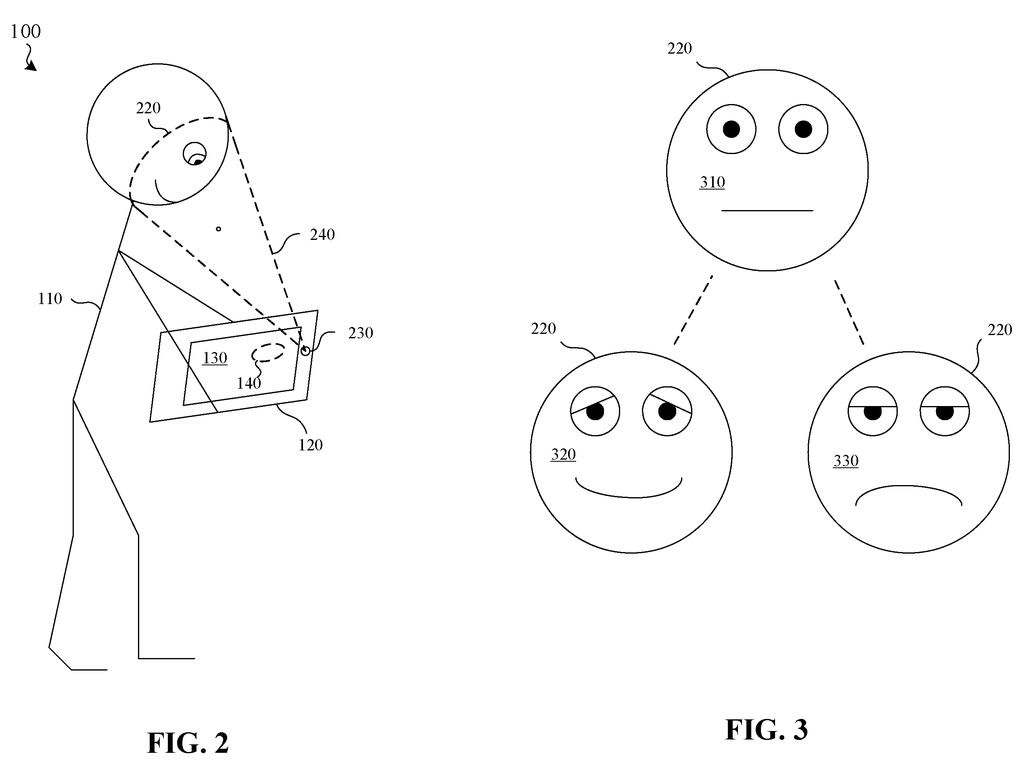
Apple's patent application describes a headset that watches for those signals for you. It looks at your facial expressions, your voice, your body language (like crossing your arms in front of you) and even your heart rate. If it decides you're uncomfortable, it can show a message, suggest a break, offer to block or report whatever is bothering you, or alert a parent or moderator.
Apple says the body data stays locked on your device, and you can opt in or out. The filing even imagines the other person's avatar getting a warning label or being dialed back.
Some implementations disclosed herein present multimedia content to a user, identify a comfort state of the user (e.g., happy, unhappy, distressed, etc.) based on body data of the user …
Translation: The headset can figure out your mood by watching your physical reactions while you use it.
How the headset reads your face and body signals
The patent describes a worn device, such as a headset, that watches your body while you view a shared virtual or mixed-reality space. It sorts what it sees into a comfort state (for example happy, unhappy or neutral) and then passes that result along so the view you're looking at can change. That is what the claims cover.
The filing lists many possible inputs:
- Cameras aimed at the eyes and face, to catch a smile or a grimace
- Microphones for tone of voice, spoken words and breathing
- Motion and depth sensors for body language, like shielding with the arms
- Health sensors such as heart rate, blood oxygen or EKG (a heart rhythm reading)
A machine learning model (software trained on examples to spot patterns) sorts the signals into predefined classes. The description says it can compare you against your own baseline, so someone whose resting face looks like a frown isn't flagged all day. It can also weigh context, such as what's being said or how close another user's avatar is.
The device can send the result over Bluetooth or Wi-Fi to a separate device that draws the scene. That device can then show a message, suggest a break, offer block or report options, or alert a guardian. The body data and comfort result can be kept in a secure enclave (a locked-off storage area on the device).
obtaining, via the one or more sensors, data regarding a body of the user while the user is viewing a multimedia environment; determining, based on the data regarding the body of the user, that the user is in a particular comfort state; …
Translation: Sensors track your body while you watch something to figure out if you are uncomfortable.
What this means for harassment in shared VR rooms
If you spend time in shared virtual spaces, this could mean a headset that notices you're upset before you do and gives you an easy way out, like one tap to block someone or report them. The filing also describes alerts to a parent or moderator, plus parental controls that work both before and after an incident.
It also touches the people who make games and apps. Subject to privacy settings, the patent describes sending comfort data from many viewers back to content creators, so they can see which scene made people uneasy. The tricky part is trust: a headset that reads your face and heartbeat has to show that the data stays on your device, which is why the filing leans on locked-off storage and opt-in controls.
Apple's 95th filing we've tracked since May in our AR glasses watchlist adds to a picture built by patents like one moving a caller's avatar and one controlling where apps open.
The shortest route to a shipping version is mostly software. A headset with cameras aimed at your eyes and face, plus a microphone, already has most of what the claims list, so a basic "you seem uncomfortable, want a break?" nudge needs no new hardware.
Reading a grimace correctly is the hard part. A player who yelps during a horror game is having fun, and the filing itself pairs body language with heart rate to tell play from real distress. Heart rate and EKG sensors are on the filing's list, and a typical headset doesn't carry them, so a first version would probably lean on face and voice.
Flagging another person's avatar needs the most groundwork. Every app and every user in a shared room has to agree on what happens when a comfort signal fires. That is a platform decision, and it would decide whether this ever leaves the lab.
Get our take in your Top Stories
Liked this breakdown? Add Patentlyze as a preferred source on Google, and our plain-English take shows up more often in your Top Stories the next time Apple patent news breaks.
There are more where this came from
We read every patent application Big Tech publishes and send you the ones worth knowing. Plain English, free, every week.
The drawings
6 drawing sheets from US 2026/0319578 A1 · click any drawing to enlarge


Want this weekly breakdown for a company we don't cover? Patentlyze Pro →
Be the first to weigh in