
Apple Files Patent for 3D Music Visuals That Surround You in a Headset
Most music visualizers react to a sound after it happens. Apple's filing describes planning the visuals from song data ahead of time, so 3D effects around you in a headset land right on the beat.
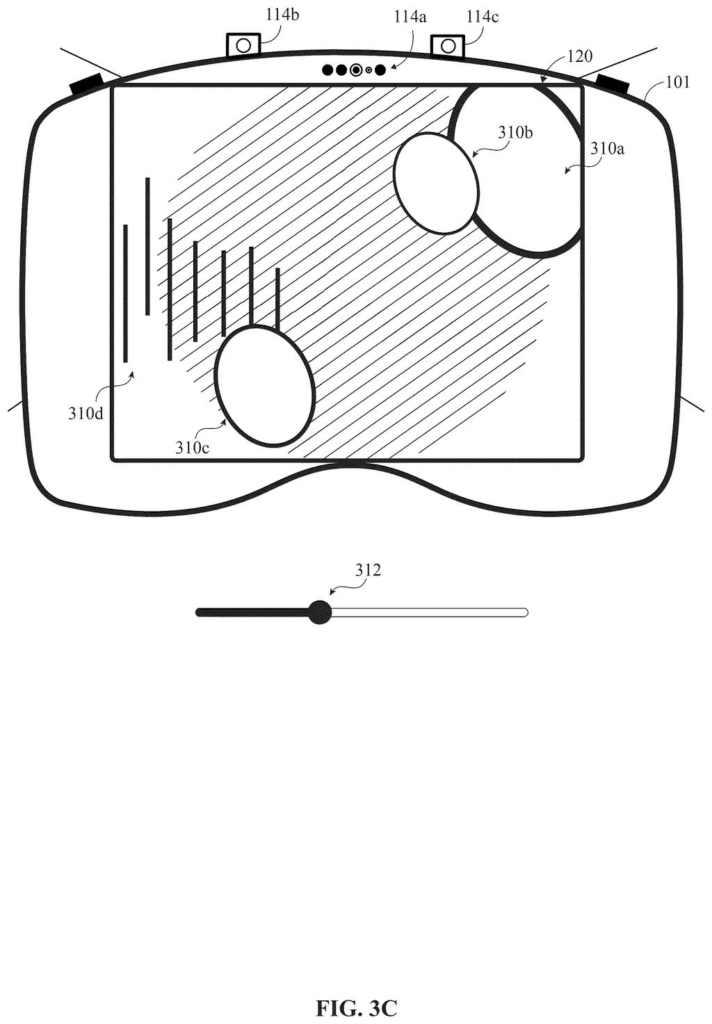
What Apple's 3D music visualizer actually does
Imagine putting on a headset, pressing play on your favorite song, and watching glowing orbs bounce through the room in time with the music. When the chorus hits, the orbs change shape. When a big beat drops, a flash of light shoots across your view. You can even reach out and shove the orbs around with your hands.
That is what Apple describes in this patent application. The usual trouble with music visuals is that they react to sound after it happens, so they lag a little behind. Apple's idea is to pull information about the song ahead of time, such as where the verses, choruses and big accents fall, and use it to plan the visuals so they land right on cue.
The filing also covers extras. You pick a theme like "Bounce" or "Lasers," and the device can adjust for the delay of Bluetooth headphones so sound and visuals still line up.
… presenting, via the one or more displays, a computer-generated visualization using the plurality of time synchronized metadata in a three-dimensional environment, wherein the computer-generated visualization includes a three-dimensional visualization corresponding to the first audio track in accordance with the immersive mode of playback.
Translation: Showing a 3D visual for the song around you when you turn on immersive mode.
How song data becomes a recipe for the visuals
The main claim covers a simple chain. You ask your device to play a song in an immersive mode. The device retrieves audio data about that song from the music app, turns it into time-synchronized metadata (a timeline of facts about the song, tied to exact moments), and draws a 3D visualization from that timeline.
The description calls the bundle of instructions a recipe: a list of settings, stored in a common data format, that says what the visuals look like, how they move and where they sit in the room. The timeline can mark phases (verse, chorus, bridge), accents (a beat drop or cymbal crash) and loudness. Lyrics can set the mood: the system can judge whether they sound happy or sad and pick a base color.
The dependent claims and description add several details:
- Anticipation: a running value tracks how close the song is to its next accent, so a visual change fires on time.
- Speaker delay: the device identifies the speaker type, looks up its delay, and shifts the visuals to match.
- Hand tracking: moving your hands changes the position, speed or direction of the objects.
- Editing: sliders can change things like the number of rays or the sky brightness.
The description also covers flat screens. Examples include phone lock-screen visuals colored from album art, and raindrops on a watch face when the lyrics are sad or the weather app reports rain.
Computer-generated visualization accompanies playback of an audio track. In some examples, systems and methods include detecting, via the one or more input devices, a first input corresponding to a request to playback a first audio track in an immersive mode at the electronic device.
Translation: The system detects when you ask to play a song in a special immersive mode.
Why headset music could get a lot more visual
For you, the payoff would be music that feels staged around you instead of pasted on a screen. Visuals that anticipate the song rather than chase it should look tighter, and the speaker-delay fix means Bluetooth earbuds would not throw the timing off. Because the same recipe idea is described for phones and watches, the feature could also reach screens you already carry.
It also fits what people tend to do in a headset: sit back and take in entertainment. A music app that doubles as a light show gives headset owners something to enjoy without a work task in mind. Keep in mind this is a patent application, and nothing in it says when or whether it will ship.
Apple's 90th filing we've tracked in our AR glasses watch since May builds on ideas like self-moving virtual objects and see-through room windows as the company keeps applying for ways to blend digital and physical space.
If you own a headset, the thing you would notice is timing. Visuals that fire a split second late feel off in a way that is hard to name, and preparing them from song data in advance is a sensible fix. The speaker delay adjustment will matter most day to day, because plenty of people listen on Bluetooth earbuds.
The rest is a light show you can steer: themes, hand gestures, a calmer look when your phone is on silent. How often you would use it depends on how good the visuals look, and a patent cannot tell us that.
For anyone who likes watching music as much as hearing it, this is a thoughtful design with a clear benefit.
Get our take in your Top Stories
Liked this breakdown? Add Patentlyze as a preferred source on Google, and our plain-English take shows up more often in your Top Stories the next time Apple patent news breaks.
There are more where this came from
We read every patent application Big Tech publishes and send you the ones worth knowing. Plain English, free, every week.
The drawings
20 drawing sheets from US 2026/0320888 A1 · click any drawing to enlarge


Show the other 12 sheets


Want this weekly breakdown for a company we don't cover? Patentlyze Pro →
Be the first to weigh in