
Apple Patents a Facial Animation System That Learns Your Face in Real Time
Apple has filed a patent for a facial animation system that builds a custom model of your face on the fly, then keeps refining it as you move, so animated versions of you stay accurate even as your expressions change.
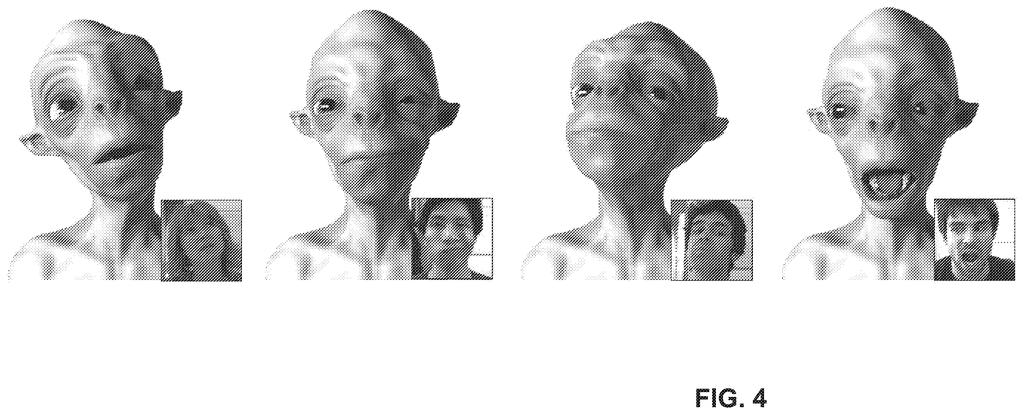
What Apple's personalized face-tracking system actually does
You're setting up a new iPhone and the camera scans your face. Instead of matching you against a one-size-fits-all template, the system builds a model shaped around your specific features in that moment.
That personal model then drives whatever comes next, whether it's a Memoji that mimics your expressions in a FaceTime call or a security check that recognizes the subtleties of your face. As you keep using the camera, the system feeds new data back in and updates the model, so it doesn't drift out of sync when the lighting changes or you grow a beard.
The practical payoff is animation and tracking that feels tuned to you rather than averaged across millions of people. For everyday users, the difference shows up in moments when an avatar finally looks like you, not just a cartoon approximation.
… generate user-specific model based on the first sensor data; and upon receiving additional sensor data of the user, generate a graphical representation of the user using the additional sensor data and the user-specific model.
Translation: The system builds a custom digital profile of your face to animate a virtual character that mimics your expressions.
How the model updates itself from your live sensor data
The patent describes a two-stage loop running on a local device (a phone, tablet, or headset).
- Stage 1 - Build the model: When the camera captures your face for the first time, the system generates a user-specific expression model. Think of it as a personal template that encodes how your cheeks, brows, and mouth move relative to each other, rather than relying on a generic average face.
- Stage 2 - Track and refine: As the camera keeps streaming sensor data (depth maps, color frames, or infrared readings), the system estimates tracking parameters (numerical descriptions of where each facial feature is and how it is moving) using that personal model. Crucially, it then feeds those estimates back to update the model itself, so the template keeps improving.
- Stage 3 - Generate output: Those refined parameters drive a graphical representation, meaning an animated face, avatar, or mask that mirrors your live expression.
The term online modeling in the patent title means the model is built and updated in real time during use, not trained in advance in a data center. All of this is designed to run locally on the device, which matters for both speed and privacy.
The method includes providing a dynamic expression model, receiving tracking data corresponding to a facial expression of a user, estimating tracking parameters based on the dynamic expression model and the tracking data, and refining the dynamic expression model based on the tracking data and estimated tracking parameters.
Translation: The software constantly updates its understanding of your face to make the animation more accurate as you move.
What this could mean for Face ID, Memoji, and AR avatars
For you as a user, the direct payoff is an avatar or animated face that actually resembles you and stays accurate over time. Today's Memoji and similar systems can look approximate at best and uncanny at worst, partly because they rely on fixed facial templates. A system that personalizes its model from your first scan and keeps correcting itself as you move could close that gap in a noticeable way during everyday FaceTime calls or Messages.
The deeper play is that the same on-device, user-specific model could tighten Face ID performance or anchor augmented-reality overlays to your actual face geometry. Apple has been steadily filing in the AR and avatar space, and this patent sits alongside a broader wave of latest Big Tech patents pushing real-time facial tracking from cloud-based processing onto the device itself, a shift that affects both the responsiveness and the privacy of anything that reads your face.
This is the eighth Apple filing we've tracked since July in our on-device AI privacy push watchlist, building on ideas like Siri's call privacy shift and a pre-send data safety check.
The key idea is that the animated face representing you keeps adjusting to your specific expressions while you use it, rather than relying entirely on a one-size-fits-all model built before you ever picked up the device. For most people using Memoji in a bright room, the difference would be subtle.
The gap becomes obvious in harder situations: dim lighting, a hand partly covering your face, or an expression the system has never seen before. That is when a model tuned to you specifically prevents the animation from looking wrong or frozen.
On Apple Vision Pro, where your digital likeness stands in for you in conversations and shared spaces, that accuracy matters in a way it simply does not on a phone screen. A few seconds of awkward or misread expressions there feels like a social failure, and a system that corrects itself over time is what prevents it.
Get our take in your Top Stories
Liked this breakdown? Add Patentlyze as a preferred source on Google, and our plain-English take shows up more often in your Top Stories the next time Apple patent news breaks.
There are more where this came from
We read every patent application Big Tech publishes and send you the ones worth knowing. Plain English, free, every week.
The drawings
8 drawing sheets from US 2026/0253301 A1 · click any drawing to enlarge


Want this weekly breakdown for a company we don't cover? Patentlyze Pro →
Be the first to weigh in