Meta
Meta · Chip · Filed Feb 11, 2026 · USPTO published Aug 27, 2026 · Aug 27 release
Meta Patents a Camera That Identifies Objects Before Image Data Leaves the Device
Most cameras ship your raw photos off to a processor somewhere else before any AI runs on them. Meta is filing a patent for a sensor that does the AI work right on the chip, so nothing identifiable ever has to leave.
- Publication number
- US 2026/0252168 A1(US20260252168A1)
- Applicant
- Meta Platforms Technologies, LLC
- Filed · Published
- Feb 11, 2026 · Aug 27, 2026
- Inventors
- Syed Shakib Sarwar, Xinqiao Liu, Barbara De Salvo
- Status when we published
- Waiting for an examiner
- Document
- 20 claims
- US classification
- 382/103
- Parent application
- Claims priority from a provisional application 63764049 (filed Feb 27, 2025)
What Meta's on-chip object detection actually does for privacy
You're wearing a pair of AR glasses at a family dinner, and the camera is constantly looking at the world around you. Every person, every face, every object in the room is being processed somewhere. The question nobody has answered cleanly yet is: where does that processing happen, and what happens to the raw images along the way?
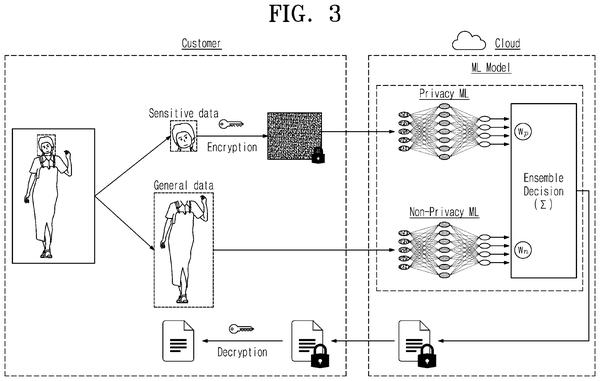
Meta's patent describes a camera sensor that does the recognition work inside the sensor itself, before the image ever travels to a separate chip or a server. Instead of sending a picture, it sends a small, encrypted label, something like a numeric code that says "there is a person here" without handing over the actual image of that person's face.
For you as a user, that's a meaningful difference. The raw photo, the one that could identify who you are or what you're doing, never has to leave the camera chip at all. Only the compressed, encrypted result does.
… an on-sensor object identification module communicatively coupled to the object code encryption module, the on-sensor object identification module configured to: receive the image data from the image pixel array; determine an identified object in the image data; generate an object code for the identified object in the image data …
Translation: The camera hardware identifies what it is looking at and creates a digital label for the object before sending any data out.
How the sensor identifies, codes, and encrypts objects on-chip
The patent describes an image sensor that has three built-in components working together:
- Image pixel array: the part of the sensor that actually captures light and turns it into image data, same as any camera.
- On-sensor object identification module: a processing unit embedded directly in the sensor that analyzes the captured image and figures out what objects are present, doing what would normally require a separate AI chip or cloud server.
- Object code encryption module: once the sensor identifies an object, it converts that identification into a compact "object code" (essentially a label or numeric token), then encrypts it before sending anything downstream.
The key distinction from conventional architectures is where the computation happens. In a typical system, raw pixels travel to an off-sensor processor (a separate chip, or even a remote server) before any AI analysis runs. That means full image data, potentially including faces and biometric detail, moves across a data bus or a network connection.
Here, the identification and encryption steps happen inside the sensor package. The off-sensor processor only ever receives the encrypted object code, never the underlying image. That gap between "image data" and "object code" is the privacy claim the patent is built on.
The filing does not specify which object detection model runs on the sensor, leaving that as an implementation detail, which suggests the patent is aimed at the architectural approach rather than any particular algorithm.
Objects in the image data are identified using on-sensor processing and object codes are generated for the identified objects. The generated object code is encrypted and transmitted to an off-sensor processor.
Translation: The device processes images internally to label objects and sends only the encrypted labels to an external computer.
What this means for AR glasses and camera privacy rules
The privacy stakes around always-on cameras, particularly in wearable devices like AR glasses, are real and growing. Regulators in the EU and several US states have expanded biometric data laws, and camera-equipped wearables are exactly the category those laws target. A design that prevents raw image data from ever leaving the sensor chip sidesteps a significant chunk of that legal and reputational exposure, because data you never transmit is data you can't mishandle or leak.
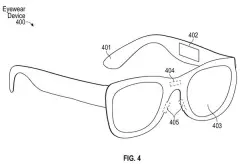
Meta has a direct product reason to care about this. The company sells Ray-Ban smart glasses with cameras, and has shown concept hardware for full AR glasses. An on-sensor privacy architecture would be a useful answer to regulators and skeptical consumers alike. This filing sits in the same area of Big Tech patent news around camera-chip AI that Apple, Qualcomm, and others have been pursuing, as the industry races to move sensitive computation closer to the sensor and farther from the cloud.
This is the 56th Meta filing we've tracked on our smart glasses watchlist since May, joining earlier work like one on hearing enhancement controls and one on finger rub menus.
Source: US 2026/0252168 A1 at the USPTO (PDF). Full patent text and figures are in the official publication.
Get our take in your Top Stories
Liked this breakdown? Add Patentlyze as a preferred source on Google, and our plain-English take shows up more often in your Top Stories the next time Meta patent news breaks.
Add Patentlyze on Google
One click.
There are more where this came from
We read the new patents from Big Tech, carmakers and more and send you the ones worth knowing. Plain English, free, every week.
The drawings · 14 sheets
14 drawing sheets from US 2026/0252168 A1 · click any drawing to enlarge


Show the other 6 sheets


More from Meta
All 192 Meta patents →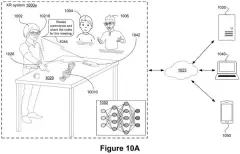
More in Chip
All 651 Chip patents →
Samsung
Samsung Patents a Chip Circuit That Randomly Scrambles Data Before Encrypting It
Apple
Apple Patents a Two-Sender System That Confirms Wireless Audio Delivery
Intel
Intel Patents a GPU Shortcut That Skips Redundant 3D Geometry Work
Intel