
Apple Patents a Swappable Nose Bridge for Glasses That Project Images
Apple is thinking carefully about the part of a headset that sits directly on your face. A new patent details a nosepiece that can be snapped on and off a wearable display, suggesting users could swap it out for a better fit.
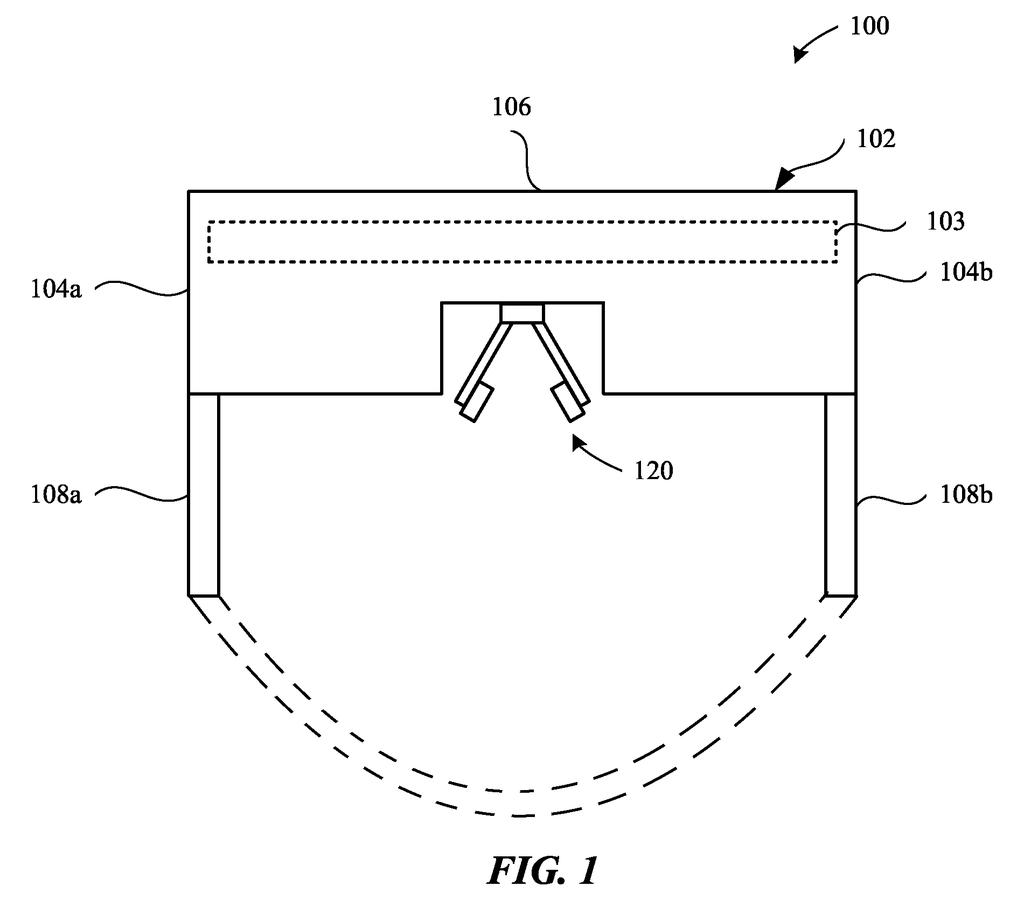
What Apple's removable nosepiece actually does
Imagine wearing a pair of ski goggles that dig into your nose after an hour. Now imagine being able to pop off that uncomfortable bridge piece and click in a different one that fits your face better. That's the basic idea here.
Apple has filed a patent for a wearable display (think a headset or smart glasses) with a nosepiece you can remove and replace. The nosepiece has a central stem that slots into the headset housing, with two angled arms branching off it, each tipped with a soft pad that rests on either side of your nose.
The key word is removably coupled. Apple is designing this so the nosepiece isn't permanently attached, which means you could swap it for a different size, shape, or material, or simply take it off to clean it.
How the stem-and-strut nosepiece attaches and fits
The patent describes a wearable display device built around three main parts: a display, a housing that wraps around it, and a nosepiece that clips onto the housing.
The nosepiece itself has a specific geometry:
- A stem that slides into a receptacle on the display housing, acting as the attachment point
- Two struts (rigid arms) that branch away from the stem at defined angles, one on each side
- Two pads at the ends of those struts, which are the surfaces that actually touch the wearer's nose
Because the struts extend at set angles, the geometry determines how far apart the pads sit and at what height they contact the nose. Different nosepiece variants with different angles or pad shapes could accommodate different face geometries.
The removable design is the structural point the claim emphasizes. The stem is designed to be received by (and presumably released from) the housing, meaning the whole nosepiece assembly can be detached without tools.
What this means for Apple Vision Pro comfort
Fit is one of the most-cited complaints about existing head-worn displays. The Apple Vision Pro, for example, ships with a Light Seal and a fixed nosepiece, and many users report comfort issues during longer sessions. A modular nosepiece system would let Apple offer multiple sizes in the box or sell them separately, similar to how it handles Apple Watch bands.
For you as a potential wearer, this could mean the difference between a headset you can use for two hours and one you can use for twenty minutes before your nose hurts. It's a small, unglamorous hardware detail, but it's the kind of thing that determines whether a device actually gets worn.
This is a practical patent, not a flashy technology announcement. But nosepiece comfort is a real barrier to adoption for head-worn displays, and the fact that Apple is patenting a modular, swappable design suggests it's treating fit as a first-class engineering problem rather than an afterthought. That's the right instinct.
There are more where this came from
We read every patent application Big Tech publishes and send you the ones worth knowing. Plain English, free, every week.
The drawings
5 drawing sheets from US 2026/0219513 A1 · click any drawing to enlarge


Want this weekly breakdown for a company we don't cover? Patentlyze Pro →