
Sony Patents an AR System That Reads the Room to Customize What You See
What if an AR headset could automatically adjust what it shows you — based on who you are — without you touching a single setting? That's the core idea in this Sony patent.
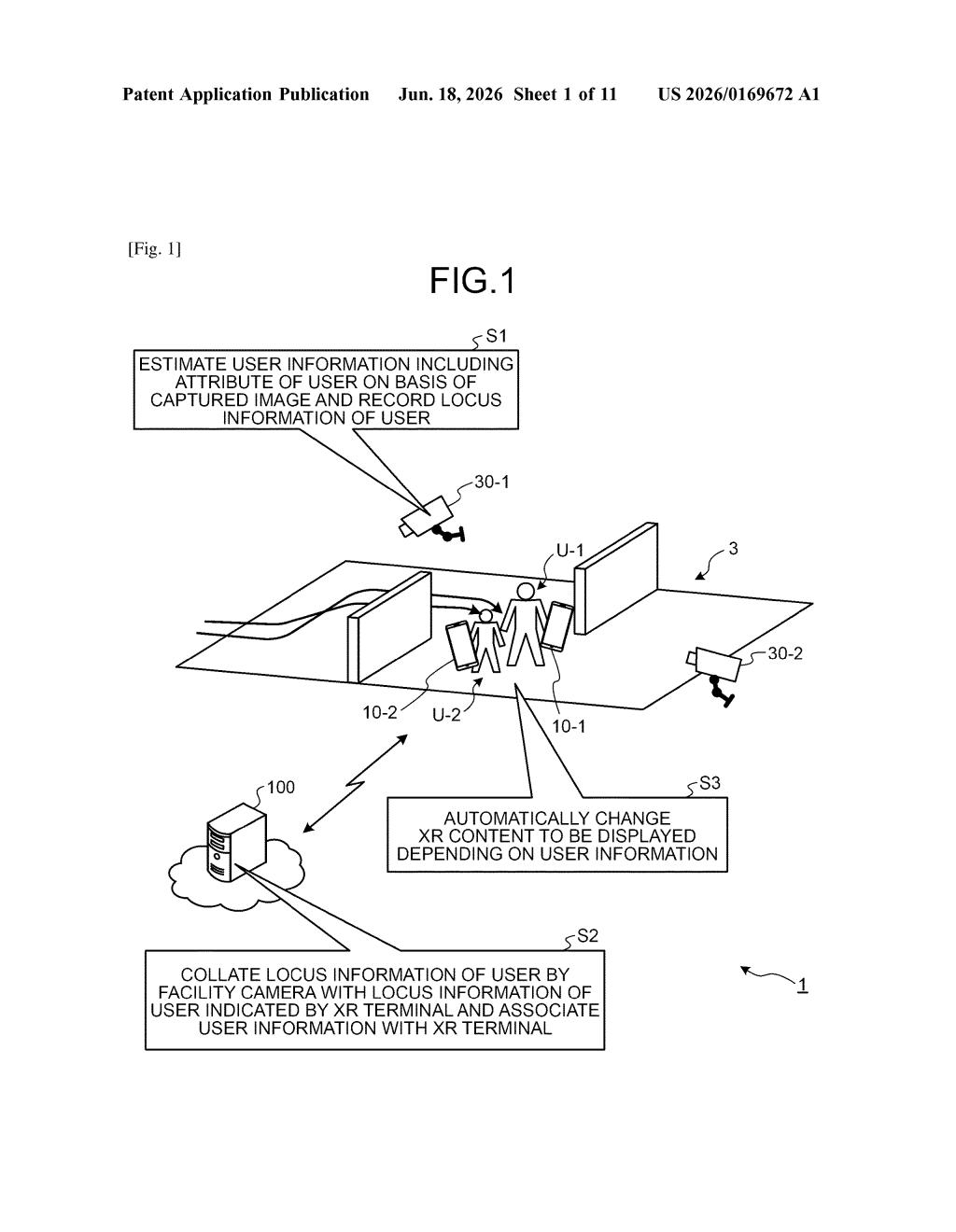
How Sony's headset figures out who's wearing it
Imagine walking into a store that uses AR headsets for product demos. The headset doesn't know anything about you yet — but a camera on the ceiling does. It's been watching how you walk, where you've been, and making guesses about things like your approximate age.
Sony's patent describes a system that connects those two pieces of information. The ceiling camera tracks your movement path — your trajectory through the space — and the headset tracks that same path from its own sensors. By comparing the two movement histories, the system can figure out which person in the room is wearing which headset, without you ever logging in.
Once that match is made, the headset automatically switches to a mode suited to your profile. A child might see a simplified interface; an adult might get the full product details. The whole thing happens in the background, without you doing anything.
How the locus-matching system links camera to headset
The patent describes a central processing device — think of it as a coordinator — that talks to two different pieces of hardware simultaneously:
- A terminal device: the AR headset (or similar display) worn by the user, which has its own camera and movement sensors
- An imaging device: a second camera installed in the room, like a ceiling-mounted camera, which watches the whole space
The room camera analyzes its footage to estimate user attributes — characteristics like age group or other demographic signals — and records the user's locus information (a logged path of where the person moved over time).
The headset independently logs its own movement path. The coordinator compares the two movement logs. Because both devices observed the same physical person walking the same route, their paths should match — and that match is how the system pairs a specific person's profile to a specific headset, with no login required.
Once paired, the system sends a signal to the headset telling it to switch its content mode — changing things like the complexity, language, or type of virtual content shown — based on what the room camera inferred about that user.
What this means for shared AR spaces and retail
Shared AR experiences — think museum exhibits, retail showrooms, theme parks, or training facilities — currently require users to manually select a profile or log in before they get a personalized experience. That friction discourages engagement. Sony's approach removes that step entirely by using passive room cameras to do the identification work.
The broader implication is that any public or semi-public AR space could personalize content for each visitor automatically. That's appealing for brands and venues, but it also raises real questions about how user attribute data is collected, stored, and consented to — especially when the system is making inferences about things like age from a camera you may not have noticed.
This is a genuinely interesting systems patent because the clever part isn't the AR display itself — it's the movement-matching trick that avoids the need for any explicit user identification. Sony Semiconductor Solutions clearly has its eye on commercial AR deployments, not just consumer headsets. The privacy angle is real and worth scrutiny, but the technical approach is clean.
There are more where this came from
We read every patent application Big Tech publishes and send you the ones worth knowing. Plain English, free, every week.
Want this weekly breakdown for a company we don't cover? Patentlyze Pro →