
Samsung Patents a System That Places Graphics at the Right Depth on 3D Displays
When two graphics overlap on a 3D screen, which one sits closer to your face? Samsung's new patent describes a system that answers that question automatically, based on what each graphic actually is.
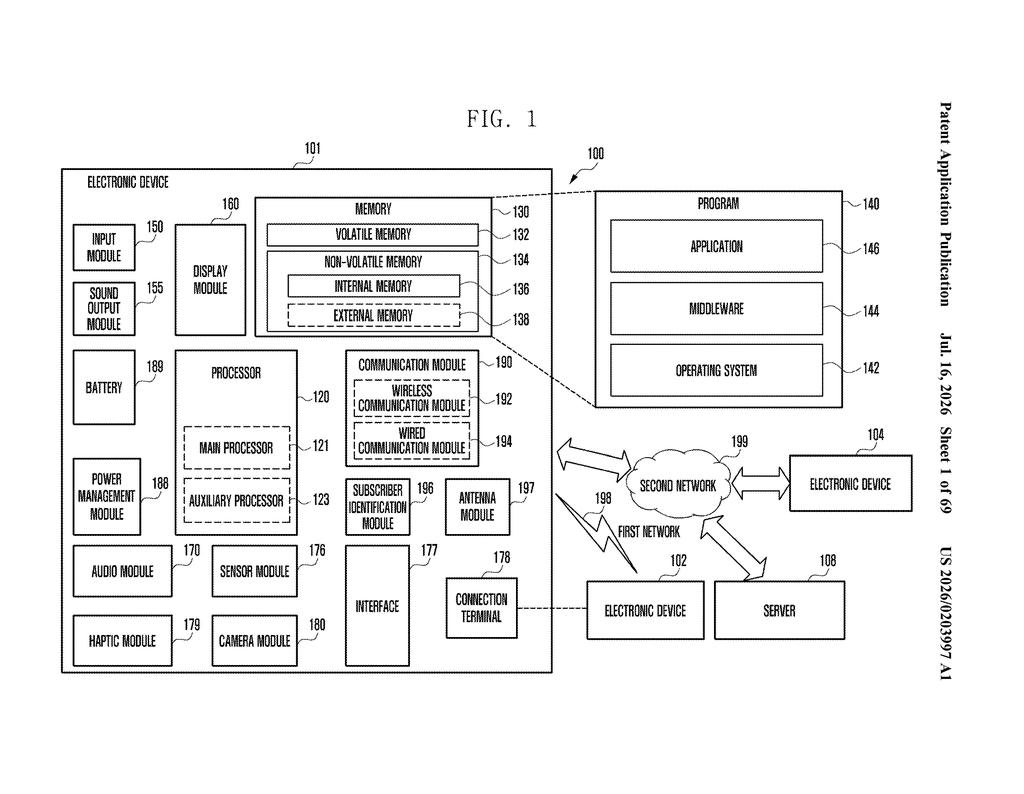
How Samsung's auto-depth system positions overlapping graphics
Imagine watching a 3D movie where a subtitle floats behind the character it's describing, or a notification badge somehow drifts inside the app icon it belongs to. On a regular 2D screen that's not a problem, but on a 3D display, every graphic needs a depth position too, not just an X and Y coordinate.
Samsung's patent describes a system that figures out those depth positions on its own. When two graphics overlap, the device looks at what each one is (its attributes, like whether it's a background image, a foreground label, or a UI button) and then assigns each one a logical depth, so the right thing appears in front and the wrong thing doesn't pop out at your face uninvited.
The goal is to make 3D displays feel natural without forcing app developers or content creators to manually specify every depth value. The device does that work automatically as it renders the frame.
How the device assigns z-axis positions to each graphic object
The patent covers a rendering pipeline for 3D displays that show stereoscopic images: a slightly different version of the scene sent to your left eye versus your right eye, which your brain fuses into a sense of depth.
The core problem it solves is z-axis conflict: when two graphic objects occupy the same screen region, the device must decide which one appears closer to the viewer (positive z) and which sits further away (negative z). Without an automated rule, overlapping UI elements can look confusing or even cause eye strain on a 3D display.
Samsung's described solution reads the attributes of each graphic object (think: metadata about what kind of element it is, its priority, or its content type) and uses those attributes to calculate appropriate z-axis positions before the final frame is rendered. The key steps are:
- Detect that two or more graphics overlap in the 2D layout
- Read each object's attributes to determine logical depth priority
- Assign a z-axis position to each object accordingly
- Render the stereo image pair with each object placed at its assigned depth
The system applies to both UI overlays and image content, and the device can also fall back to a standard 2D render when no 3D output is needed.
What this means for Samsung's 3D display ambitions
Samsung has been publicly committed to glasses-free 3D display technology, appearing in products like some Galaxy tablets and specialty monitors. Automatically managing depth for overlapping graphics is exactly the kind of infrastructure problem that has to be solved before 3D displays can handle arbitrary apps and UI, not just hand-authored 3D content.
For you as a user, this is the difference between a 3D screen that looks polished with any app and one that only works well with content specifically built for it. If Samsung can make depth assignment automatic, developers don't have to rebuild their apps from scratch just to support a 3D display mode.
This is unglamorous but genuinely necessary work. Glasses-free 3D displays have struggled commercially partly because rendering arbitrary UI in 3D is hard, and this patent directly addresses one of those core difficulties. It's not a flashy product announcement, but if Samsung is filing this, it's a sign they're thinking seriously about the software layer of 3D display, not just the hardware.
There are more where this came from
We read every patent application Big Tech publishes and send you the ones worth knowing. Plain English, free, every week.
Want this weekly breakdown for a company we don't cover? Patentlyze Pro →
Be the first to weigh in