
Samsung Patents a System That Turns Web Page Content Into Auto-Generated Sound
What if opening a webpage could automatically trigger a sound experience built from what's on the page, without you pressing play on anything? That's the basic idea behind Samsung's latest patent filing.
What Samsung's auto-audio browsing feature actually does
Imagine you open a news article or a shopping page on your phone, and instead of silence, your device plays a short audio clip that was built specifically from the content on that page. No podcast, no background music you imported, just sound that the phone generated by looking at what's on the screen.
That's what this Samsung patent describes. When you land on a page, your device checks the content sitting on it, decides whether it makes sense to create sound, and then builds that sound from the information it finds. The speaker plays it back automatically.
The patent doesn't spell out exactly what kind of sound gets generated (a spoken summary? a tone? ambient audio?), but the core idea is that the phone reads the page and produces audio without you asking it to. It's a step toward a browsing experience where your ears get as much information as your eyes.
How the device decides what sound to generate from a page
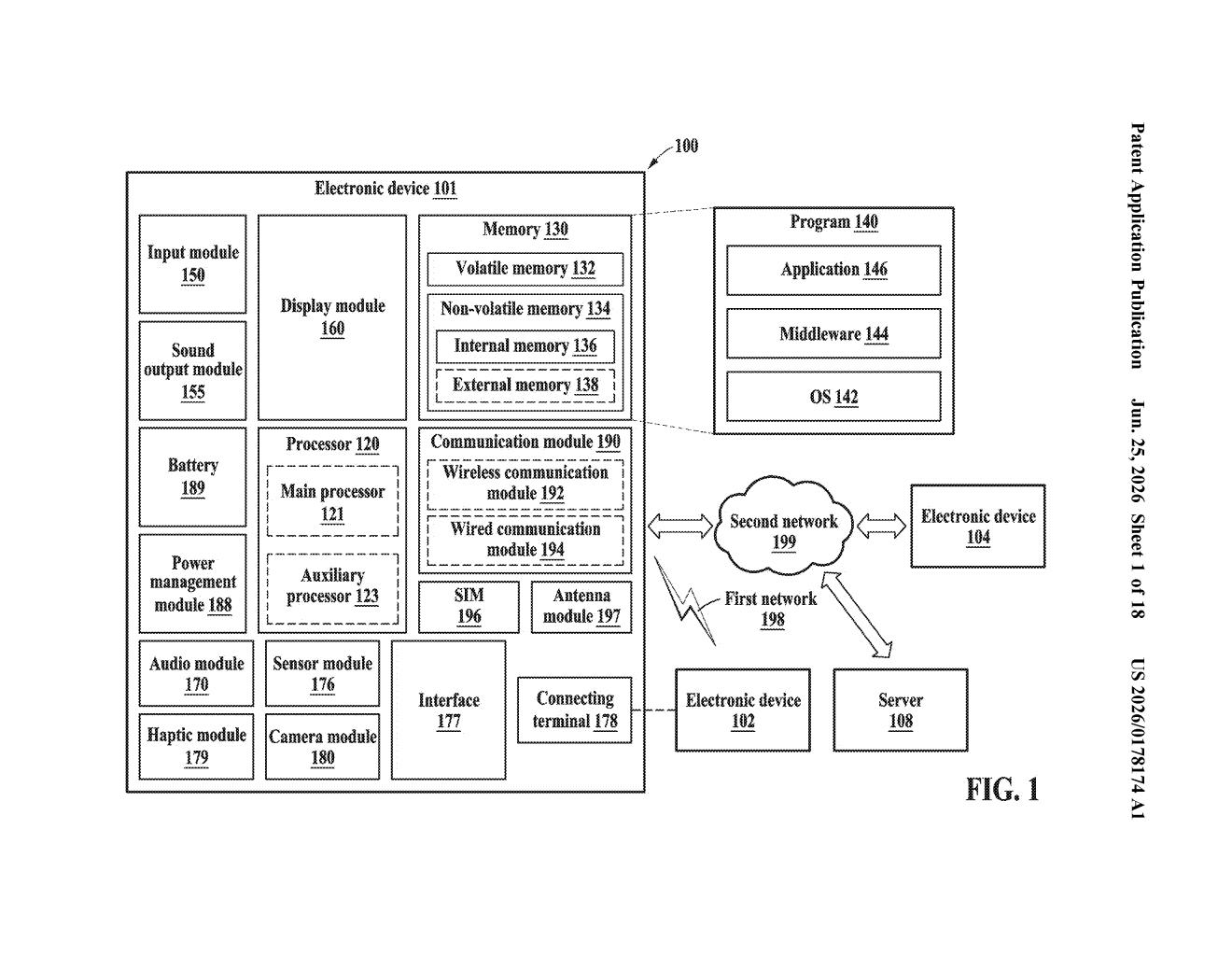
The patent describes a device with a display, a speaker, a processor, and memory that work together to handle a specific sequence of events when a user opens a page.
- Page detection: When the user navigates to a page containing multiple pieces of content, the device immediately starts evaluating it.
- Sound decision: The processor checks information about the page as a whole to decide whether generating audio is appropriate. Not every page would necessarily trigger sound.
- Audio generation: If the device decides sound is warranted, it pulls information from at least some of the content items on the page and uses that to obtain or construct audio, which is then played through the speaker.
The claim language is broad by design. "Obtain the sound" could cover anything from synthesizing speech, to selecting a pre-built audio file, to calling an on-device AI model that produces output from text or images. The patent doesn't lock in a single approach, which is typical for foundational filings that are meant to cover a concept before the implementation details are finalized.
What this means for accessibility and passive browsing
For accessibility, this is potentially meaningful. People with visual impairments already rely on screen readers, but a system that automatically generates contextually relevant audio from any page, rather than reading raw HTML aloud, could offer a much more natural listening experience.
For mainstream users, it points toward a hands-free or eyes-free browsing mode where your phone narrates or sonically summarizes content as you scroll. Samsung builds software for hundreds of millions of Galaxy devices, so even a feature that ships in a limited form on One UI could reach a very large audience quickly. Whether this ever ships as a real product feature depends on a lot more than one patent, but it signals Samsung is thinking about audio as a first-class output for web content, not just an afterthought.
This is a broad, early-stage patent that covers a concept more than a finished feature, so don't expect it on your Galaxy phone next month. That said, the direction is genuinely interesting: treating the speaker as a default output channel for web content, not just for media you explicitly play, is a real design shift. If Samsung ties this to an on-device language model for summarization, it becomes a lot more compelling.
There are more where this came from
We read every patent application Big Tech publishes and send you the ones worth knowing. Plain English, free, every week.
Want this weekly breakdown for a company we don't cover? Patentlyze Pro →