
IBM Patents a System That Automatically Skips Slides When You're Running Out of Time
You've got five minutes left and fifteen slides to go. IBM is patenting software that would handle that panic automatically, by deciding which slides to skip so you finish on time.
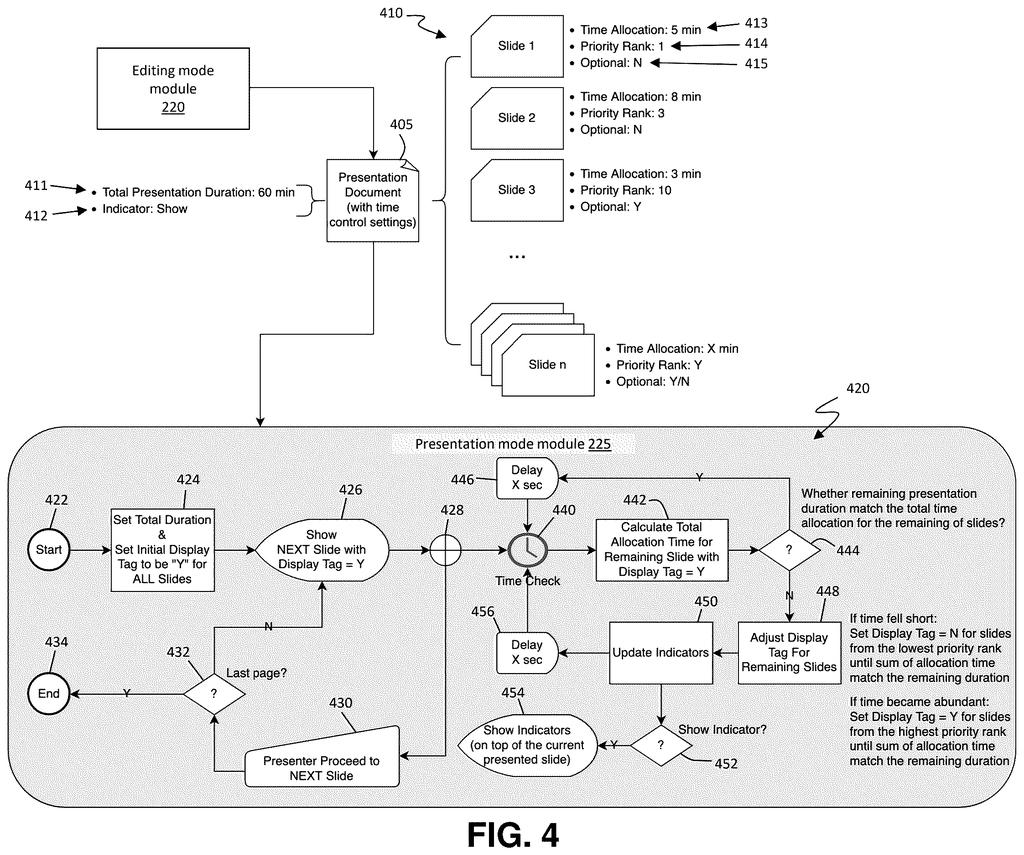
How IBM's auto-skip presentation tool actually works
Imagine you're giving a work presentation and you glance at the clock to realize you're running badly behind. You have to scramble, skipping slides manually and losing your place. IBM wants to fix that with software that watches the clock for you.
The idea is simple: before the presentation, you tag your slides with priorities, essentially telling the software which content is essential and which is "nice to have." As the presentation runs, the software compares how much time is left with how much material remains. If things fall behind, it automatically hides the lower-priority slides so you never even reach them.
You stay focused on speaking. The software handles the triage in the background, adjusting the deck in real time without you having to click anything.
How the system picks which slides to cut
The patent describes a computer-implemented method that monitors two numbers during an active presentation: the time budgeted for remaining slides and the actual time left before the session must end. When the budgeted time exceeds the remaining time (meaning you're behind), the system acts.
Rather than alerting the presenter and waiting for input, the software automatically changes metadata attached to specific slides. Think of metadata here as a hidden tag on each slide that tells the presentation software whether to show it or skip it. Flipping that tag causes the slide to be bypassed entirely during playback, without deleting or permanently altering the content.
User-defined priorities determine which slides get the skip tag first. The presenter sets these priorities ahead of time, essentially ranking slides by importance. When cuts are needed, the lowest-priority material goes first.
The patent doesn't specify a particular presentation platform, so the approach could theoretically apply to any digital presentation tool. The core claim is the automatic, priority-based selection and metadata-modification loop that runs in real time during a live session.
What this means for presentation software like PowerPoint
For anyone who gives presentations regularly, whether in sales, teaching, or internal meetings, running over time is one of the most common and embarrassing problems. Current tools give you no help once you're in the room; you have to manually skip slides and hope you pick the right ones. IBM's approach offloads that decision to software that already knows your priorities.
The practical question is where this lands. IBM has a large enterprise software portfolio and relationships with corporate productivity tools. A feature like this would fit naturally inside any slide or meeting platform aimed at business users. It wouldn't surprise anyone if this showed up in an AI-assisted presentation layer inside an enterprise suite within a few years.
This is a genuinely practical idea that solves a real, everyday problem most presentation software completely ignores. It's not flashy engineering, but the priority-tagging plus real-time metadata-flipping approach is clean and could ship without major infrastructure. IBM probably isn't the company that brings this to consumers, but the concept is solid enough that it's worth watching whether it influences the next wave of AI-assisted presentation tools.
There are more where this came from
We read every patent application Big Tech publishes and send you the ones worth knowing. Plain English, free, every week.
The drawings
5 drawing sheets from US 2026/0212322 A1 · click any drawing to enlarge


Want this weekly breakdown for a company we don't cover? Patentlyze Pro →
Be the first to weigh in