
IBM Patents a Parallel Attention Model for Multi-Channel Time Series Analysis
Most transformer models look at data one way at a time. IBM's new patent describes a system that simultaneously asks 'when did this happen,' 'which sensor said it,' and 'what does the content mean' — all at once, in parallel.
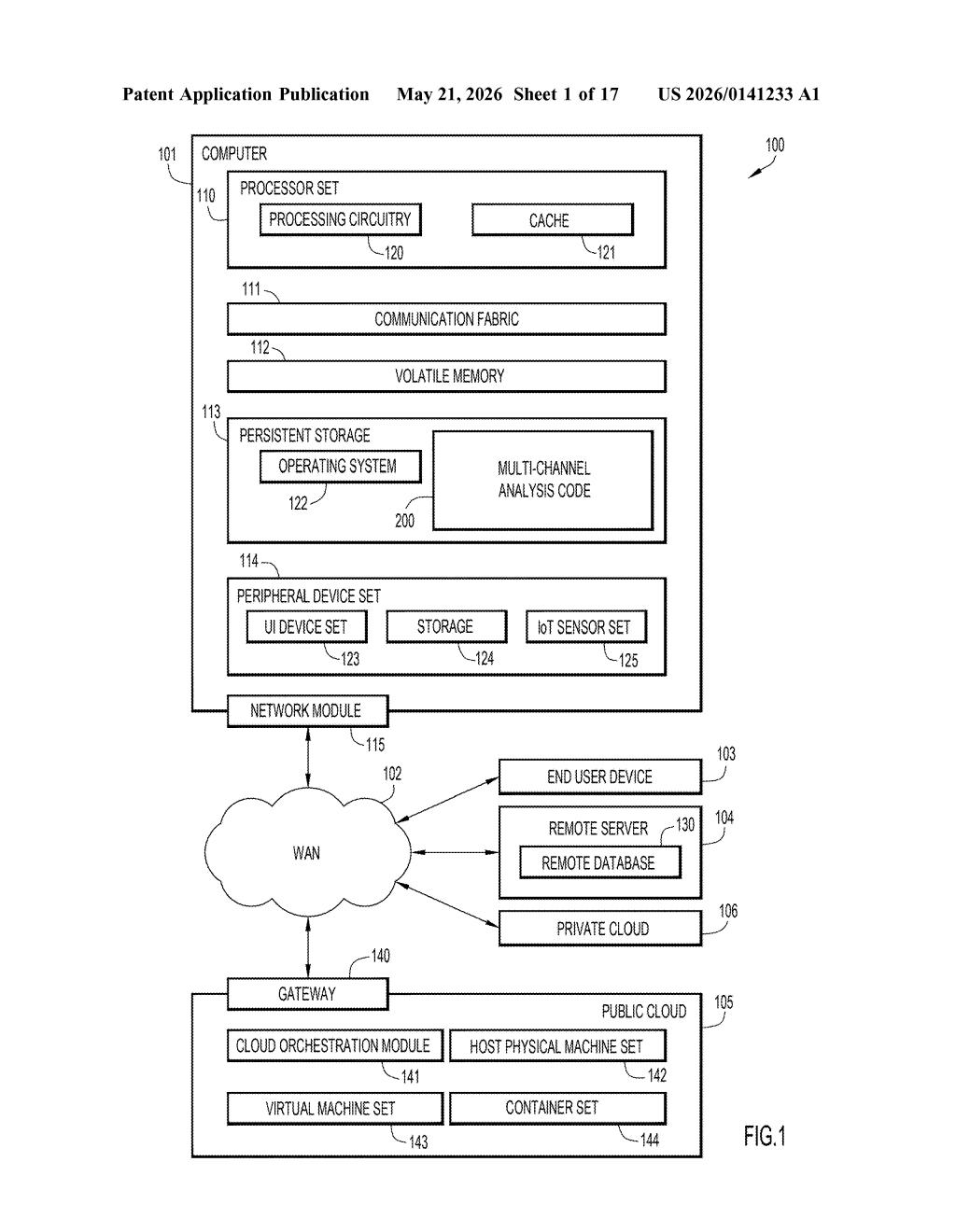
What IBM's three-way attention system actually does
Imagine a hospital monitoring dozens of sensors on a patient — heart rate, blood pressure, temperature — all ticking away over time. A traditional AI might analyze these channels one at a time, or struggle to relate them to each other meaningfully. IBM's patent tackles exactly this kind of problem.
The system takes streams of data coming in from multiple channels simultaneously and processes them through a special type of attention model — the part of a neural network that decides what to focus on. Instead of looking at time, source, and meaning one after another, this model runs three attention checks at the same time: one for when something happened, one for which channel it came from, and one for what the actual content is.
The result is a prediction or classification output — think 'this machine will fail in 48 hours' or 'this financial signal looks like a precursor to volatility.' It's a more holistic way to read multi-stream data, and IBM is betting the parallel approach is faster and more accurate than doing it sequentially.
How the parallel attention heads split time, channel, and content
The patent describes a transformer-based architecture designed for multi-channel time series — data with multiple simultaneous input streams that evolve over time, like sensor arrays, EEG readings, or financial tick data.
The pipeline works in three stages:
- Tokenization: Raw multi-channel inputs are sliced into discrete tokens — essentially chunks the model can reason about.
- Embedding via encoder: Those tokens are converted into high-dimensional vector representations (embeddings) that capture patterns the model can work with.
- Multi-variate parallel attention: The core innovation. Three attention mechanisms run in parallel — time-based (what's happening across the temporal axis), channel-based (what's happening across different input streams), and content-based (what the actual signal values mean semantically).
Attention, in transformer terms, is the mechanism that lets a model decide which parts of its input are most relevant to each other — like how you automatically focus on the loudest voice in a noisy room. Running three types of attention simultaneously rather than sequentially means the model can capture interactions between time, channel identity, and content that a single-pass approach might miss.
The output feeds into either a prediction task (forecasting future values) or a classification task (labeling a sequence with a category). The architecture is general enough to apply to both.
What this means for industrial and financial forecasting AI
Multi-channel time series is one of the genuinely hard problems in applied AI. Industrial IoT, healthcare monitoring, climate modeling, and algorithmic trading all generate exactly this kind of data — dozens of correlated streams, evolving over time, where the relationship between channels is as important as what any single channel says. Most existing approaches either flatten the channels (losing cross-stream information) or process them sequentially (losing speed).
For IBM, this fits squarely into its enterprise AI positioning — the company sells heavily into manufacturing, finance, and healthcare, all sectors that run on sensor and time-series data. A more expressive and efficient architecture for this class of problem could be integrated into IBM's Watson or watsonx platforms, giving it a technical edge in pitching to clients who already deal with complex streaming data.
This is solid, focused research — not flashy, but it addresses a real gap. The three-way parallel attention design is a logical evolution of how transformers handle multi-dimensional sequential data, and the claim that time, channel, and content attention can be usefully decoupled and parallelized is a testable, meaningful one. Whether it meaningfully outperforms existing methods like iTransformer or PatchTST in practice is the real question, and patents don't answer that.
Get our take in your Top Stories
Liked this breakdown? Add Patentlyze as a preferred source on Google, and our plain-English take shows up more often in your Top Stories the next time IBM patent news breaks.
There are more where this came from
We read every patent application Big Tech publishes and send you the ones worth knowing. Plain English, free, every week.
Want this weekly breakdown for a company we don't cover? Patentlyze Pro →