
Virtual World Patent Lets Your Digital Character Overhear Nearby Group Conversations
Imagine standing in a crowded virtual room with two conversations happening at once. IBM's new patent would let your metaverse platform figure out which group you're paying attention to, just by watching where your avatar is facing, and then turn up the volume on the right one.
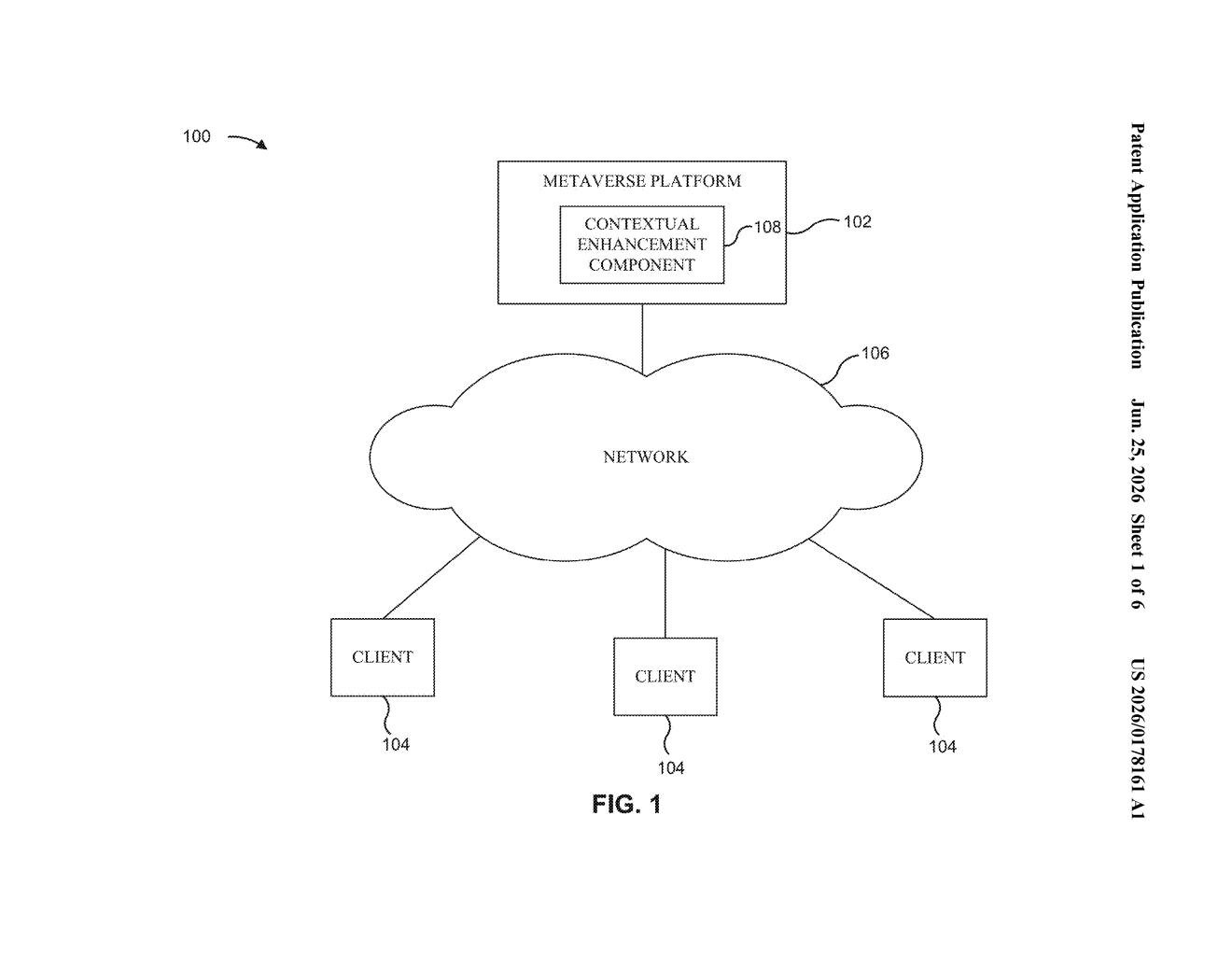
What IBM's avatar attention system actually does
Picture yourself at a virtual office party. Two groups of coworkers are chatting nearby. In most metaverse platforms today, you hear both conversations at the same volume, which makes it hard to follow either one. IBM's patent describes a system that watches which way your avatar is oriented or looking, then decides which group you're probably interested in.
Once the platform makes that prediction, it sends what the patent calls "experience enhancement data" to your device. That could mean boosting the audio from the group you're facing, showing a caption, or surfacing other contextual info about that conversation.
The idea is to make virtual social spaces feel more like real ones, where you naturally tune in to the group you're facing and tune out the rest. IBM is trying to recreate that instinctive social filtering inside a digital environment.
How the platform tracks gaze direction and predicts interest
The patent describes a metaverse platform that monitors the attention direction of a user's avatar inside a shared virtual space. When two or more groups of avatars are present, each group may be having its own separate conversation.
The system uses the avatar's orientation or gaze vector (essentially, which way the character is pointed or looking) to generate an interest prediction. That prediction identifies which conversation group the user most likely wants to engage with at that moment.
Based on that prediction, the platform delivers experience enhancement data to the user's client device. The patent is intentionally broad about what form that enhancement takes, but it could include:
- Prioritized or amplified audio from the predicted group
- On-screen captions or transcripts for that conversation
- Visual highlights or other contextual overlays
The core loop is continuous: as your avatar turns or shifts focus, the system can update its prediction and adjust the enhancement accordingly. The patent covers the computer system, its storage, and the program logic driving all three steps.
What this means for virtual meetings and social spaces
For anyone who has tried to follow a conversation inside platforms like Horizon Worlds, VRChat, or a virtual conference tool, the audio chaos of overlapping voices is a real friction point. IBM's approach treats the avatar's physical orientation as an intent signal, similar to how noise-canceling headphones treat microphone direction, and uses it to do the filtering automatically.
For IBM specifically, this fits into a broader push to make enterprise metaverse applications (virtual meetings, training sessions, trade-show-style events) more usable. If your avatar can signal which breakout group you're joining just by turning toward it, the experience gets closer to how real-world spatial audio and attention work, which could matter a lot for adoption in workplace settings.
This is a sensible, incremental idea for anyone who has tried to hold a conversation in a noisy virtual space. It won't sell headsets on its own, but the attention-as-intent signal is a clean design principle that could genuinely reduce friction in enterprise metaverse tools. Whether IBM builds it into a product or licenses it is the real question.
There are more where this came from
We read every patent application Big Tech publishes and send you the ones worth knowing. Plain English, free, every week.
Want this weekly breakdown for a company we don't cover? Patentlyze Pro →