
Samsung Patents a Fix That Helps Devices Pinpoint Each Other's Exact Location
Samsung has filed a patent describing a two-stage filtering process that lets a UWB chip figure out exactly where a signal's useful data starts and how far the sender's radio has drifted in frequency. It's unglamorous work, but precise ranging depends on getting both of those numbers right.
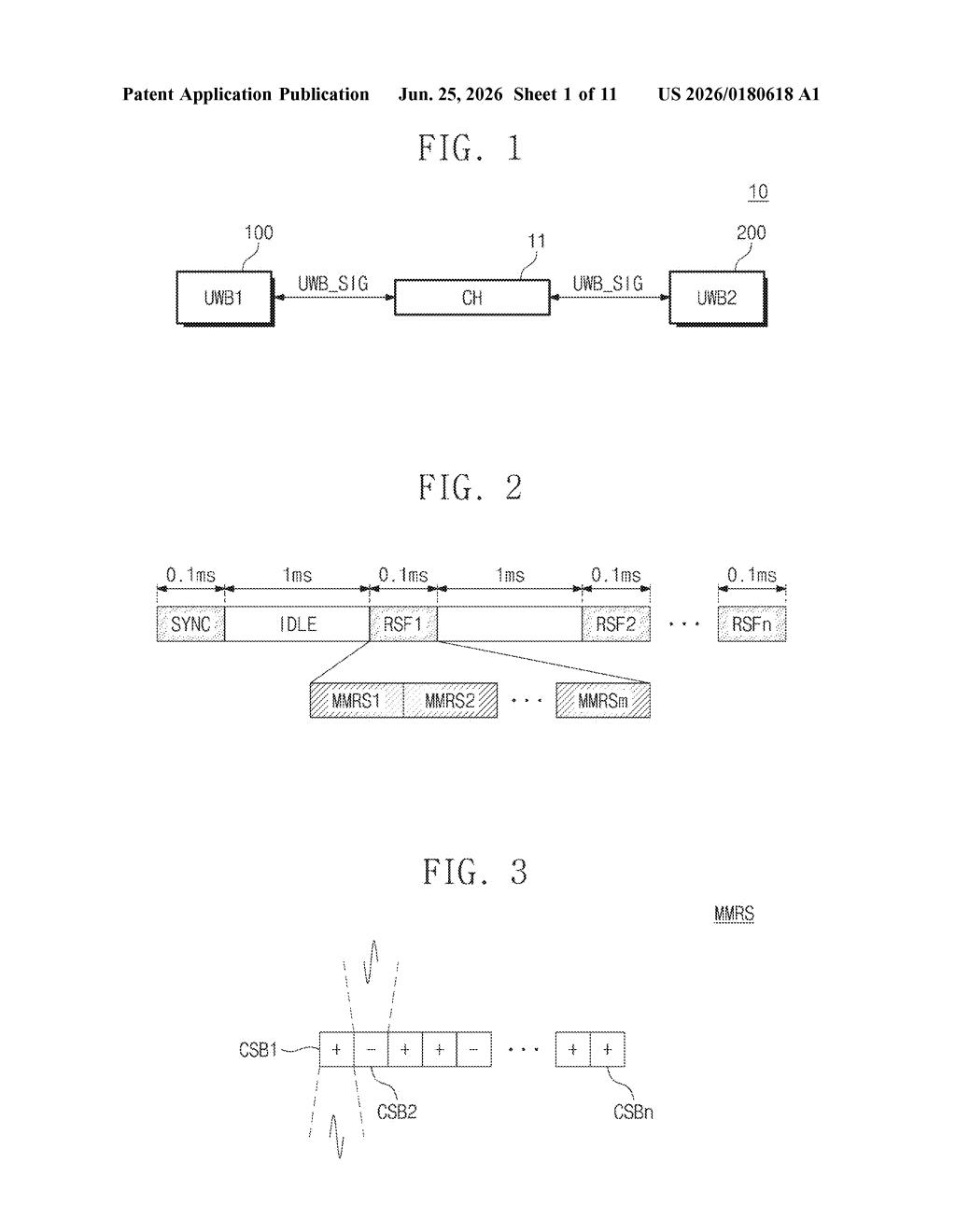
What Samsung's UWB frequency-correction trick actually does
Imagine you're trying to find a friend in a crowded concert hall by listening for their voice, but the crowd is loud and everyone's pitch shifts slightly as they move. You'd need to first figure out where their voice begins, and then correct for how their pitch has changed before you can accurately pinpoint them. That's roughly what this patent is solving for UWB (Ultra-Wideband) radios.
UWB is the short-range radio technology Apple and Samsung use for precise indoor location, things like finding a lost tag, unlocking a car as you walk up to it, or enabling tap-to-pay with spatial awareness. For it to work well, the receiving device has to lock onto the incoming signal quickly and correct for tiny frequency differences between the two radios involved.
Samsung's patent describes a way to do that correction in two filtering passes rather than one, which lets the chip estimate both when the real data starts and how much the sender's radio frequency has drifted. Getting both right at the same time improves the accuracy of the distance calculation.
How the two-stage matched filtering estimates signal drift
The patent describes a method for a UWB receiver to process incoming signals more accurately by running two separate filtering operations on accumulated signal data.
Matched filtering (a technique that compares incoming signal patterns against a known reference template to pull out useful data from noise) is applied in two stages:
- First matched filter: runs across all code symbols in the accumulated batch, giving a broad picture of the signal's structure and identifying where the "boundary" symbol sits. The boundary symbol marks the transition between idle filler content and the real payload.
- Second matched filter: runs on only a subset of code symbols, producing a complementary result used alongside the first.
Using both results together, the chip estimates two things simultaneously: the Carrier Frequency Offset (CFO), which is the gap between the sender's and receiver's radio frequencies caused by hardware imperfections or Doppler effects, and the count of "idle" signal packets that precede the real data.
Correcting for CFO before computing distance matters because even a small frequency mismatch introduces timing errors that throw off range estimates. The two-filter approach lets the chip resolve both unknowns at once rather than making sequential guesses that compound error.
What this means for UWB-powered tracking and payments
UWB's reputation for centimeter-level precision is only as good as the signal processing underneath it. Devices like Samsung's Galaxy SmartTags, car digital keys, and point-of-sale proximity systems all rely on fast, accurate ranging. A receiver that can lock onto a signal and correct for frequency drift more reliably will produce tighter distance estimates, which translates to fewer false triggers and more consistent performance in real environments like parking garages or crowded retail spaces.
This is also the kind of low-level improvement that compounds across an entire ecosystem. If Samsung bakes this method into its UWB chipsets, every product using those chips, from phones to wearables to IoT sensors, gets the benefit without any change to the hardware.
This is deep baseband signal-processing work, not a splashy product announcement. But UWB's usefulness in the real world lives or dies on exactly this kind of precision tuning. Samsung is one of the few companies building its own UWB silicon, so patents like this are worth tracking as signals of where its ranging accuracy is headed.
There are more where this came from
We read every patent application Big Tech publishes and send you the ones worth knowing. Plain English, free, every week.
Want this weekly breakdown for a company we don't cover? Patentlyze Pro →